Brought to you by:

Carotid endarterectomy and TCAR show comparable outcomes in patients with high cardiac risk

Carotid endarterectomy (CEA) and transcarotid artery revascularization (TCAR) showed similar perioperative safety and long-term effectiveness in patients with severe cardiac comorbidities, according to a recent retrospective review of a prospectively maintained database. Aidin Baghbani, MD, first author on the study…
Education session closes PAD knowledge gap among primary care residents

A focused education session significantly improved primary care residents’ confidence in diagnosing and managing peripheral artery disease (PAD), a new study found. The findings reinforce longstanding concerns about limited PAD awareness in primary care and highlight a scalable solution. “Our…
Study strengthens case for conservative therapy in claudication over early intervention

Early peripheral vascular intervention (PVI) for claudication is associated with higher rates of progression to chronic limb-threatening ischemia (CLTI) and major adverse limb events (MALE) compared with conservative medical management, according to data presented at the 2026 annual winter meeting of the…
VAM 2026 chairs discuss pathways to podium, poster presentations

Whether you’re a seasoned vascular surgeon or a first-time attendee, Society for Vascular Surgery (SVS) Program Committee Chair Jason Lee, MD, and Postgraduate Education Committee (PGEC) Chair Claudie Sheahan, MD, want you to know there’s a place—and a pathway—for everyone…
Analysis of BEST-CLI, PREVENT III reveals significant improvement in vein bypass outcomes over 20-year period

A post-hoc comparison of the BEST-CLI and PREVENT III multicenter, prospective, randomized controlled trials (RCTs) aimed at evaluating outcomes of vein bypass in chronic limb threatening ischemia (CLTI) patients over the past two decades found that they had “significantly improved”…
Training smarter, not harder: Analysis finds no negative impact of reduced core surgical requirements

Since the 2018 Accreditation Council for Graduate Medical Education (ACGME) reduction of core surgical requirements from 24 to 18 months during integrated vascular surgery residency, vascular residents’ operative experience has been unaffected, suggesting improved training optimization and efficiency. This was…
‘How to thrive, not just survive, as a vascular surgeon’

Outgoing Vascular & Endovascular Surgery Society (VESS) President Misty Humphries, MD, used her presidential address to outline how trainees and young vascular surgeons can “thrive and not just survive as a vascular surgeon.” The University of California, Davis interim chief…
Reflections from VESS: Internal mentoring, external inspiration and really good skiing

Just over a week ago, I was racing my medical school vascular surgery attending, Dr. Adam Doyle, down a Breckenridge run memorably named “The Devil’s Crotch.” We were celebrating fresh powder, the conclusion of an excellent fellows program, and the…
Patient selection may explain ‘counterintuitive’ relationship between carotid stenting volume and outcomes in new study
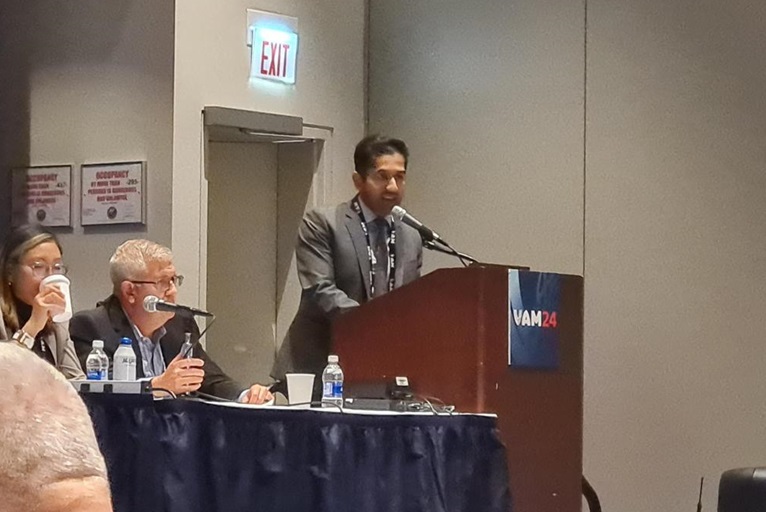
High stroke and death rates relating to carotid stenting in the Pacific Northwest may be driven by the selection of high-risk patients with less than 80% stenosis, and reducing the frequency of stenting in this high-risk group—along with better adherence…
Patient selection may explain ‘counterintuitive’ relationship between carotid stenting volume and outcomes in new study
High stroke and death rates relating to carotid stenting in the Pacific Northwest may be driven by the selection of high-risk patients with less than 80% stenosis, and reducing the frequency of stenting in this high-risk group—along with better adherence…