Brought to you by:
-
‘Why vascular?’: Grappling with the vascular workforce challenges of the future

It’s one of the enduring reasons given cross-generationally in answer to the question, “Why vascular?” It goes something along the lines of, “I value that vascular surgeons have longitudinal relationships with their patients.” That was the message from Jessica Simons, MD, the 2024–25 president of the New England Society for Vascular Surgery (NESVS), a professor…
-
SCVS Young Vascular Surgeons Program deadline further extended
The deadline for applications to the 2026 Society for Clinical Vascular Surgery (SCVS) Young Vascular Surgeons Program has been further extended to Jan. 4 at 11:59 p.m. Eastern Time. Designed for early-career vascular surgeons who have completed fellowships or an integrated vascular surgery residency and are in their first five years of practice, it is…
-
Interim results of covered stent-graft hint at ‘new avenue’ in dialysis access treatment
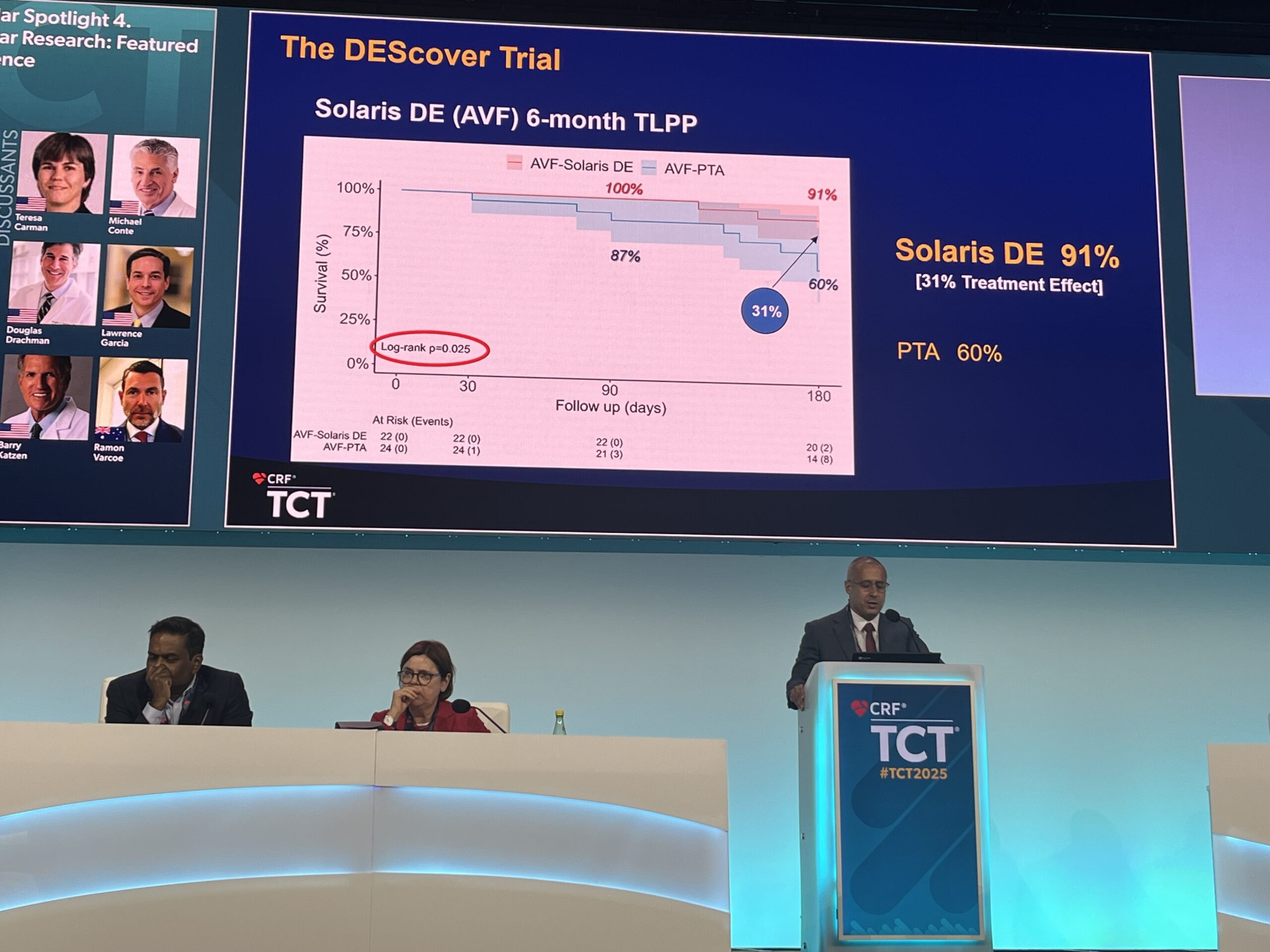
The interim results of a first-in-human trial of a sirolimus-eluting covered stent graft—Solaris DE (Solaris Endovascular)—for the treatment of dialysis access dysfunction demonstrate the promise of the device in treating vascular access outflow stenosis, an investigator in the trial has commented. Results of the DEScover trial, evaluating the safety and efficacy of the Solaris drug-eluting…
-
Abstract submissions open for VAM 2026
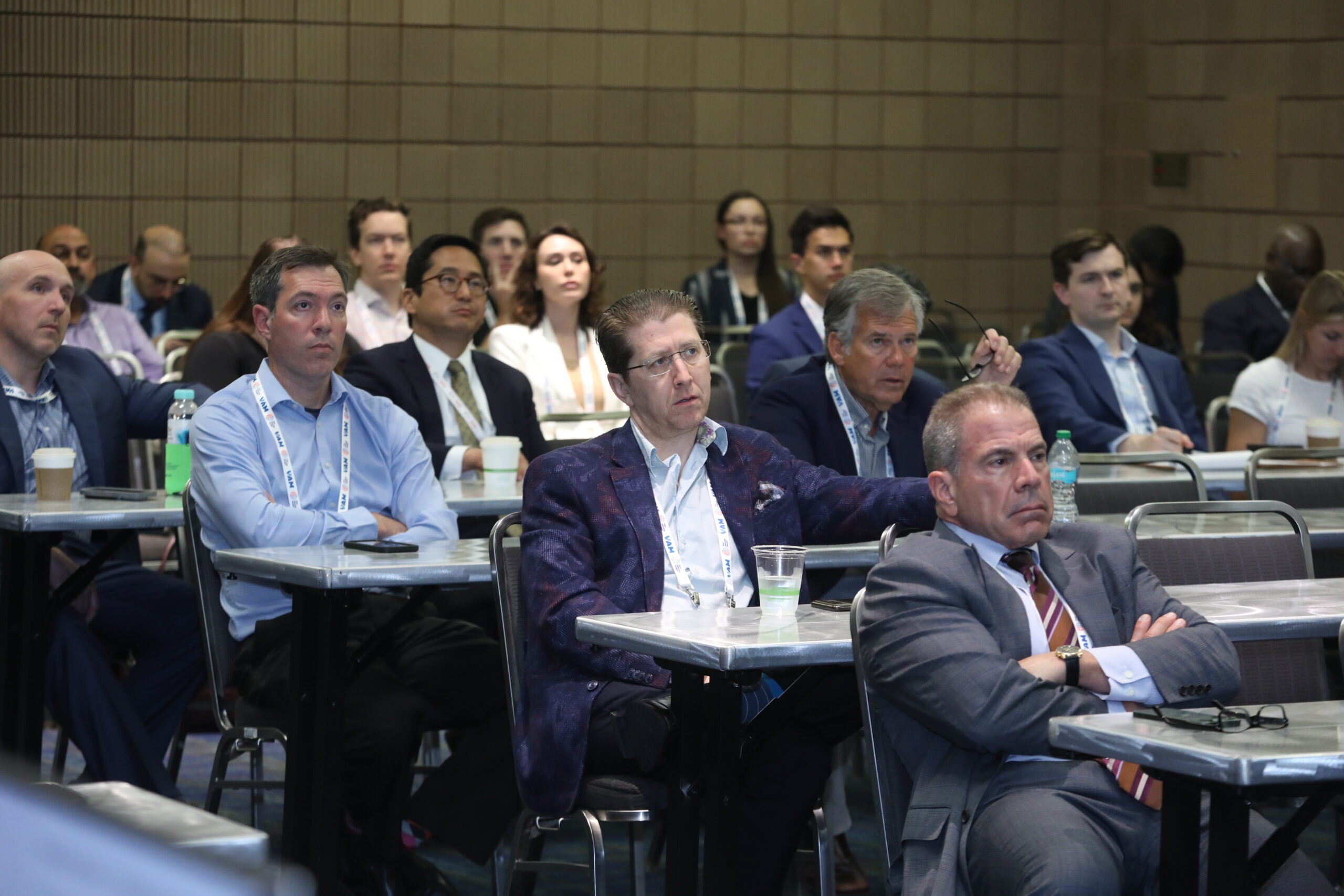
The Society for Vascular Surgery (SVS) invites authors to submit abstracts for the 2026 Vascular Annual Meeting (VAM 2026) by Jan. 7, 2026, at 3 p.m. Central Time. The event, held at the Hynes Convention Center in Boston (June 10–13), will feature the latest advancements in vascular surgery and offer a platform for researchers and…
-
Care for intermittent claudication considered ‘inappropriate’ found to be common, putting patients at ‘increased’ risk

In a multi-institutional cohort of patients with intermittent claudication (IC), care deemed inappropriate, or where the risk outweighs the benefit, by the SVS appropriate use criteria (AUC) for the management of IC was “common” and associated with increased risk of symptom recurrence, reintervention and amputation, a retrospective review showed. Furthermore, in patients with mild-to-moderate lifestyle…
-
PERT, AI and the rise of thrombectomy devices: ‘PERT leads to more advanced thrombectomy removal therapies, lower hospital stays’

The increasing sophistication of the device space for the treatment of pulmonary embolism (PE) aligned with advances in the deployment of pulmonary embolism response teams (PERTs) are among factors leading to notable improvements in care, according to leading vascular surgeon Patrick Muck, MD. The chief of vascular surgery at Good Samaritan Hospital in Cincinnati, Ohio,…
-
Early-bird deadline for SAVS 2026 approaches
The early-bird deadline for registration at the 2026 Southern Association for Vascular Surgery (SAVS) annual meeting in Paradise Island, the Bahamas (Jan. 21–24) falls tomorrow (Dec. 13). SAVS organizers are encouraging those planning to attend to sign up before the deadline passes in order to avoid a hike in registration fees. The cost of registration…
-
Deadline extended for SCVS Young Surgeons Program
The application deadline for the Society for Clinical Vascular Surgery (SCVS) 2026 Young Vascular Surgeons Program has been extended until midnight Eastern Time on Sunday (Dec. 14). The program will take place as part of the 2026 SCVS Annual Symposium (March 28–April 1) in Chula Vista, California. It is This is designed for early-career vascular…
-
SVS Foundation funds vascular initiatives to the tune of $360,000 last year
The Society for Vascular Surgery (SVS) Foundation’s 2025 annual report details a year of significant progress in research, education and advocacy aimed at improving vascular health worldwide. The foundation awarded more than $359,000 in grants during the 2024–2025 cycle, continuing its legacy of supporting research and training. Since 1987, the SVS has provided nearly $16…
-
CREST-2: Landmark trial finds benefit from carotid stenting
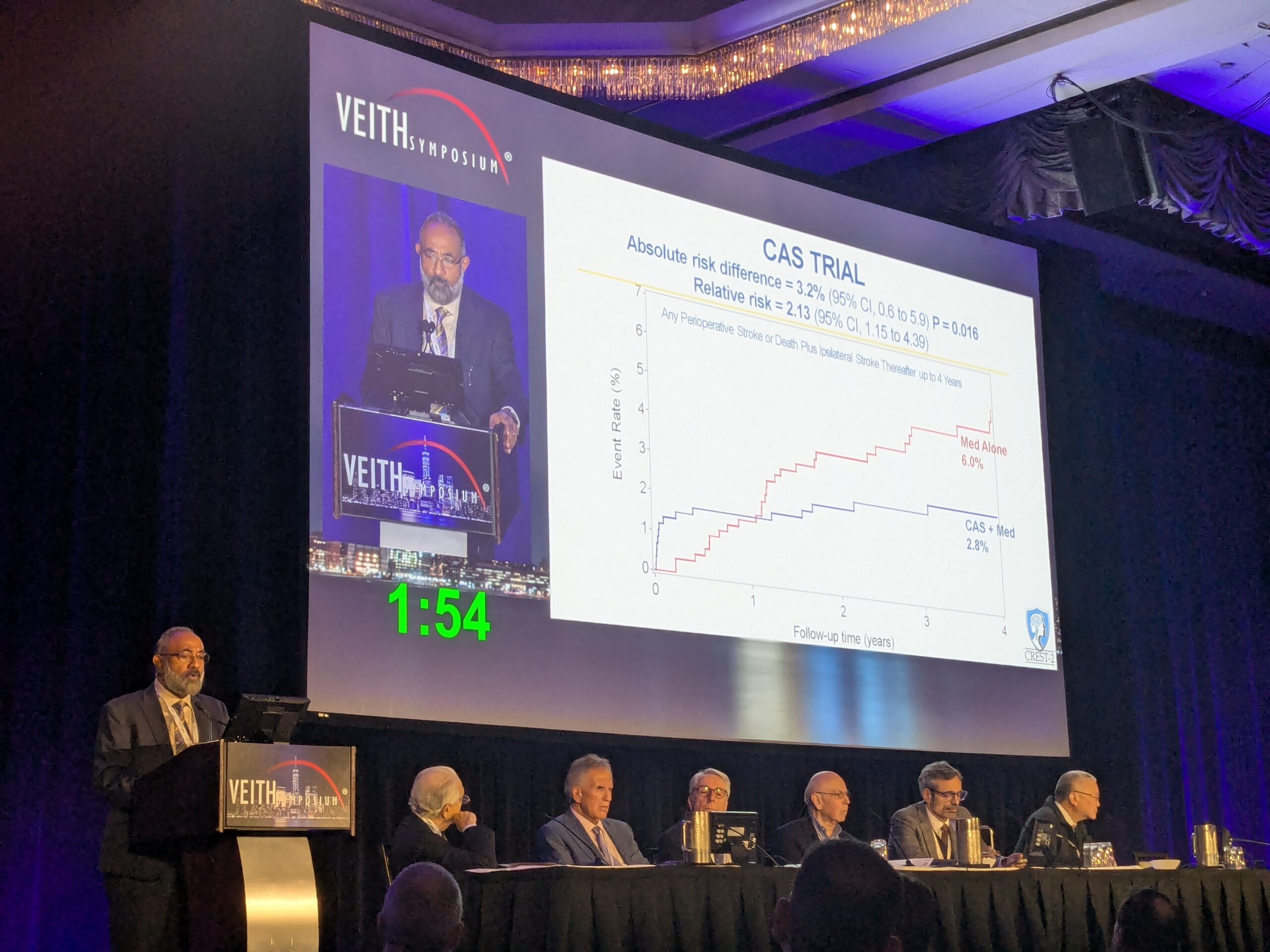
The National Institutes of Health (NIH)-funded CREST-2 study has found that, for people with high-grade asymptomatic carotid artery stenosis who have not experienced recent stroke symptoms, a carotid artery stenting (CAS) procedure—combined with intensive medical therapy—significantly lowered stroke and death rates compared with medical therapy alone. The more traditional “gold standard” approach of carotid endarterectomy…