Brought to you by:

Non-contrast MRI outperforms DSA in detecting below-the-knee arteries in CLTI patients
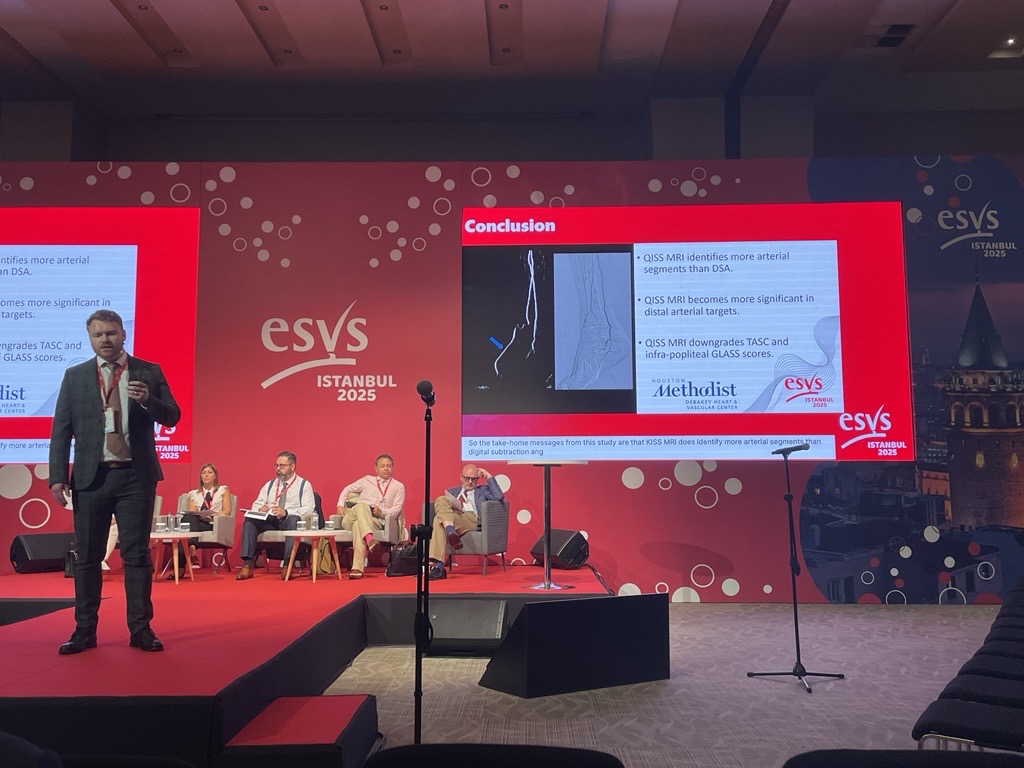
Researchers have shown that quiescent-inflow single-shot (QISS) magnetic resonance imaging (MRI) is able to identify more below-the-knee vessel segments than digital subtraction angiography (DSA) in patients with chronic limb-threatening ischaemia (CLTI). Taking first prize for best abstract, Alexander Crichton (Houston…
Novel MRI technique for CLTI poised to address ‘medieval problem in modern medicine’

“We want to change global standards. What we’re doing isn’t working. Patients are getting hurt and devices are failing—we want to be able to make sure devices we’re using today are safe, so that we can build new devices that…
Novel phenotypic AAA classification may help better stratify aneurysm risk

Inspection of aortic lumen, wall and thrombus volume changes throughout the cardiac cycle enables novel classification of abdominal aortic aneurysms (AAAs) into four types “representing the complex wall-lumen-thrombus interaction,” a new study delivered during the 2025 Critical Issues America (CIA)…
The future of vascular surgery (and the role a hybrid OR plays in it)
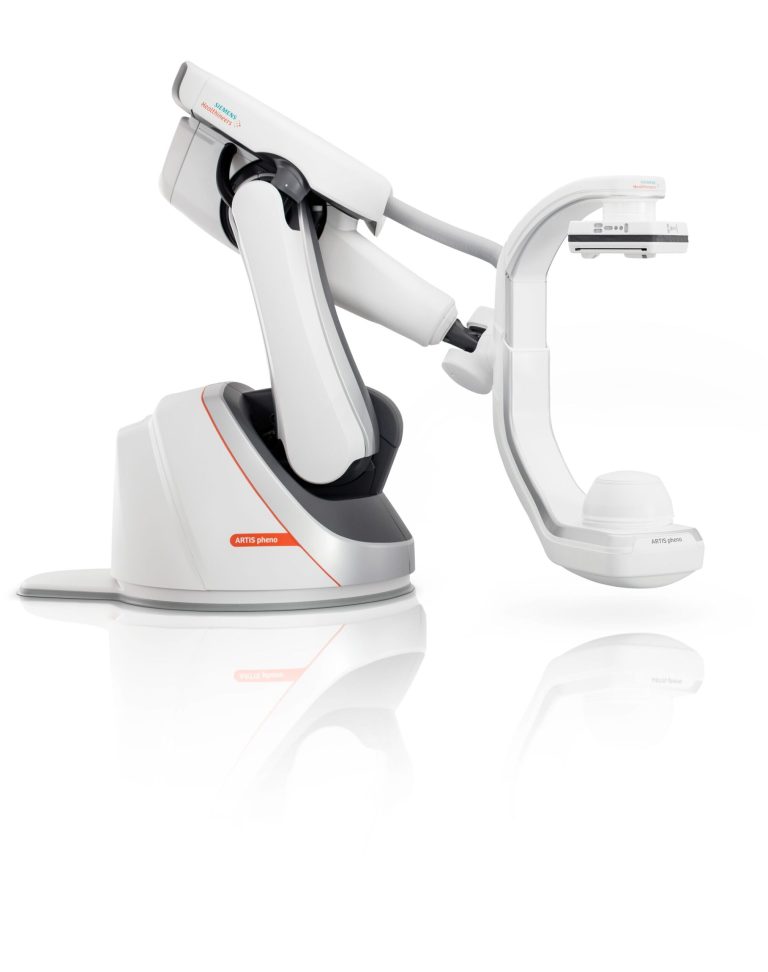
This advertorial is sponsored by Siemens. Two leaders in vascular surgery preview the future of interventional imaging and consider the emergence of the hybrid operating room (OR) as a future model for success. The hybrid OR is emerging as a…
FORS-powered LumiGuide 3D imaging technology is rolled out at specialized centers in U.S. and Europe
Andres Schanzer, MD, has hailed it “one of the most exciting changes” seen in imaging during the course of his career. Philips’ LumiGuide “human GPS” technology—which uses light reflected along an optical fiber inside a guidewire to generate three-dimensional (3D),…
Randomized trial set to elucidate value of image fusion technology for aortic repair

An ongoing UK National Institute for Health and Care Research (NIHR)-funded randomized controlled trial seeks to illuminate the value of an image fusion guidance technology for endovascular aortic repair. In a presentation on the trial at this year’s VEITHsymposium…
Future research needed to ‘optimize’ use of imaging technologies during aortic procedures
Imaging technologies in the aortic space will be a key feature of Saturday’s Plenary Session 8 (11:15 a.m. to 12:30 p.m.) in Potomac A/B, with speakers set to share data on Philips’ Fiber Optic RealShape (FORS) technology and Centerline Biomedical’s…
SVS webinar on 3D printing showcases how technology could affect current and future practice
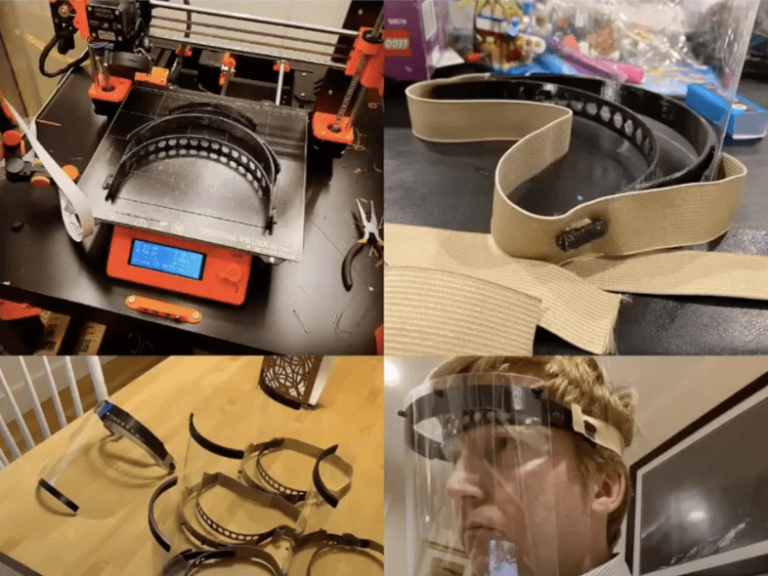
The recording of the Society for Surgery (SVS) webinar on three-dimensional (3D) printing in vascular surgery is now available on the SVS website. The SVS Health Information Technology Committee (HIT) held the webinar, “3D Printing for Vascular Imaging,” in December…
How a multidisciplinary team meets the complex challenges of fixing failed EVARs
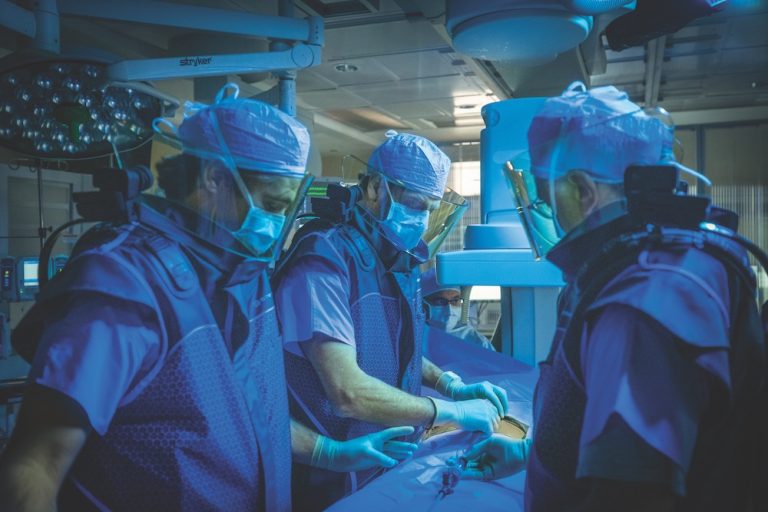
This advertorial is sponsored by Tampa General Hospital. The Aortic Disease Program at Tampa General Hospital’s Heart & Vascular Institute is no stranger to the challenges of complex care. Situated in the population center of Tampa, Florida, in the nation’s…
Dec. 12 webinar to examine 3D printing for vascular imaging

Society for Vascular Surgery (SVS) members can learn some of the ins and outs of three-dimensional (3D) printing for vascular imaging at a webinar on Dec. 12. The SVS’ Health Information Technology (HIT) Committee is sponsoring the webinar, which begins…