Brought to you by:

NESVS 2023: Novel IVC filter retrieval device slashes procedural time and radiation exposure during in vivo experiments, Yale researchers report
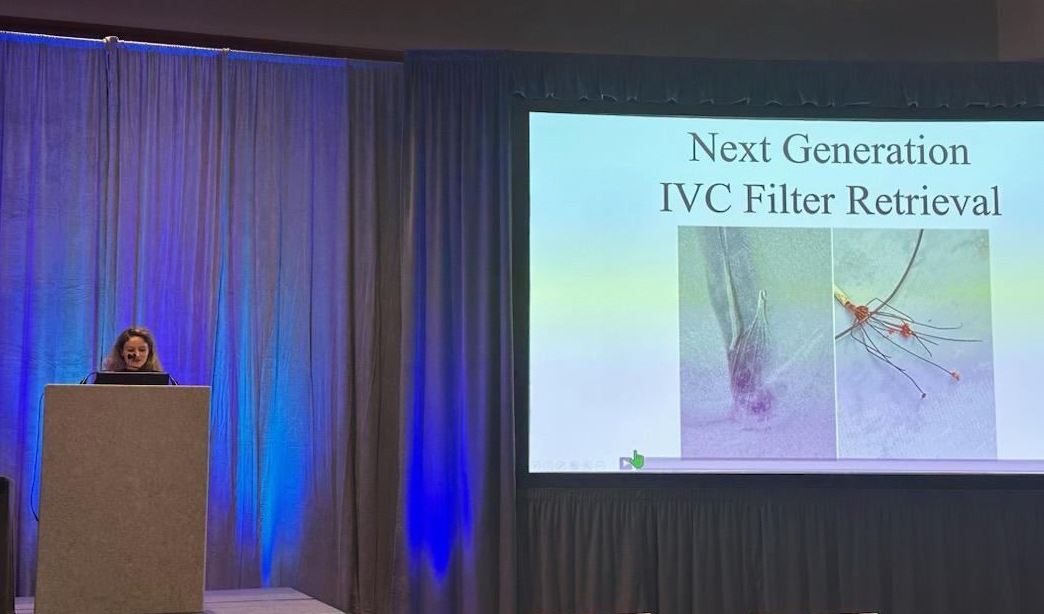
An inferior vena cava (IVC) filter retrieval device dubbed the next-generation in removal of the venous thromboembolism-fighting tools could substantially cut procedural times and radiation exposure, according to data emerging out of in vivo testing at Yale University. The Articulating…
Behind the procedure: Removing in-stent thrombosis with the RevCore Thrombectomy Catheter

This advertorial is sponsored by Inari Medical. For patients with in-stent thrombosis (IST), one of the most critical unmet needs has been an effective method to remove acute-to-chronic material. Here, Rishi Roy, MD, a vascular surgeon at Advanced Vascular &…
Child-bearing age ‘should not be a contraindication to venous stenting’

In a recently published study, dedicated venous stents performed well through pregnancy and postpartum, and a protocol including the use of low-dose antiplatelets in combination with anticoagulation at either a prophylactic or therapeutic dose depending on the patient’s risk profile…
The top 10 most popular Vascular Specialist stories of July 2023

In the previous month, Vascular Specialist delivered a range of leading commentary from the Society for Vascular Surgery (SVS) in response to the New York Times investigation on inappropriateness in vascular care; the anticipated Food and Drug Administration (FDA) update…
Study finds similar rates of VTE in both flying and non-flying surgical patients

Uncertainty underlying the magnitude of risk posed by long distance air travel in venous thromboembolism (VTE) patients has created the need for a deeper, systematic dive into the guidelines and resources providers should be turning to when managing their pre-flight…
Risk of cancer-related VTE recurrence ‘significantly lower’ using NOACs compared with low molecular weight heparin

Delivering results and recommendations from a systematic review and meta-analysis of novel oral anticoagulants (NOACs) versus low molecular weight heparin (LMWH) in the prevention of venous thromboembolism (VTE) recurrence in cancer patients, Patricia Noreen Bueno, MD, from St Luke’s Medical…
Risk assessment models “no better than coin toss” for predicting bleeding in patients considered for VTE pharmacologic prophylaxis

A study of two risk assessment models (RAMs) for predicting the bleeding risk in patients considered for pharmacologic prophylaxis to prevent venous thromboembolism (VTE) has found that though an increasing risk score correlated with higher bleeding rates, both models had…
The essential ‘need’ for vascular surgeons in pulmonary embolism treatment paradigm

The specter of pulmonary embolism (PE) as a common and lethal disease process—with mortality of massive PE static at about 50% for decades while rapid advances were made in stroke and STEMI care—forms the backdrop to a VAM 2023 breakfast…
AVF 2023: FLASH registry suggests ‘favorable safety and effectiveness profile’ in high-risk PE patients
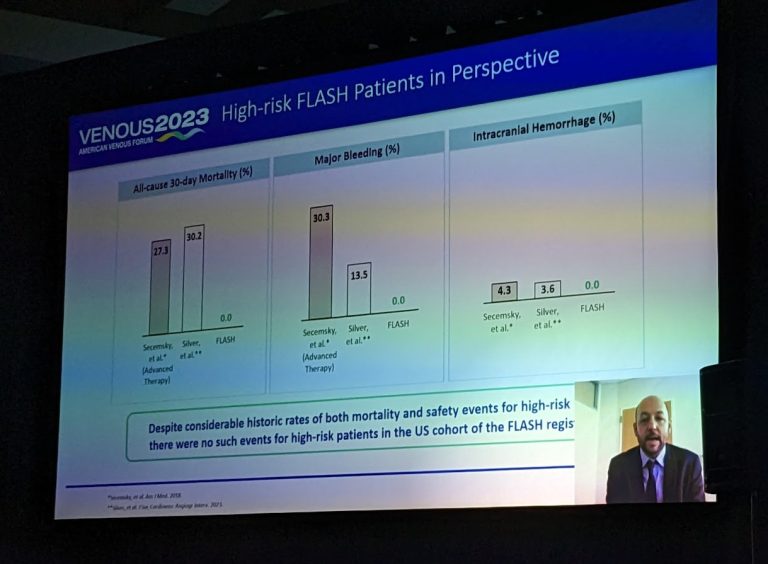
Among 61 high-risk pulmonary embolism (PE) patients followed through to the 30-day visit in the U.S. cohort of the FLASH registry, no mortalities were recorded, while at 48 hours post-treatment with the FlowTriever mechanical embolectomy system, likewise, there were no…
New study demonstrates IVC filters ‘safe and effective’ in treating venous thromboembolism

Few adverse events are connected to the use of inferior vena cava (IVC) filters to help prevent deep vein blood clots from developing into pulmonary embolisms (PE), according to the findings of the Predicting the safety and effectiveness of inferior…