Brought to you by:

Carotid endarterectomy tied to lower stroke, mortality rates than stenting

Carotid endarterectomy (CEA) was associated with significantly lower long-term stroke and mortality compared to carotid artery stenting (CAS) in patients with asymptomatic carotid artery disease, according to a new real-world analysis. The study, which was presented at VAM 2026, compared…
Structured exercise after acute DVT may reduce long-term complications

New research presented at VAM 2026 showed how structured aerobic exercise combined with standard anticoagulation in patients with acute lower extremity deep vein thrombosis (DVT) may help significantly reduce the risk of developing post-thrombotic syndrome (PTS). The study was funded by the…
‘It’s not us versus them’: Rethinking multidisciplinary collaboration in vascular care

How do vascular surgeons and other similar specialties come together for the benefit of the patient? That is the main question behind a session given by Caitlin Hicks, MD, associate professor of surgery at Johns Hopkins School of Medicine, during…
Unequal Access, unequal outcomes: Addressing disparities in acute limb ischemia

Although unequal access to care is contributing to persistent disparities in acute limb ischemia (ALI), there is a lot that surgeons can do to improve it. That’s the sentiment of Katharine McGinigle, MD, associate professor of surgery at UNC School…
Shaping the vascular workforce of tomorrow
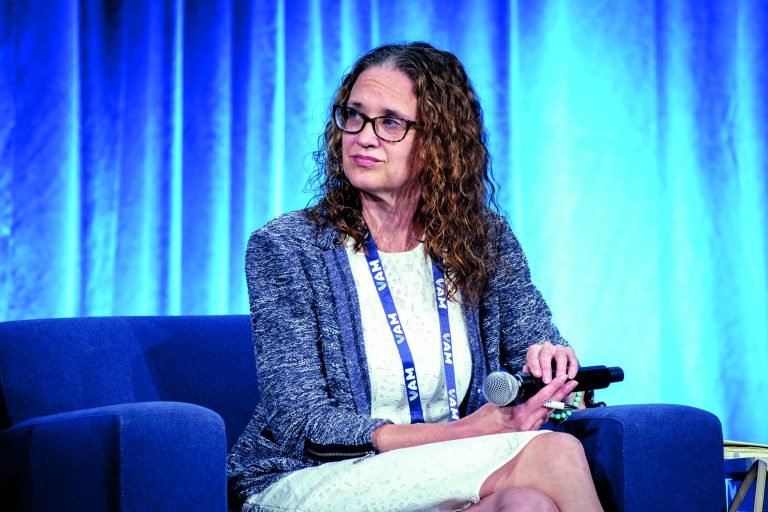
“I have been a staunch supporter of thinking ambitiously about how we maintain what should be a viable and thriving workforce that doesn’t just address capacity of surgical support but also training for what our patients need — not just our patients of today, but our patients 20 and 30 years from now,” said Dawn Coleman,…
Study explores when AAA surveillance may no longer benefit older patients

New research suggests that surveillance for small abdominal aortic aneurysms (AAA) may not always provide meaningful benefit in older patients, particularly those with significant comorbidities. The data was presented during Plenary Session 5 by Sowmya Mangipudi, MD, MSc. The study…
Rethinking antiplatelet and anticoagulant use in PAD after AQUATIC

During Thursday’s Hot Topics session, John Curci, MD, an associate professor at Vanderbilt Health, discussed the changing landscape of long-term antiplatelet and anticoagulant use in the management of peripheral artery disease (PAD) in light of results from the AQUATIC trial.…
Data support conservative approach to claudication in elderly patients

Claudication rarely takes a limb. But in patients over 80, the attempt to treat it surgically may take something just as important. New data, presented at VAM 2026 by Jeffrey Siracuse, MD, makes the case that for octogenarians with intermittent…
TCAR demonstrates durable long-term outcomes with few reinterventions

Across more than 1,000 transcarotid artery revascularization (TCAR) procedures performed over eight years at a single high-volume institution, a recent study found only 12 patients required reintervention — a 1.1% rate that speaks to the durability of TCAR. The data…
Advances in medical management could redefine PAD care

“Peripheral arterial disease [PAD] should no longer be viewed simply as a problem of arterial obstruction requiring procedural intervention,” said Mohamed Zayed, MD, PhD, associate professor of Surgery and Radiology at Washington University School of Medicine. That assertion cuts to…