Brought to you by:


Shaping the vascular workforce of tomorrow
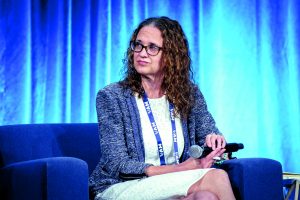
“I have been a staunch supporter of thinking ambitiously about how we maintain what should be a viable and thriving workforce that doesn’t just address capacity of surgical support but also training for what our patients need — not just our patients of today, but our patients 20 and 30 years from now,” said Dawn Coleman, chief of the Division of Vascular and Endovascular Surgery at Duke University.
That was the central message of a presentation Coleman gave Friday examining how vascular surgery can prepare for growing patient demand while ensuring the specialty remains attractive and sustainable for future generations of surgeons.
The discussion comes as vascular surgery faces a unique combination of challenges: an aging population requiring increasingly complex vascular care, geographic gaps in access to specialists and a need to recruit and retain enough surgeons to meet future demand.
While workforce shortages are a concern across health care, Coleman argued that vascular surgery faces particular pressures because of the specialty’s broad scope and around-the-clock responsibilities. “We pride ourselves and feel so much value in being needed and responding,” she said. “But in the same breath, it is exhausting.”
Over the past two decades, integrated vascular surgery residency programs have helped address some of those challenges. Coleman said the training model has increased the number of trainees entering the field and expanded recruitment opportunities. It has also helped attract a more diverse group of applicants by drawing from a broader candidate pool that better reflects the patient populations vascular surgeons serve.
Still, significant workforce gaps remain, particularly in rural communities where access to vascular surgeons can be limited. “A huge area of need that is going to be a challenge for us is in the rural and community space,” said Coleman. “We're going to see continued challenges in certain areas that will compromise access to vascular surgeons that can provide comprehensive care.”
Addressing those shortages will require more than simply training additional surgeons, Coleman argued. It will also require rethinking how the specialty recruits and supports future physicians.
Coleman said one priority should be exposing students to vascular surgery earlier in their medical education. “Students only know what they know,” she said. “Many people seem to not even understand the concept of what vascular surgery is. Early exposure is important.”
The presentation will also highlight changing motivations among younger physicians. Coleman said many trainees are increasingly interested in limb preservation, health equity and caring for underserved populations. “More and more I hear, ‘I want to save limbs. I want to take care of underserved patients,’” she said. “There’s this thread of service that feels a little bit different, and frankly, that’s what we need.”
Coleman also called for greater flexibility within training programs while maintaining the rigorous standards required of vascular surgeons. Accommodating family responsibilities and evolving career goals, she argued, will be important for attracting and retaining talented trainees. “Just because I did something one way does not mean it should or has to be that way for somebody else,” she said. “It’s not the hardship Olympics.”
The presentation will ultimately focus less on workforce shortages themselves and more on the specialty’s opportunity to shape its future. “If we care about our patients, we’re going to care about sustaining a really healthy workforce for them,” said Coleman. “I think we have to be more intentional about that.”
Coleman also highlighted ongoing efforts through the Association of Program Directors in Vascular Surgery’s Vascular Forward Workforce Initiative, which is exploring approaches to recruitment, training and retention. Together, those efforts aim to ensure future patients have access to the vascular surgeons they will increasingly need in the decades ahead.
“We have to be careful in how we create a narrative,” said Coleman. “We all love our job. I love my job. I would do this over and over again. The rebranding and the valuation efforts that we are prioritizing right now as a specialty trickle over to training and they're really important. We need to support those things. I would also encourage everybody to be intentional in a way that truly curates a collaborative work environment that is patient focused and that we retain a mindset of curiosity, and importantly, flexibility.”