Brought to you by:


Unequal Access, unequal outcomes: Addressing disparities in acute limb ischemia
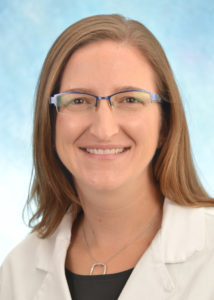
Although unequal access to care is contributing to persistent disparities in acute limb ischemia (ALI), there is a lot that surgeons can do to improve it. That’s the sentiment of Katharine McGinigle, MD, associate professor of surgery at UNC School of Medicine, who delivered a presentation during the “Modern Management and Controversies in Acute Limb Ischemia” session at VAM 2026. McGinigle spoke with Vascular Specialist to discuss how clinicians can make an impact.
Vascular Specialist: What is the background of this session?
Katharine McGinigle, MD: In everything we do in vascular surgery, it’s important to think about how we’re diagnosing the problem, treating it and following it long term due to a variety of factors. There may be completely reasonable differences in the way we deliver care to certain patients. It’s important to evaluate that to make sure that there are no unintended differences in care that end up disproportionately causing bad outcomes or delayed diagnosis, especially in peripheral artery disease [PAD]. The disparities can be really complex and interwoven. ALI brings that to a head because you have an emergency condition layered on top of a lot of long-term systemic barriers and challenges that we’ve been facing.
Vascular Specialist: What are the main points of the session?
McGinigle: The disparity signal in ALI is consistent and reproducible. There is not a lot of literature about ALI in comparison to other vascular pathologies, but data from multiple data sources like the VQI, NSQIP and Medicare claims consistently show there's differential rates of time to intervention. Although these are all retrospective studies, these disparities persist after adjusting for all of the comorbidities and disease severity. There's some clinical complexity that plays in, but it's not simply that. There's structural drivers that are preventing equitable outcomes in ALI. Patients in rural areas have significantly less favorable outcomes. The “time is tissue” mantra that applies so effectively to stroke and heart attack doesn't really seem to have the same panache for ALI. Rural patients tend to face critical delays in reaching vascular centers. Those are immutable things oftentimes, but there's clearly improvements that can be made.
In addition to geography, there's some well reported systemic barriers that cause a higher risk factor burden for Black and Hispanic patients. Things like diabetes, hypertension, renal disease and progression of PAD. For Black patients specifically, it’s been shown they have a higher risk of ALI. They're also significantly less likely to receive revascularization and have higher primary amputation rates.
Females also have some disparities. Females with ALI tend to be misdiagnosed, have longer time to diagnosis and time to intervention. They are presenting sicker with more advanced ischemia. Although they are less likely than men to have AFib, they are more likely to have an embolic event because they’re less likely to get the appropriate medical treatment. There's a lot of multifactorial drivers causing this later and more advanced presentation in women and that obviously has impacts on our surgical outcomes.
Vascular Specialist: What can be done to fill those treatment gaps?
McGinigle: Most of the evidence is database driven retrospective research that has limited granularity. But there are a few multicenter case series, one of which I was happy to participate in that has just been published in the Journal of Vascular Surgery. Even with the granularity about clinical presentation and severity of other comorbidities, it's hard to measure ALI because it's so heterogeneous. Data on social determinants of health and distance from medical centers is taken from administrative data and racial and ethnic categories are often collapsed all within group variation that we don't really measure. It all comes down to not being overwhelmed by all the things making patients sick and thinking about when that patient hits the door, what can you do at a clinical level?
It's worth it for every group to sit down and think about their decision-making frameworks. Who comes in and gets put on a heparin drip versus who gets rushed to the endo suite or the operating room? Why do you choose one intervention versus another? Which types of patients don't even get offered a revascularization attempt and go straight to amputation? Create a care pathway so that trainees are more likely to get a structurally competent clinical pathway that also helps speed up the time from the door to revascularization. Doing audits to look at time from the initial event to the emergency department would be great to evaluate. All of those institutional level things should be audited and measured. We should strive to improve all of that because as you improve care for everybody, some of the unwarranted care variation will automatically go away.
Vascular Specialist: What’s the key takeaway?
McGinigle: The take home message is that the timeline of getting a patient to your operating room, the decision making about what kind of operation you're going to perform, system factors like insurance coverage and follow-up care, are all areas where we can make improvements. Just like the continuous quality improvement we do, there's a lot we can look at individually to make sure we are treating everybody equally and that we are giving everybody the opportunity to experience that same high level of clinical expertise.
Vascular Specialist: Anything else you wanted to share?
McGinigle: Some of my medical students and a team of qualitative researchers I work with have interviewed patients who suffered from ALI. The concept was to ask patients what an ideal recovery from ALI looked like. They also interviewed surgeons. Surgeons thought that being alive and having a limb was the goal. But patients had a more nuanced perspective about having a highly functional limb that was pain-free and being able to mitigate the mental health impact from having a medical emergency. All of the disparities that play into patients coming to the hospital and the way they get treated also impact their recovery. We haven't moved through the research enough to figure out if there's different geographic, sex or race and ethnicity differences in postoperative expectations but I think that's a crucial point. ALI is an emergency that needs to get treated, but patients oftentimes have chronic disability related to it. Being thoughtful about offering postoperative care equally and giving people access to support is also really important but it’s often forgotten about in the setting of an emergency.