Brought to you by:


Maria Gifford
SVS Foundation grant fuels barbershop-based PAD screening in Philadelphia

A single Philadelphia zip code once carried one of the highest rates of non-traumatic limb amputation in the country. Three years into a screening program built around an unlikely setting — the neighborhood barbershop — that number has fallen sharply…
Poverty plays growing role in major amputation risk

Major lower extremity amputations were once heavily concentrated in a narrow band of under-resourced, safety-net hospitals. A three-decade national study now shows that burden has spread well beyond those settings and that poverty is a more powerful predictor of limb…
SVS recognizes leaders in community vascular practice at VAM 2026

Each year the Society for Vascular Surgery (SVS) honors a member with the Excellence in Community Practice Award, recognizing outstanding leadership shown by a practicing vascular surgeon within their community. The honor recognizes sustained contributions to patients, exemplary professional practice…
Peter Lawrence receives SVS Lifetime Achievement Award

A career that nearly began on the football field instead of in the operating room culminated at VAM 2026 in the highest honor of the Society for Vascular Surgery (SVS), as Peter Lawrence, MD, received the SVS Lifetime Achievement Award…
Can tailored thromboprophylaxis reduce amputation risk?

One in five endovascular procedures fails within six months and for decades vascular surgeons have answered that statistic with the same blunt toolkit: aspirin, clopidogrel, or whatever combination a given surgeon prefers. This year’s Frank J. Veith Distinguished Lecture at…
Elective PVI for claudication linked to worse limb outcomes and higher costs

Vascular surgeons have long debated whether and when to intervene on claudication. A new study suggests the field may be intervening too often, too early and with consequences that compound over time. The findings, recently published in the Journal of…
Data support conservative approach to claudication in elderly patients

Claudication rarely takes a limb. But in patients over 80, the attempt to treat it surgically may take something just as important. New data, presented at VAM 2026 by Jeffrey Siracuse, MD, makes the case that for octogenarians with intermittent…
TCAR demonstrates durable long-term outcomes with few reinterventions

Across more than 1,000 transcarotid artery revascularization (TCAR) procedures performed over eight years at a single high-volume institution, a recent study found only 12 patients required reintervention — a 1.1% rate that speaks to the durability of TCAR. The data…
Advances in medical management could redefine PAD care
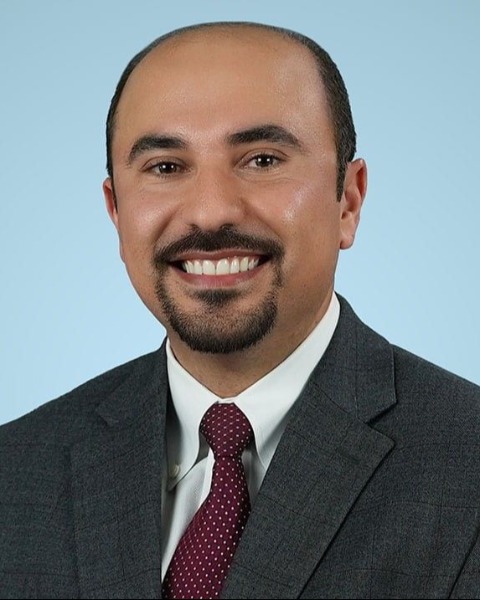
“Peripheral arterial disease [PAD] should no longer be viewed simply as a problem of arterial obstruction requiring procedural intervention,” said Mohamed Zayed, MD, PhD, associate professor of Surgery and Radiology at Washington University School of Medicine. That assertion cuts to…
Deep vein arterialization challenges notion of ‘no-option’ CLTI

“Patients previously considered ‘no-option’ may no longer truly be without options,” said Anahita Dua, MD, associate professor at Harvard Medical School and a vascular surgeon at Massachusetts General Hospital. That assertion sums up the central finding of an analysis comparing…