
A large retrospective study of patients with acute limb ischemia (ALI) found that early outcomes including limb salvage, survival and amputation-free survival are equivalent between open surgery-first and endovascular-first revascularization strategies. The research determined that outcomes were driven primarily by the severity of ischemia at presentation and not by the treatment approach selected, a finding the researchers say reframes how clinicians should think about managing the condition.
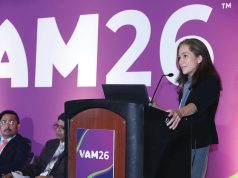
Cuneyt Koksoy, MD, clinical research coordinator in the Division of Vascular Surgery and Endovascular Therapy at Baylor College of Medicine in Houston, presented the findings during Plenary Session 1 at VAM 2026.
ALI is a sudden, dramatic reduction in blood flow to an extremity that poses an immediate threat to limb viability, requiring prompt revascularization to prevent major amputation or death. While both open surgical and catheter-based endovascular approaches have long been used to restore perfusion, head-to-head comparative data on the two strategies — particularly using contemporary devices and techniques — have remained scarce, leaving clinicians without clear evidence to guide initial treatment selection.
“Our manuscript addresses a significant gap in the literature that directly compares open-first versus endovascular-first revascularization in ALI,” said Koksoy. “Since the randomized controlled trials in the ‘90s, there is a dearth of comparative effectiveness research comparing modern endovascular techniques — especially percutaneous thrombectomy devices — versus standard open techniques. Our data represent the largest retrospective study comparing these two strategies and corroborate recent guidelines published by the European Society for Vascular Surgery.”
The study found that over time, endovascular-first therapy was associated with better survival, though it required more reinterventions. Results held consistent across patient subgroups and newer aspiration-based thrombectomy techniques were associated with fewer early complications compared with older endovascular methods. With ischemia severity rather than treatment choice identified as the primary determinant of outcomes, the findings carry a direct message for clinical decision-making.
“Endovascular-first therapy is a safe and effective option for many patients — it does not compromise early outcomes and may offer long-term advantages in selected cases,” said Koksoy. “That said, it’s not a one-size-fits-all approach.”
Beyond validating endovascular-first therapy as a frontline option, Koksoy said the study was designed with the broader purpose of generating the foundational data needed to move the field toward future prospective trials. He said the findings are intended as a platform for that next step, not simply a retrospective snapshot.
“Since traditional outcome metrics such as survival and major amputation are similar between open-first and endovascular strategies, it behooves us to better understand which patients benefit most from each approach,” said Koksoy. “Device-specific outcomes are another important area for future research.”
Koksoy said the results argue against a reflexive preference for either approach and instead point toward a more individualized treatment framework, one in which ischemia severity and patient-specific clinical factors jointly guide the choice of strategy. He added the study’s scale and two-center design strengthen the case for using its findings as the basis for future randomized investigation.
“Both open and endovascular approaches provide equivalent outcomes with respect to survival and major amputation, but choosing the right strategy depends on the patient and the severity of ischemia,” said Koksoy. “Further study will be required to determine how to best personalize treatment to specific individual patients.”