Brought to you by:
-
VAM 2021 taking shape, schedule changes to expand programming

Though many individual components will remain the same, the 2021 Vascular Annual Meeting (VAM) will have a different look and feel. “The meeting has been reorganized. We’re creating an expanded version of VAM that will take place Wednesday morning through Saturday evening,” said Andres Schanzer, MD. He and Matthew Eagleton, MD, co-chair the Society for…
-
Clarion call: Application deadlines for research awards coming up
Applications for three Society for Vascular Surgery (SVS) Foundation awards are coming up early in the new year. The Resident Research Award (Jan. 13, 2021) is open to surgical and vascular surgery trainees. This prestigious award carries with it the opportunity to present at the Vascular Annual Meeting (VAM) in June 2021. The award provides…
-
President Dalman reflects on year of adversity—and positive change
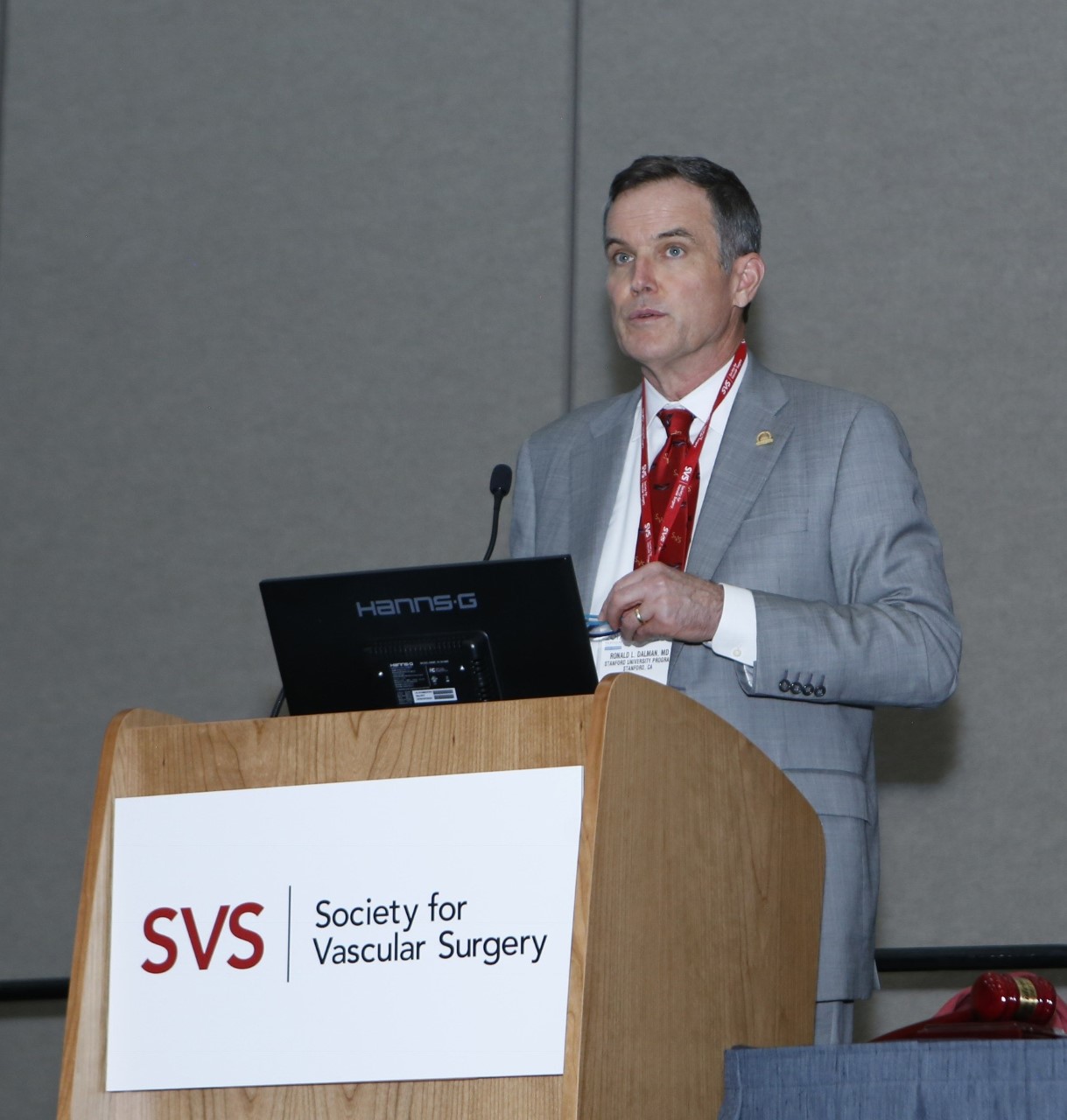
The last nine months took away much. The Vascular Annual Meeting (VAM) was canceled. The Vascular Research Initiatives Conference (VRIC) suffered a similar fate—its content latterly resuscitated in virtual form earlier this month. The traditional Society for Vascular Surgery (SVS) presidential handover, too, followed an unorthodox route. But if there have been sources of comfort…
-
Abstracts for VRIC, VAM 2021
Calling surgeons and scientists: Your research is wanted. Submission sites are now open for two annual SVS meetings in 2021, the Vascular Research Initiatives Conference (VRIC) and the Vascular Annual Meeting (VAM). The VRIC submission site will close Jan. 6, 2021. Conference details are still being worked out. Registration is expected to open in December.…
-
Intravascular lithotripsy ‘superior’ to PTA in acute procedural success out to 30 days
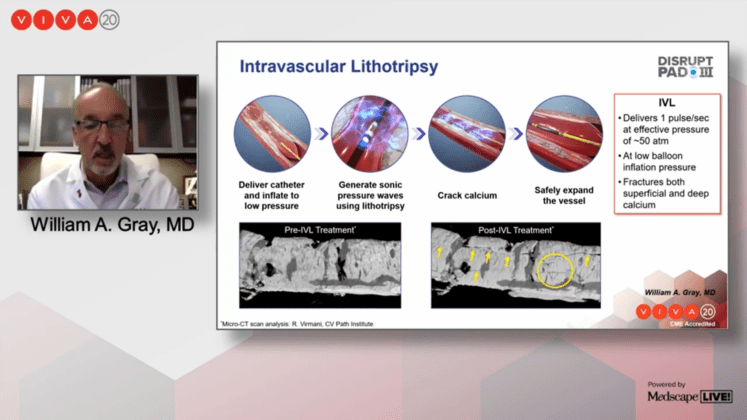
The DISRUPT PAD III randomized controlled trial (RCT) provides the largest level-one evidence for the treatment of heavily calcified femoropopliteal arteries, noted William Gray, MD, an interventional cardiologist at Main Line Health, Philadelphia, during the second and final late-breaking data session at this year’s Vascular Interventional Advances conference (VIVA 2020) held Nov. 6–8 virtually. Gray…
-
Latest VOYAGER PAD analysis finds no mortality and improved limb outcomes in drug-coated device cohort
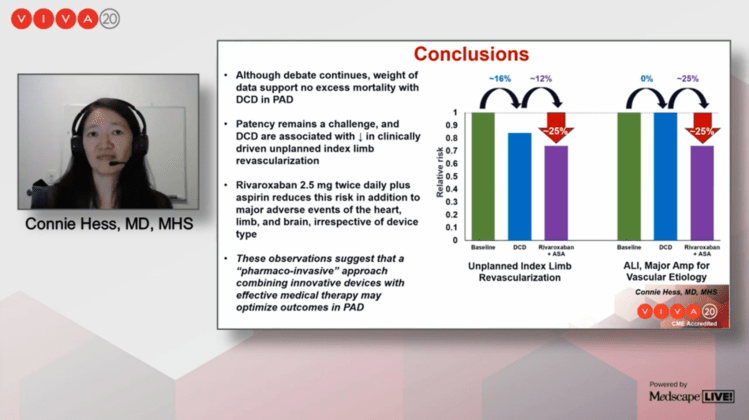
Given the absence of a safety signal in data from the VOYAGER PAD trial, a new analysis examined the potential benefit of drug-coated device versus non-drug-coated device treatment for reducing limb outcomes. Connie Hess, MD, an associate professor of cardiology at the University of Colorado in Aurora, presented the most recent findings in a late-breaking…
-
New analysis finds DCBs lead to greater four-year survival after fempop revascularization
Patients treated with a paclitaxel-coated balloon saw greater survival, freedom from amputation and amputation-free survival through four-year follow-up after their initial femoropopliteal revascularization operation than those who received treatment using an uncoated device, researchers behind a propensity-matched retrospective review at University Hospitals Cleveland Medical Center, Ohio, found. The study further demonstrated that freedom from target-lesion…
-
‘Significant’ value of adding podiatrists to limb salvage alliance

A multidisciplinary limb salvage alliance found that operating room (OR) and clinic volumes as well as work relative value units (wRVUs) all increased significantly over a three-year period after the recruitment of podiatrists into the program. Studying data from 2015–2019, researchers found that although growth was initially attributed to the addition of vascular surgeons in…
-
SVS makes commitment to diversity, equity and inclusion

Following a year of study and including more than 40 separate goals, objectives and requested actions, the SVS Executive Board has received, reviewed and embraced the report of the SVS Diversity, Equity and Inclusion (DEI) Task Force as a blueprint for response and change. It now has begun the task of implementing the report and…
-
NYC study shows 50% limb salvage rate in COVID-19 patients with ALI during pandemic peak

Data gathered from patients presenting with acute limb ischemia (ALI) during the peak of the COVID-19 pandemic at the heart of New York City—a U.S. epicenter—demonstrated a 50% rate of limb salvage as well as a 70% 30-day mortality rate, with 20% of that number among patients in whom revascularization was attempted. The research was…