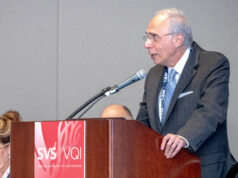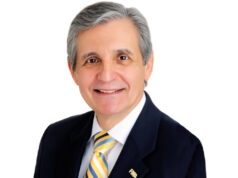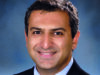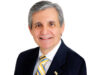
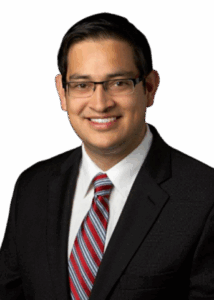
“We are the first major U.S.-based surgical society to present this topic to our membership. Once again, vascular surgery is leading the way,” said Carlos Pineda, MD, a member of the Society for Vascular Surgery (SVS) Cultural Competency Committee (CCC), formerly known as the DEI Committee. Pineda was speaking during his opening remarks at the committee’s fourth annual summit, entitled “Neurodivergence for the Vascular Surgeon.”
The virtual event, held on Oct. 18, placed vascular surgery at the forefront of a growing movement to recognize and support neurodivergent professionals in healthcare. The Summit introduced attendees to the concept of neurodiversity, an umbrella term that includes conditions such as autism spectrum disorder (ASD), attention-deficit/hyperactivity disorder (ADHD), dyslexia and other cognitive variations.
While industries like technology and finance have made strides in embracing neurodivergent talent, medicine—particularly surgical specialties—has only recently begun to explore this area.
The idea for this Summit’s theme was sparked by a conversation within the CCC last fall. Pineda recalled how William Schutze, MD, an SVS member and volunteer, was moved by the 2024 presidential address at the Southern Association for Vascular Society (SAVS) annual meeting. During the talk, David L. Cull, MD, shared his personal experiences with a learning difference.
“To hear a firsthand, honest account from a respectful vascular surgeon about the challenges and strengths associated with learning differences was both fascinating and eye-opening,” said Pineda. “By understanding this topic better, we’ll be able to help our colleagues, trainees and students who are neurodivergent. Many possess extraordinary abilities that, when recognized and supported, can help advance our specialty and improve care for our neurodivergent patients.”
Scott Humphries, MD, medical director of the Colorado Physician Health Program (CPHP), opened the neurodiversity summit with a primer on neurodivergence, exploring its scientific underpinnings and the stigma that often surrounds this topic.
“When we look at neurodivergency, we’re looking at where someone falls on a spectrum,” said Humphries. “It’s not about drawing hard lines, but understanding how traits can affect daily life, and when individuals may need additional support.”
As a psychiatrist, Humphries emphasized that while neurodivergent conditions are often straightforward to treat, overconfidence in diagnosis can lead to missteps.
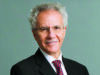
James Henderson, MD, FHEA, a consultant on neurodivergence, a surgeon and deputy lead of Autistic Doctors International, offered a personal perspective. Diagnosed with autism in his mid-forties, Henderson shared how his neurodivergence shaped his approach to medicine.
“To me, autism is simply a way of being,” he said. “It’s not something that can or should be cured. We just perceive and interact with the world differently, and that diversity of thought can be a strength.”
Henderson reminded attendees that neurodivergence is deeply individual. “If you’ve met one [autistic person], you’ve met only one [autistic person],” he said.
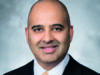
Omid Jazaeri, MD, vice-chair of the CCC, shifted the focus to patient care, highlighting how neurodivergence affects not only providers but also the patients they serve. With 15–20% of adults estimated to be neurodivergent—many undiagnosed until later in life—Jazaeri emphasized the importance of adapting care strategies in vascular surgery where the patient population skews older.
“Caring for your neurodivergent patient isn’t extra work. It’s essential work. It’s work that you must do to accommodate for them,” he said.
Jazaeri outlined practical strategies for improving communication and care, such as avoiding medical jargon, offering visual aids and written summaries, allowing extra processing time, and validating patient perspectives, even when they seem atypical.
“When you’re discussing high-stakes decisions like carotid surgery, or even low-risk procedures like varicose vein treatments, you have to be very specific and clear,” he said. “Don’t assume patients understand; give them the time and tools they need.”
In the Summit’s closing session, Jazaeri called for a shift in mindset: “We need to move away from framing neurodivergence as a deficit. It’s a difference—one that enriches our profession.”
“We have to stop labeling patients as ‘non-compliant’ or ‘difficult’ without understanding the context they’re coming from. There’s a real opportunity here to change how we train, support and evaluate both patients and professionals,” he said.
Patrick Ryan, MD, a summit participant, was also diagnosed with a learning disorder in adulthood. He questioned the speakers about how well SVS accommodates neurodivergence in leadership evaluations. Rana Afifi, MD, chair of the CCC, acknowledged that the organization has room to grow.
“We have a lack of awareness, lack of knowledge and lack of education about this,” she said. “The choices on the leadership track in the SVS were made in a way where it did not at some point give room for uniqueness and different skills.”
In recent years, the CCC itself has updated its rubrics to focus more on competencies and less on traditional markers such as position or background when selecting nominees.
Jazaeri proposed several initiatives as action items for the SVS to tackle over the next three to five years, including advocating with the American College of Surgeons (ACS) and American Medical Association (AMA) for neurodiversity standards in surgery, launching pilot grants for neurodivergence research, embedding neurodiversity into SVS physician well-being frameworks and establishing mentorship networks for neurodivergent vascular surgeons.
“It affects all of us,” Pineda said. “Trainees, colleagues, coworkers, family, patients and sometimes ourselves. Brushing it with a framework is definitely going to help raise awareness and support. Approaching things with curiosity and not judgment will help. That’s why we have to be open to different opinions. Making this change in our behavior will definitely impact all those around us.”