Brought to you by:

The people and devices that put ‘the vascular in vascular’
The people, discoveries, innovations and events that brought the vascular surgery profession to where it is today will form the subject matter for this year’s John Homans Lecture—“Who put the vascular in vascular surgery?”—at VAM 2025.
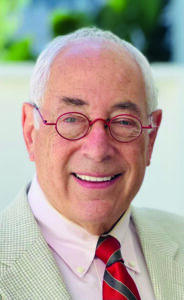
Jerry Goldstone, MD, an adjunct professor at Stanford University College of Medicine, will pore over some of the most important developments in the field since the founding of the SVS in 1946, which set the stage for the modern vascular surgical specialty.
“When the 31 founding members were gathered for their first meeting in 1947, how could they possibly have imagined what vascular surgery is like today,” Goldstone mused in an interview with VS@VAM ahead of his lecture, which takes place this morning on Morial CC’s Second Floor (Room 208–210) from 10:45–11:15 a.m. “They formed this organization because there was no organization devoted to vascular surgery. Most were general surgeons with a special interest in vascular, some were cardiac people with a special interest in vascular.”
What they helped shape yielded some tremendously important advances over the years, minting vascular surgery as a bona fide, standalone specialty in its own right, Goldstone says. After canvassing colleagues in the field, he landed on “about 10 of the most important things that got us from zero to a place, now, where there is one big society, 6,000 members, our own journals, recognition internationally, good science.”
Among the topics he will chart are the formation of the SVS and its merger with the American Association for Vascular Surgery (AAVS), previously the North American Chapter, International Society for Cardiovascular Surgery (NA-ISCVS); the development of grafts; the coming of the vascular lab and duplex ultrasound; carotid endarterectomy (CEA); two innovations in venous disease in the shape of the the Greenfield filter for pulmonary embolism (PE) and laser ablation of the great saphenous vein; the founding of the Journal of Vascular Surgery (JVS); and the birth of the vascular surgery fellowship. The rise of CEA helped push the vascular specialty forward, Goldstone remarks. “After all, we are a surgical specialty, and known by the operations we do, and one of the most common and distinctive is CEA,” he explains.
“It put vascular surgeons into contact with other people, in other specialties, and elevated the profession beyond its own little cocoon, as maybe a little different from general surgery. It put vascular surgery as a profession on the map in a broader sense.”