Brought to you by:

Not all carotid procedures are equal after patients suffer a postoperative stroke

Comparative analysis looks at stroke-related disability and mortality after three modes of carotid revascularization. Strokes after transfemoral carotid artery stenting (TFCAS) were “the most disabling and lethal” when compared with transcarotid artery revascularization (TCAR) and carotid endarterectomy (CEA) in a…
Drilling into controversies in field of asymptomatic severe carotid stenosis management

Some of the enduring controversies in the management of asymptomatic severe carotid stenosis will underpin an educational session set to take place today. The session tackles debate around the deployment of carotid revascularization strategies in both standard- and high-risk patient…
Patient selection may explain ‘counterintuitive’ relationship between carotid stenting volume and outcomes in new study
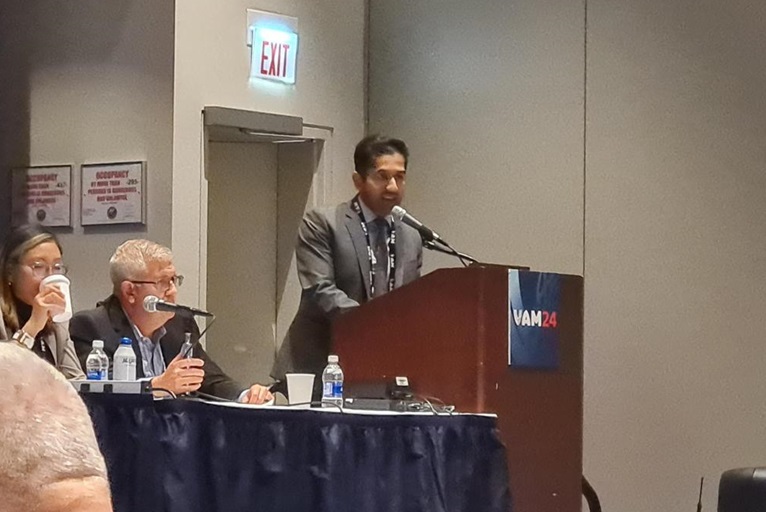
High stroke and death rates relating to carotid stenting in the Pacific Northwest may be driven by the selection of high-risk patients with less than 80% stenosis, and reducing the frequency of stenting in this high-risk group—along with better adherence…
TCAR and endarterectomy both ‘reasonable’ but stenting linked to worse outcomes in kidney disease patients

A study examining outcomes between different carotid revascularisation procedures has concluded that transcarotid artery revascularisation (TCAR) and carotid endarterectomy (CEA) both represent a “reasonable choice” in severe chronic kidney disease (CKD) and haemodialysis patients—but transfemoral carotid artery stenting (TF-CAS) appears more likely to result…
TCAR and endarterectomy both ‘reasonable’ but stenting linked to worse outcomes in kidney disease patients

A study examining outcomes between different carotid revascularization procedures has concluded that transcarotid artery revascularization (TCAR) and carotid endarterectomy (CEA) both represent a “reasonable choice” in severe chronic kidney disease (CKD) and hemodialysis patients—but transfemoral carotid artery stenting (TF-CAS) appears…
Patient selection may explain ‘counterintuitive’ relationship between carotid stenting volume and outcomes in new study
High stroke and death rates relating to carotid stenting in the Pacific Northwest may be driven by the selection of high-risk patients with less than 80% stenosis, and reducing the frequency of stenting in this high-risk group—along with better adherence…
New data underscore physician experience levels required to derive benefit from transfemoral carotid artery stenting

Data from a new study that maps out the levels at which adverse postoperative events decrease following transfemoral carotid artery stenting (TfCAS) based on depth of physician experience with the procedure represent an “absolute minimum threshold of learning,” the lead…