Brought to you by:

What the cost of cancer care teaches vascular specialists

How does the cost of treating critical limb-threatening ischemia (CLTI) in the U.S. stack up to cancer care? That was the question at the heart of research conducted by Richard W. Walsh, MD, and colleagues at the University of Texas…
Cost-effectiveness outcomes defy expectations in latest BEST-CLI data drop

The open surgical approach will prove to be “slightly superior” to endovascular intervention in terms of cost per life year gained, while the latter will be slightly superior to open surgery with regard to cost per quality-adjusted life year gained,…
New study validates BEST-CLI trial results, ‘suggesting generalizability’

A new propensity-matched analysis of more than 1,100 lower extremity revascularization procedures carried out in patients with chronic limb-threatening ischemia (CLTI)—which aimed to help solve the puzzle of why the BEST-CLI trial did not lead to a pick-up in the…
Redefining ‘optimal medical therapy’ for vascular patients

Vascular and endovascular surgeons are frequently the only specialists other than primary care involved in the longitudinal care of their patients afflicted with clinically active vascular disease. As such, while scrutinizing the longitudinal and periprocedural outcomes in their patients, involvement…
Corner Stitch: Becoming a community-engaged vascular surgeon

At the end of my intern year, I was tired. It had been a long year of rounding, placing orders, seeing consults and refining basic suturing skills on primarily general surgery rotations—an experience not dissimilar from many of my fellow…
SVS leadership and membership integral to ‘far-reaching’ BEST-CLI trial

Support from the Society for Vascular Surgery (SVS) and, later, funding from the SVS Foundation were integral to the BEST-CLI trial, said one of the landmark trial’s leaders. BEST-CLI sought to determine the best revascularization treatment strategy—surgical or endovascular—for patients…
Study demonstrates textbook outcomes occur less than a quarter of the time after CLTI revascularization

Textbook outcomes remain “very rare” after revascularization for chronic limb-threatening ischemia (CLTI), with the main driver being an enduring inability to attain complete wound healing and to return patients to their preoperative ambulatory status, according to the lead researcher behind…
Countdown to New Orleans: VAM 2025 set to explore innovation

The 2025 Vascular Annual Meeting (VAM) will take place in New Orleans, Louisiana, from June 4–7, with a particular focus this year on innovation. Key program highlights coming up this year include case-based learning sessions entitled “Optimal Management of the…
BEST-CLI trial spline model analysis breaks new ground in assessing the impact of CKD severity on CLTI outcomes

A new analysis of the BEST-CLI trial has produced the first evidence-based glomerular filtration rate (eGFR) value—30 mL m2—as the cutoff below which patients with chronic limb-threatening ischemia (CLTI) experience significantly worse outcomes after revascularization regardless of the treatment modality…
Deep vein arterialization: Much remains to be learned but use poised to expand in patients with less severe ischemia
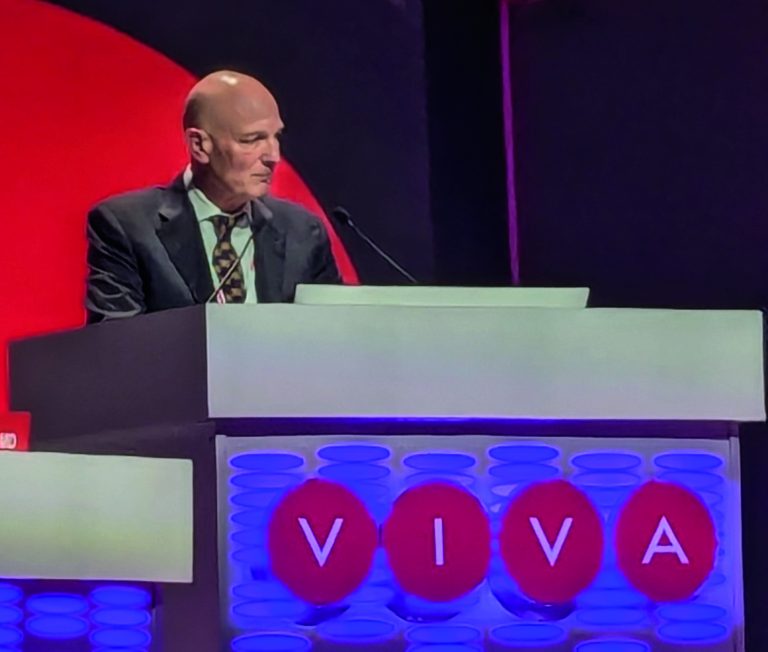
These remain early days for transcatheter arterialization of the deep veins (TADV) in the setting of patients with severe chronic limb-threatening ischemia (CLTI), says Daniel Clair, MD, one of the principal investigators in key clinical trials of the procedure, but…