Brought to you by:

Study strengthens case for conservative therapy in claudication over early intervention

Early peripheral vascular intervention (PVI) for claudication is associated with higher rates of progression to chronic limb-threatening ischemia (CLTI) and major adverse limb events (MALE) compared with conservative medical management, according to data presented at the 2026 annual winter meeting of the…
Premature PAD tied to higher amputation rates

Patients with premature peripheral arterial disease (PAD) face a significantly increased risk of mid- and late-term major amputation, according to a new analysis of the linked Vascular Quality Initiative and Medicare dataset (VQI-VISION). The research was presented at the 2026…
Claudication: Medicare-linked data outline higher rates of progression to CLTI after revascularization among Black women

Black women with claudication had the highest rate of progression to chronic limb-threatening ischemia (CLTI) after lower extremity revascularization at 180 days, new data from a Medicare-linked Vascular Quality Initiative (VQI) procedural registry show. The results were demonstrated in a…
Meta-analysis: Drug-coated devices show comparable aggregate outcomes to non-drug-coated devices in CLTI

Drug-coated balloon (DCB) angioplasty appears to offer similar benefits as plain old balloon angioplasty (POBA), with or without stenting, for patients with chronic limb-threatening ischemia (CLTI) who are undergoing endovascular femoropopliteal segment lower extremity revascularization, according to new meta-analysis data…
Esprit BTK: Drug-eluting resorbable scaffold poised as first-line therapy for below-the-knee CLTI
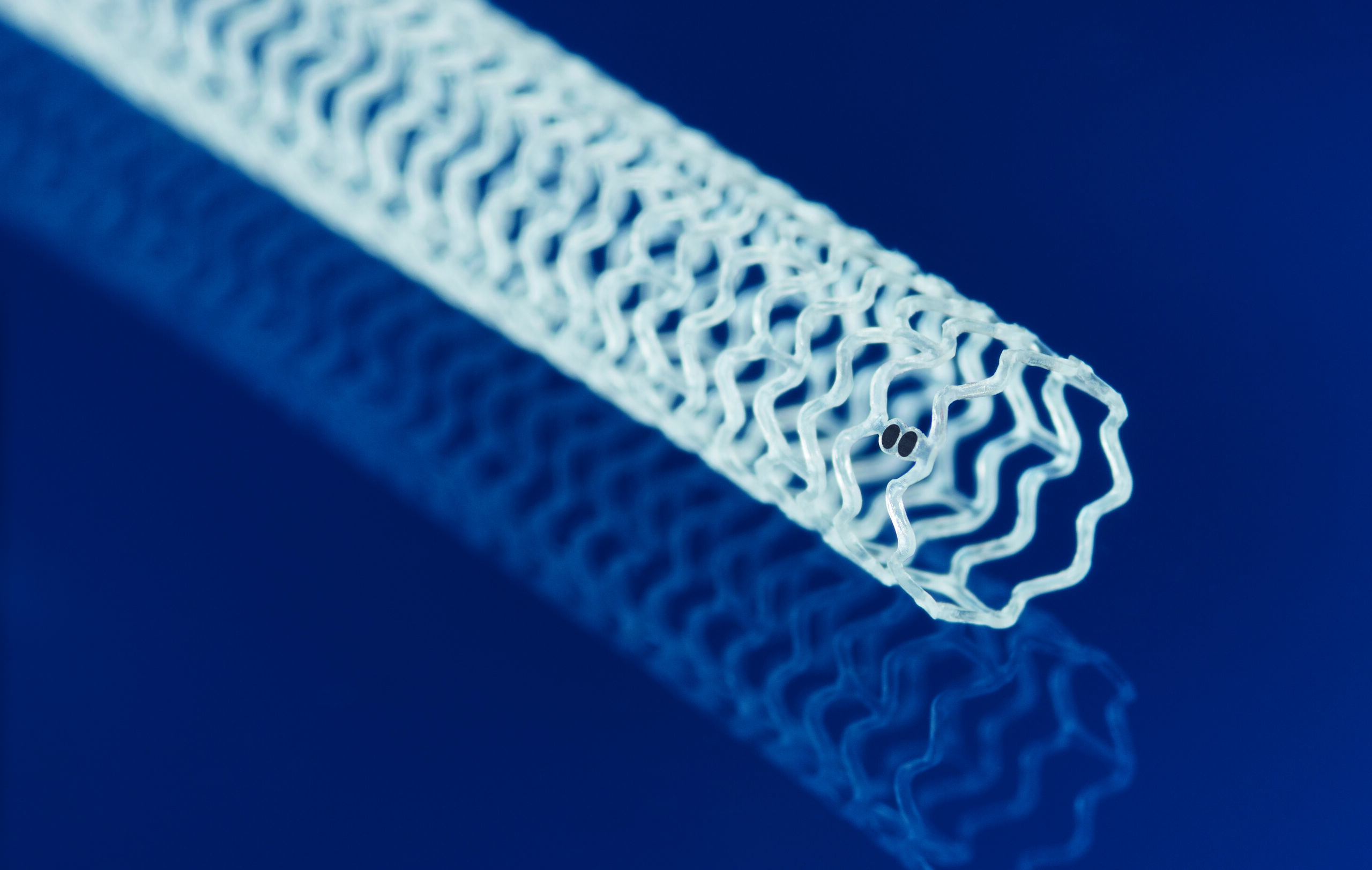
This advertorial is sponsored by Abbott. “We now have something on label and FDA [Food and Drug Administration] approved that we can use as a first-line therapy for tibial vessels,” Richard Pin, MD, chief of vascular surgery at Southcoast Health…
‘We need to look at the totality of evidence’: VIVA panelists examine SWEDEPAD findings
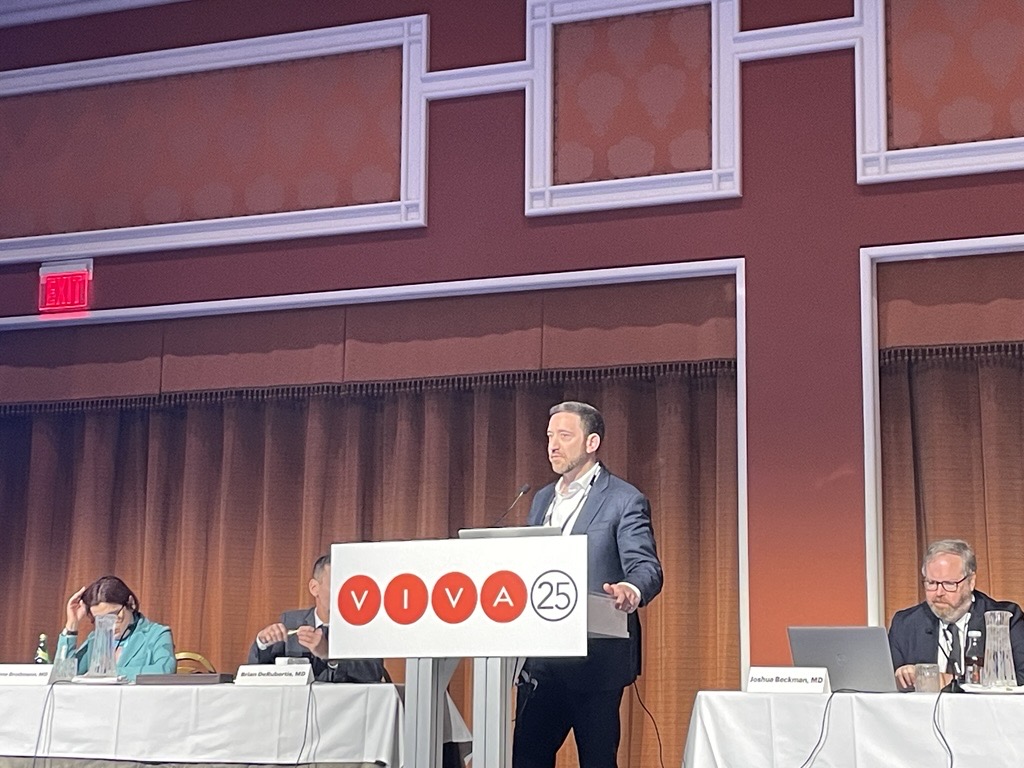
A focused session at the 2025 Vascular Interventional Advances (VIVA) conference (2–5 November, Las Vegas, USA) homed in on the latest findings from the SWEDEPAD registry-based randomized controlled trials (RCTs), with panelists discussing the results with reference to the wider…
Cracking CLTI: How Shockwave Javelin intravascular lithotripsy is opening up new frontiers in heavily calcified peripheral arterial occlusive disease

This advertorial is sponsored by Shockwave Medical. Three vascular surgeons discuss how and when they deploy the transformative Shockwave Javelin first-of-its-kind Forward Intravascular Lithotripsy (IVL) Platform in cases of heavily calcified peripheral vascular occlusive disease. Viewpoints on when and how…
PROMISE III: Six-month data ‘reinforce’ case for TADV in no-option CLTI patients
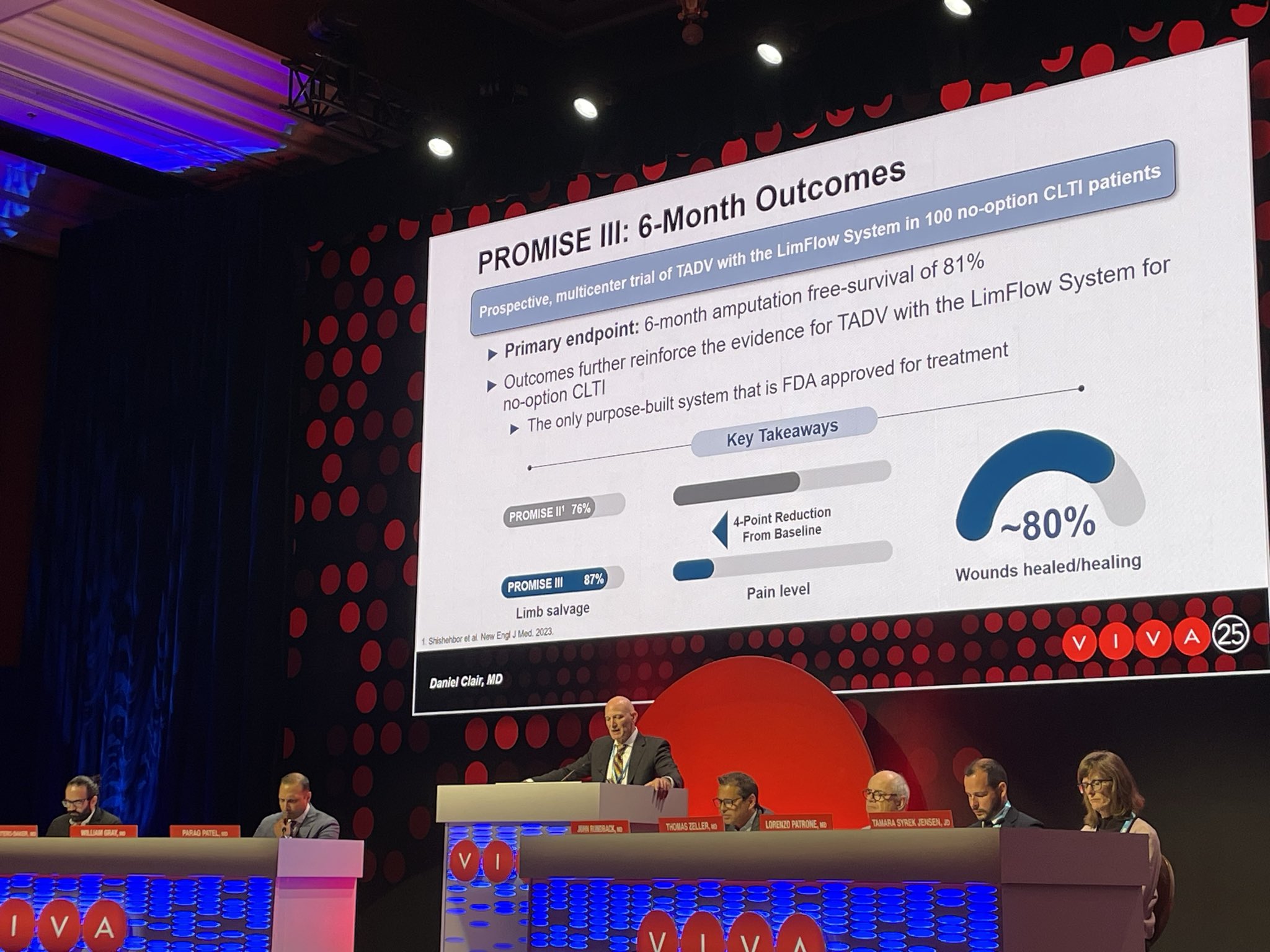
Six-month outcomes among no-option chronic limb-threatening ischemia (CLTI) patients treated using transcatheter arterialization of the deep veins with the LimFlow system (Stryker/Inari Medical) in the PROMISE III trial showed a 81% rate of amputation-free survival. Principal investigator Daniel Clair, MD,…
Non-contrast MRI outperforms DSA in detecting below-the-knee arteries in CLTI patients
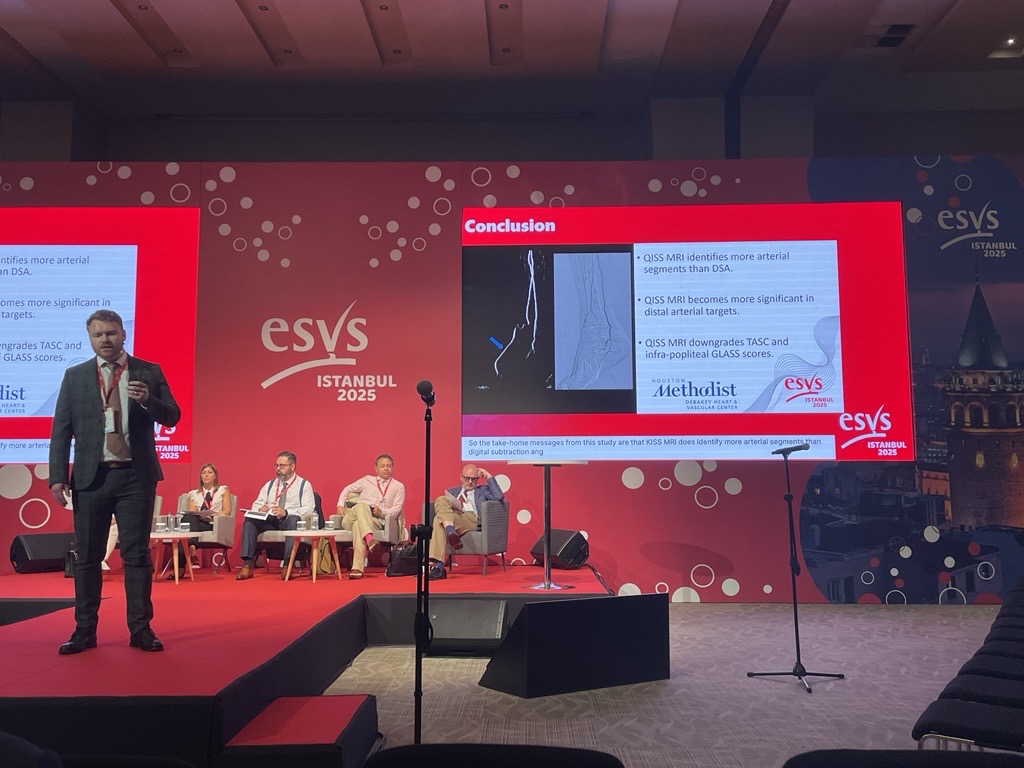
Researchers have shown that quiescent-inflow single-shot (QISS) magnetic resonance imaging (MRI) is able to identify more below-the-knee vessel segments than digital subtraction angiography (DSA) in patients with chronic limb-threatening ischaemia (CLTI). Taking first prize for best abstract, Alexander Crichton (Houston…
TADV without venous branch coiling still yields strong limb salvage rates among ‘no-option’ CLTI patients
Transcatheter arterialization of deep veins (TADV) done without the coiling of venous outflow branches achieved sufficient distal perfusion after three months among “no-option” chronic limb-threatening ischemia (CLTI) patients, according to results from a study published in the Journal of Vascular…