Brought to you by:

TCAR may be associated with favorable outcomes in restenotic carotid lesions, study suggests

Transcarotid artery revascularization (TCAR) may be associated with favorable in-hospital outcomes for the treatment of restenotic carotid lesions after carotid endarterectomy (CEA), suggests a study that also evaluated in-hospital outcomes of transfemoral carotid artery stenting (TFCAS) and redo-CEA. Writing in…
Analysis shows TCAR is more cost effective than CAS for carotid stenosis

Transcarotid artery revascularization (TCAR) produces similar outcomes to the gold standard treatment for carotid stenosis—carotid endarterectomy (CEA)—but comes at a greater cost. This was among the conclusions presented by Sheila M. Coogan, MD, at the Vascular Annual Meeting (VAM) in…
USPSTF reaffirms 2014 recommendation against screening for asymptomatic carotid stenosis

The United States Preventive Services Task Force (USPSTF) has recommended against screening for asymptomatic carotid artery stenosis in the general adult population—a reaffirmation of the 2014 D recommendation. The USPSTF statement came in a recommendation statement recently published in the…
CEA provides inhibitive effect on stroke prevention for eight years over no surgical intervention

Carotid endarterectomy (CEA) has a small but significant effect on stroke prevention through eight years compared with no surgery, investigators who carried out a cohort analysis in a large integrated health system found. A research team led by Robert Chang,…
Study identifies disparities in early revascularization for symptomatic carotid stenosis

Data from a new study carried out in Texas found disparities in those undergoing early carotid revascularization along gender, race and ethnic lines. A research team from Baylor College of Medicine in Houston demonstrated that women are less likely to…
Unveiling an AI-driven risk stratification tool to attain better stroke prediction

It’s one of the most intractable areas of focus in all of vascular disease, and the source of—inarguably, Brajesh K. Lal, MBBS, emphasizes—the most intensely studied vascular surgical procedure anywhere in the sphere of the specialty. And for some years,…
CEA found to significantly improve neurocognitive function 30 days after procedure
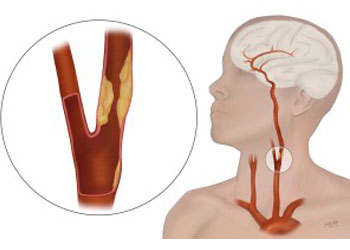
Revascularization by way of carotid artery endarterectomy (CEA) is linked to significant improvements in neurocognitive function a month post- procedure across multiple domains, a July 1 scientific session will hear. Furthermore, presenting author Natalie Sridharan, MD, assistant professor of surgery…
Report: Safely executing CEA during COVID-19
A carotid endarterectomy (CEA) carried out on a 71-year-old stroke patient who tested positive for COVID-19 is highlighted in a recent case report as an example of the procedure’s safe execution under the strains of the pandemic. Tej M. Singh, MD,…
Patients with asymptomatic severe carotid stenosis may be successfully managed medically, researchers find ‘relatively high’ long-term survival

STEAMBOAT SPRINGS, Colo.—High-risk patients with asymptomatic severe carotid stenosis may be successfully managed medically, delegates at the winter meeting of the Vascular & Endovascular Surgery Society (VESS) held in Steamboat Springs, Colorado, Jan. 30–Feb. 2, were told. That was the…
How to maximize a minimal incision
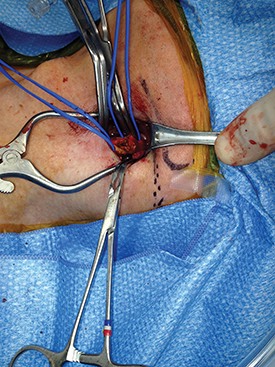
Mini-incision carotid surgery was first reported (not necessarily performed) by Ascher et al in 2005. In light of this report and an ever-growing patient demand for minimally invasive procedures, it is surprising that this procedure has not been widely adopted…