Brought to you by:

A brilliant plan to increase vascular surgeons’ income—and decrease the incidence of stroke!

I have come up with a brilliant plan that will decrease the incidence of stroke nationwide, provide an excellent source of income for vascular surgeons, and reduce vascular surgeons’ stress and burnout. My concept is based on two recent trends…
Female sex ‘should be considered an independent risk factor’ for new stroke occurrence after carotid revascularization in symptomatic patients
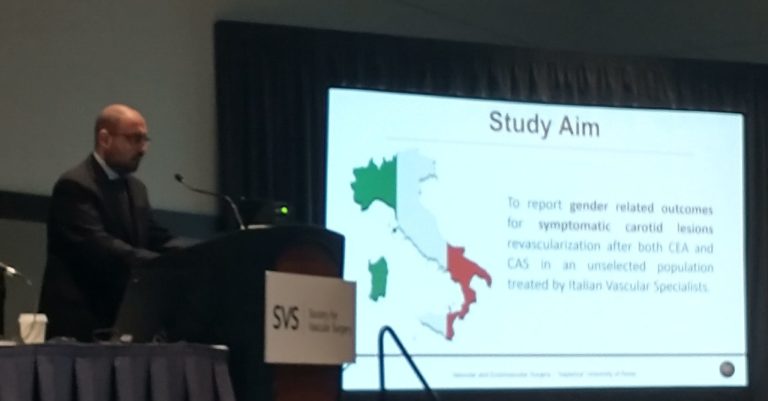
A preliminary report lends evidence to support female sex being considered as an independent risk factor for new stroke occurrence after carotid revascularization in symptomatic patients, according to a research team from Italy who presented at the International Chapter Forum…
Study of post-carotid endarterectomy surveillance prompts protocol discussion
The results of an analysis of nearly 2,000 carotid endarterectomies (CEAs) “challenge the notion” that patients benefit significantly from the current post-operative surveillance guidelines, and suggest that these may be contributing to “oversurveillance”—an issue that should be addressed in future…
Carotid stenting demonstrates comparable short- and long-term results to endarterectomy

Pooled patient-level data from more than 2,500 asymptomatic, non-octogenarian subjects have shown that carotid artery stenting (CAS) achieved comparable short- and long-term results to carotid endarterectomy (CEA). The findings of this analysis have been published by Jon Matsumura (University of…
Early TCAR results in higher ipsilateral postoperative stroke rates when compared to carotid endarterectomy

Adham Elmously, MD, a fellow at New York Presbyterian Hospital, New York, is set to present outcomes of early transcarotid artery revascularization (TCAR) vs. carotid endarterectomy (CEA) after acute neurologic events during the opening day of the Vascular Annual Meeting…
Silent coronary ischemia: FFRCT reduces cardiac death, myocardial infarction in carotid endarterectomy patients out to three years, study finds

Diagnosis of silent, or unsuspected, coronary ischemia in patients undergoing carotid endarterectomy (CEA) using fractional flow reserve-computed tomography (FFRCT), with selective postoperative coronary revascularization, significantly reduced cardiovascular death, cardiac death and myocardial infarction through three years of follow-up when compared…
FDA approves expanded indications for TCAR’s Enroute stent
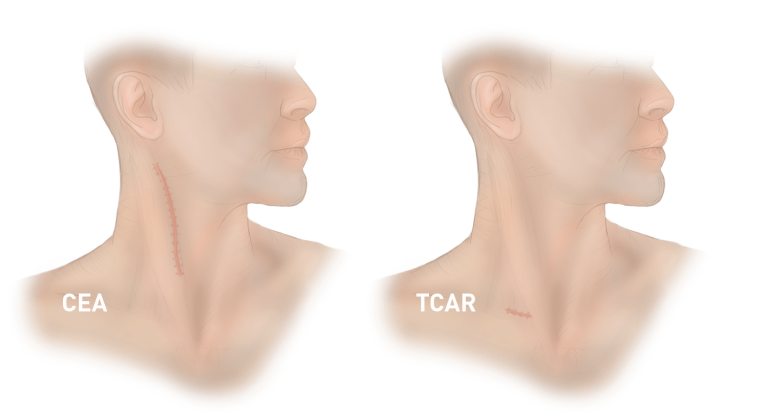
The Food and Drug Administration (FDA) approved expanded indications for the Enroute stent system—part of the transcarotid artery revascularization (TCAR) procedure—to include patients at standard risk for adverse events from carotid endarterectomy (CEA), Silk Road Medical announced today. Previously, the…
Randomized trial suggests carotid endarterectomy does not affect dementia risk

Carotid endarterectomy (CEA) does not appear to either reduce or increase the risk of dementia, despite it having been shown to reduce stroke risk. This is according to 20-year results from the ACST-1 trial, published online ahead of print in…
VESS 2022: Novel use of TCAR to treat complex brachiocephalic disease shown to be effective, researchers report

A “unique” case series of patients undergoing transcarotid artery revascularization (TCAR) in which the system was put to novel use for proximal intervention or incorporated in a hybrid approach to complex brachiocephalic disease demonstrated it to be effective in “providing…
Ontario registry risk model provides ‘reliable’ predictions of stroke, death following carotid endarterectomy
The Ontario carotid endarterectomy registry (OCER) model was found to be the most reliable predictor of stroke or death after carotid endarterectomy (CEA) among 17 models assessed. This was the primary finding of a systematic review published in Stroke by…