Brought to you by:

TCAR demonstrates durable long-term outcomes with few reinterventions

Across more than 1,000 transcarotid artery revascularization (TCAR) procedures performed over eight years at a single high-volume institution, a recent study found only 12 patients required reintervention — a 1.1% rate that speaks to the durability of TCAR. The data…
TCAR may offer lower neurological risk than CEA in older symptomatic patients

A large retrospective analysis of more than 350,000 patients drawn from the Vascular Quality Initiative (VQI) database found transcarotid artery revascularization (TCAR) maintained a more favorable neurological risk profile compared with carotid endarterectomy (CEA) in older symptomatic patients, with the…
Carotid endarterectomy and TCAR show comparable outcomes in patients with high cardiac risk

Carotid endarterectomy (CEA) and transcarotid artery revascularization (TCAR) showed similar perioperative safety and long-term effectiveness in patients with severe cardiac comorbidities, according to a recent retrospective review of a prospectively maintained database. Aidin Baghbani, MD, first author on the study…
CREST-2: Landmark trial finds benefit from carotid stenting
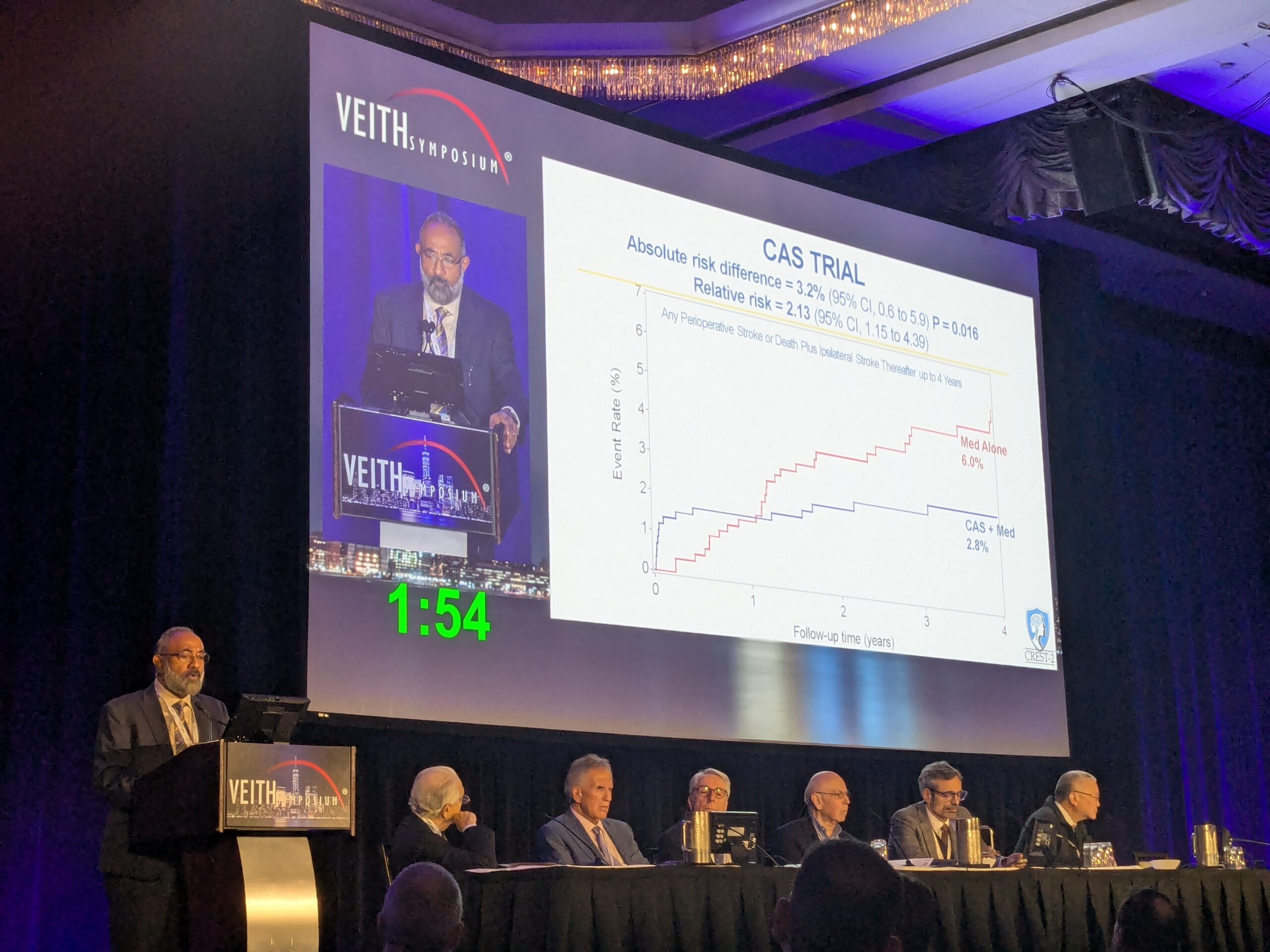
The National Institutes of Health (NIH)-funded CREST-2 study has found that, for people with high-grade asymptomatic carotid artery stenosis who have not experienced recent stroke symptoms, a carotid artery stenting (CAS) procedure—combined with intensive medical therapy—significantly lowered stroke and death…
PERFORMANCE III demonstrates ‘very low’ 30-day event rates for dual neuroprotection in TCAR
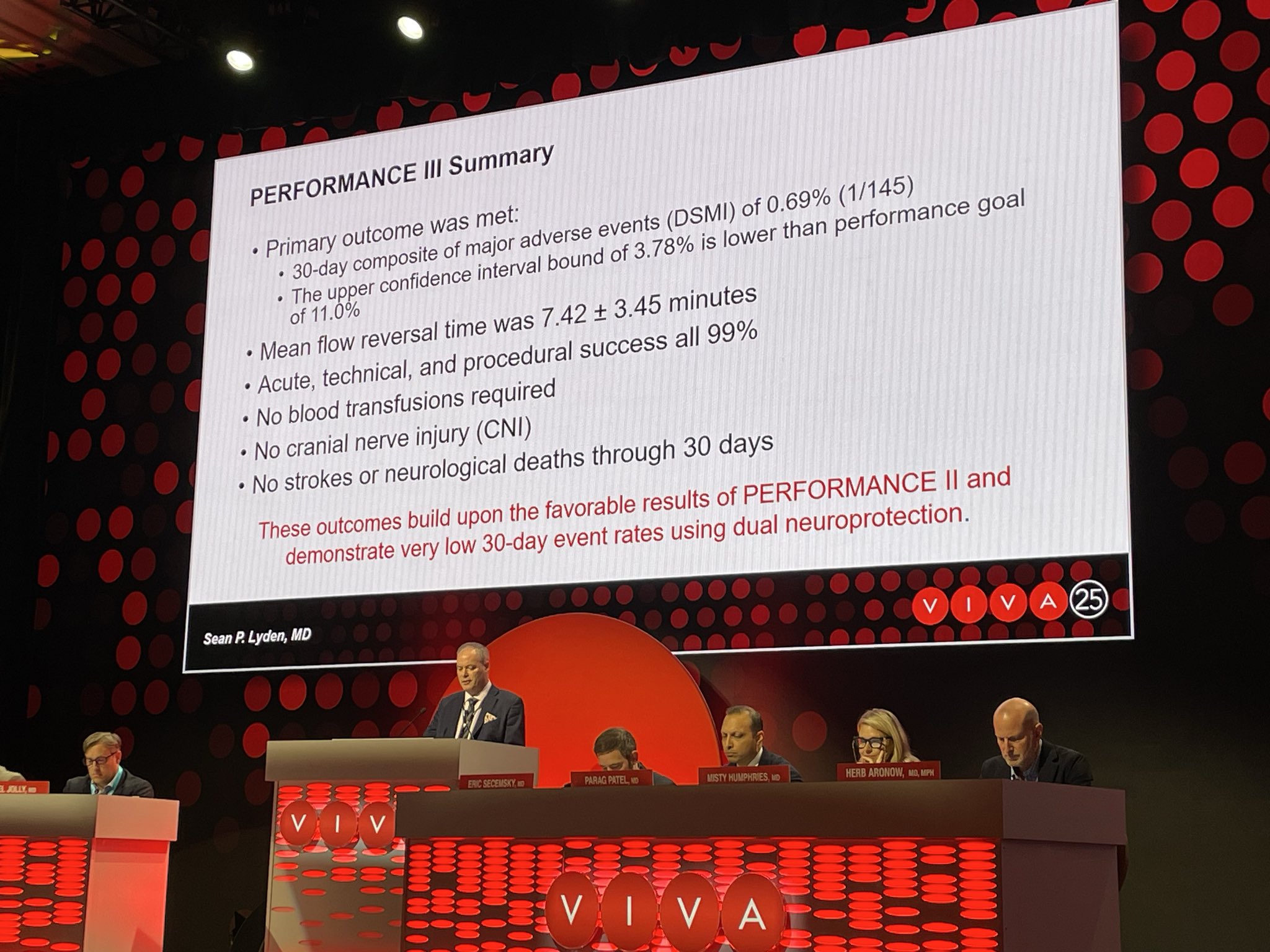
Thirty-day results from the PERFORMANCE III study of integrated embolic protection (IEP) in transcarotid artery revascularization (TCAR) demonstrate “very low” 30-day event rates. Sean Lyden, MD, chair of vascular surgery at the Cleveland Clinic in Cleveland, Ohio, shared this finding…
‘Excellent’ one-year outcomes from ROADSTER 3 show TCAR is ‘safe and effective’

One-year outcomes in the ROADSTER 3 post-approval study to evaluate the safety and effectiveness of transcarotid artery revascularization (TCAR) using the Enroute stent and neuroprotection system (Boston Scientific) in standard-surgical-risk patients revealed a 1.5% intention-to-treat rate of composite major adverse…
Not all carotid procedures are equal after patients suffer a postoperative stroke

Comparative analysis looks at stroke-related disability and mortality after three modes of carotid revascularization. Strokes after transfemoral carotid artery stenting (TFCAS) were “the most disabling and lethal” when compared with transcarotid artery revascularization (TCAR) and carotid endarterectomy (CEA) in a…
Drilling into controversies in field of asymptomatic severe carotid stenosis management

Some of the enduring controversies in the management of asymptomatic severe carotid stenosis will underpin an educational session set to take place today. The session tackles debate around the deployment of carotid revascularization strategies in both standard- and high-risk patient…
Debate verdict: Carotid endarterectomy maintains its golden hue

The established “gold-standard” approach to carotid revascularization remained enshrined as the go-to operation as far as a 2025 Charing Cross (CX) International Symposium audience was concerned. Some 76% of those who voted in the post-debate poll sided with Barbara Rantner,…
Reflections from VESS: Internal mentoring, external inspiration and really good skiing

Just over a week ago, I was racing my medical school vascular surgery attending, Dr. Adam Doyle, down a Breckenridge run memorably named “The Devil’s Crotch.” We were celebrating fresh powder, the conclusion of an excellent fellows program, and the…