
For decades, vascular surgery had few female surgeons. The specialty carved out its territory with increasingly sophisticated techniques, but the operating rooms where surgeons performed carotid endarterectomies and aortic repairs remained overwhelmingly male. Only in recent years have women started entering the field in significant numbers.
Today, women comprise 14.6% of practicing vascular surgeons. But as more enter the profession, they aren’t getting equal access to the complex, career-defining cases that make vascular surgery what it is.
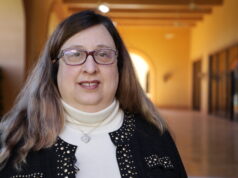
Britt Tonnessen, MD, associate professor of vascular surgery and associate program director of the vascular residency program at Yale School of Medicine, has a career spanning nearly 20 years. Over that time, she has observed talented female surgeons struggle to secure the same volume and complexity of cases as their male counterparts despite identical training and credentials. When a study was published in the Journal of Vascular Surgery (JVS) in June 2025 documenting how significant these disparities are, Tonnessen felt the data deserved a response.
“The current study brought forth important data that should raise questions and concerns as to why highly trained female surgical subspecialists had lower volume of cases when compared to men, despite an uptick over time,” said Tonnessen.
Tonnessen co-authored a letter to the editor published in JVS in November 2025, which not only acknowledged the problem but calculated what the disparities actually cost female surgeons.
Numbers Behind the Gap
The study analyzed medical claims data from the Centers for Medicare and Medicaid Services from 2017 to 2021, examining who performs common vascular procedures across all specialties.
The findings showed that board-certified vascular surgeons performed the highest percentage of major vascular procedures: 68.6% of open infrarenal aortic interventions, 65.2% of endovascular aneurysm repairs (EVARs), 59.1% of carotid endarterectomies, 60.3% of open arteriovenous fistulas, 59.3% of endovascular arteriovenous fistulas, 71.4% of open infrainguinal interventions, and 45.7% of endovascular infrainguinal interventions.
The majority of all procedures were performed by male vascular surgeons, ranging from 88.3% to 94.7% depending on the procedure type. However, vascular surgery demonstrated the greatest increase in procedures performed by women over the five-year period.
Female vascular surgeons performed between 6-10% of endovascular aortic repairs and carotid endarterectomies over the study period. Considering women comprise only 14.6% of vascular surgeons overall, that still represents a significant deficit. An additional 4-7 EVARs and 7-14 carotids endarterectomies per year should be going to female vascular surgeons but aren’t.
The letter noted that surgical complexity is linked to work relative value units (RVUs) — a metric used to measure the value of medical services for physician compensation and billing — and potentially widens the pay gap in productivity-based practice settings. Higher complexity surgical procedures generate more RVUs while lower complexity procedures generate fewer.
In productivity-based compensation models, physicians who perform more high-RVU procedures earn more. This makes the disparity in surgical-case complexity a direct financial concern.
“In the fee-for-service and RVU-centric models of employment, such a differential has significant financial implications,” said Tonnessen.
Mining the data
Sophia Trinh, MD, lead author of the study and an internist in the Department of Surgery at Louisiana State University Health Sciences Center in New Orleans, caught Tonnessen’s attention.
“One of the main reasons I wanted to examine surgeon gender disparities is due to my personal experience as a female surgery trainee,” said Trinh. “Because I will be part of the workforce one day, these disparities apply to me.”
All specialties showed a significant increase in procedures performed by females, with one glaring exception: Thoracic and cardiac surgery showed no growth at all.
“I found it surprising how far behind some of the other surgical specialties are, such as cardiothoracic surgery,” said Trinh. “For example, women are less likely to get operative referrals but earn less RVUs per case compared to men. In our study, women performed the lowest proportion of higher-earning RVU cases and the highest proportion of lower earning RVU cases.”
The referral gap in vascular surgery
Tonnessen’s letter addressed a larger issue: Why are female surgeons performing fewer carotid, aneurysm, and bypass procedures?
“Some may speculate that women in vascular surgery are less interested in these cases or choose less vigorous schedules,” the letter said. “Such explanations are convenient but do not resonate.”
The real answer, Tonnessen says, lies in referral patterns shaped by implicit bias. Research shows that surgeon gender influences case referrals.
“Extrapolating, this practice potentially affects operative referrals that come from colleagues in other male-dominated specialties such as cardiology, cardiothoracic surgery, and orthopedics,” said Tonnessen. “Women in vascular surgery also may be presumed to be experts in some areas like leg veins, for example, but not in aortic disease.”
Studies cited in the letter show that female surgeons experience a decrease in referrals after a single complication — a penalty that male surgeons don’t face. Female surgeons also receive more nonoperative referrals.
“Patients and referring clinicians may have different expectations for women surgeons that translates to longer appointment times and emphasis on ‘softer’ and nonoperative skills,” said Tonnessen. “Collectively, such expectations place additional burdens on female surgeons and can lead to practice dissatisfaction and burnout.”
Vascular surgery’s lead in female recruitment
When it comes to improving gender equality, vascular surgery is doing better than most surgical specialties. The field has made intentional efforts to recruit women, and results are showing.
“Over the years, vascular surgery has had a lot of active initiatives to recruit women to the specialty,” said Trinh. “For example, in 2012 the Society for Vascular Surgery launched an initiative that focused on recruiting more women to the specialty, and an integrated track is much more appealing to women who must consider the length of training, especially when considering having children.”
From 2007 to 2016, there was a 56% increase in female trainees in vascular surgery.
A 2020 study examined what women were being advised by their mentors when applying to surgical programs. “Over 50% of cardiothoracic surgeons, neurosurgeons, and urologists who participated in the survey advised that only men pursue cardiothoracic surgery,” said Trinh. “There is still a lot of work to done when advising and actively recruiting women to these fields.”
With medical schools now enrolling more than 50% women, failing to recruit and retain female surgeons means depleting the talent pool during a growing physician shortage. And female surgeons have outcomes on par with male surgeons. A 2022 Canadian study showed decreased mortality and readmissions among female surgeons.
A path to equity
“Leaders and administrators play a critical role to promote their women surgeons’ expertise and to address the inevitable biases that arise,” said Tonnessen. “Practice patterns can be proactively reviewed, such as distribution of unassigned referrals and allocation of resources such as support staff, marketing, and operative block time.”
Trinh emphasizes intervention at the earliest stages. “This starts at the medical school level, when most students’ interest in surgery begins,” she said. “I remember being a medical student and a lot of my friends said they didn’t want to do surgery because of the lifestyle or the stereotype that the specialty wasn’t women-friendly.”
Malachi Sheahan III, MD, chair of the Department of Surgery at Louisiana State University Health Sciences Center in New Orleans and medical editor of Vascular Specialist, noted the field’s progress while acknowledging ongoing responsibility.
“As a specialty, vascular surgery has made an intentional effort to add women to our workforce,” said Sheahan. “I am especially proud of the recruitment scholarship program of the Southern Association for Vascular Surgery, where 70% of the recipients who went on to match in vascular surgery were women.”
“It would be foolish, however, to just blindly add women to our trainee pools without monitoring their progress at every level,” said Sheahan. “It is our responsibility to ensure they are successfully completing their training, joining the workforce, and having productive careers.”
Next steps
Both Tonnessen and Trinh agree that more research is needed to fully understand the disparities documented in the study.
“To address the disparities, we need to understand the why more comprehensively,” said Tonnessen. “I would be interested to see subgroup analyses that evaluate vascular surgeons by geographic region, practice type, and stage of career.”
Trinh isn’t currently tracking post-2021 trends, but she’s curious to see whether other surgical specialties will show growth in female representation. “In terms of a meaningful benchmark by 2030, if the proportion of women performing vascular procedures meets the trend of women matriculating from medical school, this would be a considerable stride,” she said.
The study examined practicing vascular surgeons, not trainees. The 56% increase in female trainees from 2007 to 2016 hasn’t yet fully filtered into the workforce data.
“I think as more female trainees enter the workforce, the number of procedures performed by women will continue to increase and near the trend seen with medical school graduates,” said Trinh.
But achieving equity requires more than waiting for demographics to shift. It requires acknowledging that highly trained female surgical subspecialists face barriers their male counterparts don’t — barriers that manifest in case volumes, RVU generation, compensation, and career satisfaction.
“Women in vascular surgery deserve equitable access to expertise-building cases,” Tonnessen wrote in the letter. The data show progress, but the imbalance underscores barriers that still need to be dismantled — case by case, referral by referral