Antithrombotic therapy following iliac vein stenting varies widely and long-term outcomes differ significantly depending on the underlying condition, according to new research.
The retrospective study included 314 patients who underwent iliac vein stenting at Yale New Haven Hospital between 2012 and 2024. The primary objective was to assess the long-term risks of bleeding, venous thrombosis and arterial thrombosis in patients with nonthrombotic iliac vein lesions (NIVL) or post-thrombotic syndrome.
“What distinguishes this study from others is that it looks at the comprehensive view of all thrombotic and bleeding risks patients face when they’re getting these medications,” said Cassius Iyad Ochoa Chaar, MD, MPH, MS, associate professor of surgery at Yale School of Medicine and senior author on the study.
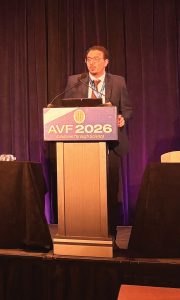
The findings, presented at the 2026 annual meeting of the American Venous Forum (AVF) in Denver, Colorado (Feb. 28-March 4), found there was significant variation in antithrombotic regimens prescribed following venous stenting and outcomes differed markedly depending on the underlying condition.
“Unlike patients with thrombotic syndromes, patients treated with NIVL had significantly less venous thrombosis in the long term,” said Shreef Said, MD, first author on the study. “We have data up to six years and the patency for a patient with NIVL was 94% compared to 74% for patients with thrombotic syndromes.”
Rates of new or recurrent venous thromboembolism (VTE) were also substantially lower in patients with NIVL. “That may reflect that we need to be more conservative when it comes to antithrombotic management for patients with NIVL,” said Said. “There is no justification for aggressive antithrombotic management, as there is much less recurrence of VTE and much less thrombosis in the long term.”
In both groups, the data showed one in three patients experienced a bleeding event, though most were minor. However, major bleeding occurred in 17% of patients with NIVL and 24% with thrombotic syndromes, raising concerns about prolonged or intensive antithrombotic therapy. “I think it’s concerning to keep patients with NIVL on antithrombotic management or anticoagulation long term, given they have lower risk for thrombosis.”
The study also looked at major adverse cardiovascular events (MACE) and found that they were relatively uncommon in both groups. “We looked at the event of myocardial infarction, percutaneous coronary intervention and stroke,” said Said. “We found a similar percentage between both groups, 9% in patients with NIVL and around 7% in patients with thrombotic syndromes and most of the patients that developed arterial thrombosis had baseline atherosclerotic disease prior to stenting”
Chaar said the findings highlight an important difference between venous stenting and arterial interventions, where aggressive antithrombotic therapy is often standard practice. “We tend to extrapolate treatment of venous stents from arterial stents in the periphery,” he said. “This study clearly shows the patients that are getting venous stents are very different from the patients with arterial stents. We clearly show that MACE is very low in that patient population and it does not justify aggressive antithrombotic therapy. We should probably be more conservative with treatment and develop criteria for escalation of antithrombotic therapy.”
However, Chaar said that more rigorous studies are needed. “Antithrombotic medication in patients with venous stenting and venous disease is understudied,” he said. “It requires more funding from industry or from federal sources to give us better answers on how to appropriately use medication and to potentially study the cost effectiveness of the various regimens being used. There’s a lot of variations because there’s no guidance. There’s going to be more anticoagulants and antithrombotic medications coming onto the market in the next few years. If we don’t have clear guidance for those patients, the variations are likely to become more complex, more expensive and potentially harmful in some cases.”