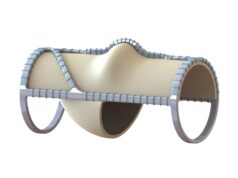

enVVeno Medical has announced that it received an “unfavorable” decision from the Food & Drug Administration (FDA) in response to its supervisory appeal of the “not-approvable” letter it received on Aug. 19 in response to its premarket approval (PMA) application for the VenoValve device, a surgical replacement venous valve for treating severe deep chronic venous insufficiency (CVI).
The supervisory appeal upheld the review staff decision in the not-approvable letter that the VenoValve did not meet the standard of reasonable assurance of safety and effectiveness, enVVeno reported.
“Although the appeal decision was not the result we are looking for, it did provide valuable insight into the criteria that would be necessary for approval of enVVe, our next-generation transcatheter based replacement venous valve,” said Robert Berman, enVVeno Medical’s CEO. “enVVe should have a different safety profile than an open surgical device and is ready for human testing. Assuming that we can reach alignment with the agency on achievable endpoints for enVVe, it makes sense to turn our attention and devote our resources to enVVe.”
Meanwhile, data on the VenoValve device continued apace at the podium during the fall.
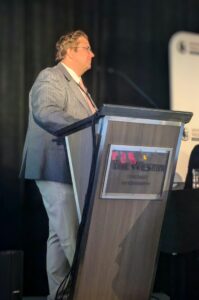
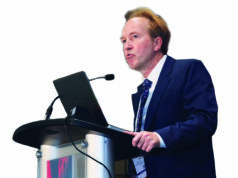
At the 39th European Society for Vascular Surgery (ESVS) annual meeting (Sept. 23–26) in Istanbul, Turkey, SAVVE trial principal investigator Matthew Smeds, MD, of Saint Louis University in Saint Louis, Missouri, shared a new finding that the novel bioprosthetic valve’s impact on ulcer area reduction and symptoms is dependent upon ulcer location.
Smeds shared that the U.S. pivotal study of the device assessed 61 ulcers in 43 of the 75 patients enrolled in SAVVE. The presenter specified that, of these 43 patients, 65% had ulceration above the malleolus and 35% had ulceration below. He noted that average starting ulcer size was larger in the above-malleolus location as compared to the below-malleolus location. Smeds stated that, when stratified by location, average ulcer size reduction was 12cm in ulcers above the malleolus, while the corresponding figure was 3.3cm in those below the malleolus. In terms of ulcer duration, Smeds revealed that patients who had had an ulcer for less than a year at baseline had a more significant reduction in ulcer size.
Smeds concluded that the VenoValve device appears to have a positive effect on ulcer healing, particularly in patients with ulcers of less than one-year duration. He added that the impact of ulcer healing as well as patient-reported symptoms and quality of life is more substantial in patients with ulcers above the ankle and that this occurs within one month of device placement.
Similarly, at the 2025 annual meeting of the Western Vascular Society (WVS) in Ojai, California (Sept. 14–17), data was presented by Adam Surti, MD, a general surgery resident at Cedars Sinai Medical Center in Los Angeles, show that among 44 patients in the SAVVE trial classified as having C6 disease, 31 had ulcers for more than one year. At two-year follow-up, 35 C6 patients remained in the study, and, for patients with ulcer duration greater than one year, ulcer area reduction was 1.8cm2 at one year and 0.3cm2 at two years. Ulcers located above the malleolus showed the most significant healing, with area decreasing from 12 to 3.8 cm2. Ulcer recurrence rates at two-year follow-up was 7%, notably lower than the 15%–44% recurrence rates reported in literature, Surti reported.