 How a group of vascular surgeons is working to plug gaps in knowledge and inspire colleagues to recognize the specialty’s essential role in future space travel.
It’s not so much a case of where-no-vascular-surgeon-has-gone-before as making sure aspects of the vascular surgery toolkit are optimized and available onboard to effectively support the mission. A vast scoping review of wound healing and care during long-duration spaceflight, recently published in the Journal of Vascular Surgery: Venous and Lymphatic Disorders (JVS-VL), harbors big ambitions—to lay out how vascular surgery and other complementary specialties can help build a bridge and fill in knowledge gaps between terrestrial care and aerospace medicine.
The work is no small feat. The study team—including first author Dóra Babócs, MD, from the Advanced Aortic Research Program at Baylor College of Medicine in Houston, and M. Mark Melin, MD, a vascular surgeon focused on wound care at the Mayo Clinic in Rochester, Minnesota—scoured more than 4,000 scholarly articles, covering a diverse study population in both space and terrestrial environments, to assemble a comprehensive picture. Not unlike the vastness and unknown quantities of the future endeavors their work seeks to support, Babócs, Melin—both members of the Space Surgery Association—and colleagues pieced together a rich tapestry of the state of wound healing in space: what is known about the subject, what is unknown and where opportunities for progress linger.
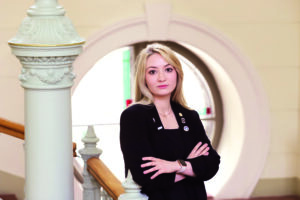
“One of the things we realized is that while we have so many approaches related to wound care and wound healing, we still don’t know enough yet,” explains Babócs. “Many of these cannot really be addressed without people being trained in this field. So, we are also trying to encourage and inspire vascular surgeons to participate more in aerospace medicine and space surgery because there are so many gaps in knowledge that require a collaboration between aerospace medicine professionals and vascular surgeons, general surgeons and interventional radiologists. Space and spaceflight are going to be a huge project for humanity if we are to go back to the moon and even go to Mars. We are trying to bridge Earth-based vascular surgery with aerospace medicine.”
But it’s not just about evaluating the effectiveness of current wound-healing treatments in interventional and exposure areas like the International Space Station (ISS), terrestrial high- and low-volume vascular settings, and low-resource austere environments such as Antarctica. It’s also about spin-offs for care back on Earth, says Melin. For instance, information gleaned from a deep vein thrombosis (DVT) event that occurred in the internal jugular vein of an astronaut in space not only changed how women who want to use menstrual suppressants during space travel are cared for, but also those who do so back on terra firma. It’s these types of spin-offs that underscore the essential role of vascular surgeons in the space race, Melin relates.
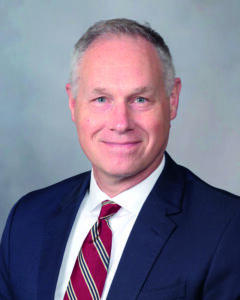
“There are applications that we are using all the time in terms of fluid shift,” he says. “On Earth, we see a lot of fluid shifts to the legs. The astronauts are dealing with fluid shifts to the head and neck that create retinal changes, even swelling in the brain that takes a full two years to fully go away. And it changes how people heal. All of this medical knowledge is really important to what we are doing in terms of research here on the ground as well. There are great connections here.”
The JVS-VL paper—which also includes as authors Baylor’s chief of vascular surgery Gustavo Oderich, MD, and Monika Gloviczki, MD, formerly of Mayo’s Gonda Vascular Center—targets the NASA Human Research roadmap as part of the effort to fill knowledge gaps.
“We wanted to include the pathophysiological background, why events have happened, how can we prevent them and, once they have already happened, what we can do about them,” explains Babócs.
And, going forward, the stakes could not be higher for those aboard space missions, she continues. “Until now, humanity’s goal was to go onto the ISS and do research there. Now, because of lunar and Mars missions, these are going to be so much longer in duration, and the distances are going to be significantly farther. If something happens on the ISS requiring any invasive or surgical treatment, we have the opportunity to evacuate to Earth, where the patients can receive definitive treatment at an Earth-based clinical hospital facility. But, if something happens halfway to Mars or on the moon, we are not going to have this opportunity, because just a one-way trip to Mars is going to be nine to 11 months. If something happens, we will inevitably have communication delays, and so it will be very useful to have a comprehensive manual on how to prevent these problems, or for what to do when they have already happened. Even if only some smaller surgical procedure, for example stitching a wound or closing a wound, everything is going to be different. The behavior of the tissue is going to be different. The regeneration of the cells is going to be different. We need to get ready.”
The team behind the JVS-VL paper, which also includes Rowena Christiansen, MD, from the University of Melbourne Medical School, Australia, and medical students Krishi Korrapati and Cooper Lytle, has published extensively on the topic, and, for Melin, future surgeons like Babócs, a postdoctoral research fellow at Baylor, hold the key to progress in this niche area. “Dóra is inspiring vertically and horizontally,” he says. “She is inspiring old guys like me, but also the next generation coming up, because it’s those folks who are going to make really significant sacrifices and take on servant leadership to be able to accomplish much of this. It also creates this aspirational view, where it just creates a whole new vantage point: it’s really energized me late in my career for what we are doing bedside with patients to be able to improve outcomes.”