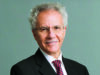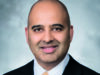
The upcoming Vascular Annual Meeting (VAM), taking place June 4–7 in New Orleans, will see Jason T. Lee, MD, and Claudie Sheahan, MD, at the forefront of educational programming. Both have stepped into pivotal roles, with Lee serving as VAM program chair and Sheahan taking on the position of Postgraduate Education Committee (PGEC) chair following the conclusion of last year’s conference.
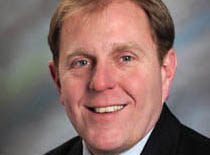
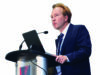
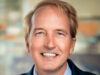
Lee, chief of vascular surgery at Stanford, has been attending VAM since his time as a medical student and continues to show enthusiasm for the latest scientific discoveries within the specialty.
“I’ve had the fortunate opportunity to be on the Program Committee in various positions for over a decade and have watched this meeting continue to get better at providing education, larger in scope and more inclusive for all members,” said Lee. “I’m honored to have the chance to work on the program directly this year with many amazing volunteers and the support staff from the SVS.”
In 2025, Lee will celebrate his 25th anniversary of attending VAM. Over the years, he has felt a strong desire to be present at the meeting, not only to witness the advancements in cutting-edge science and technology that can impact practices and research, but also to emphasize the importance of highlighting and networking with the younger, up-and-coming professionals in the field.
According to Lee, themes to expect at VAM 2025 are essential for the “modern and contemporary vascular surgeon.” Topics submitted by SVS members will shape the programming, including new innovations and outcomes related to aortic disease, peripheral arterial disease (PAD), carotid disease, hemodialysis access, venous disease, wound care and the application of artificial intelligence (AI) and machine learning, the latter of which will be featured in a set of papers on Saturday morning.
“The VAM program is only as good as what the membership submits. This year, we received 849 submissions for the 62 available spots in the program. We take our responsibility seriously to ensure that the program is current, and the process is fair and transparent, and reflects the important clinical and research work our members are engaged in,” said Lee.
The abstract selection for VAM is a blinded, peer-reviewed process that allows for the submission of a wide range of scientific topics covering the entirety of the vascular specialty.
Beyond the scientific abstracts presented, this year’s VAM program will include innovative networking and social events, including “SVS Connect@VAM: Welcome to New Orleans!” The event is scheduled for the Wednesday night of VAM.
“I want VAM to be the can’t-miss event of the year for all individuals connected to vascular surgery, and I hope our membership will all make plans to attend and encourage other partners and mentees to attend. Our committee’s vision for VAM 2025 builds on the years of creative changes to the annual meeting and to have something meaningful for every attendee,” said Lee.
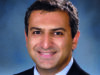
Sheahan, from New Orleans’ own Louisiana State University School of Medicine, has been a part of the PGEC for the last three years and has a similar sentiment to Lee on her vision for enhancing the science at VAM while serving as PGEC chair.
In addition to this year’s core topics, educational issues are being featured on such platforms as a Dialysis Summit, and in sessions on deep venous obstruction, “My Worst Cases” and aortic dissection. New this year is an educational summit on trauma similar in style to a Ted Talk presentation. Sheahan anticipates that this session, “Critical and Current Issues in the Management of Vascular Trauma,” as a standout session for attendees.
“It’s very effective when you have a speaker so passionate about a topic. Making a complex topic appear simple and concise is very difficult to do, and you have here some of the leading experts in our country on vascular trauma who will be able to do that,” she said.
Sheahan pinpoints a parenthood session, “Carrying the Weight: Parenthood in Vascular Surgery,” as one of the top-rated submissions gaining early traction. Topics will cover all aspects of parenthood from the perspective of the vascular surgeon and trainees, including insight from same-sex couples and from those working in different type of clinical practice.
“This interview style session is, no doubt, going to provide a lot of great discussions that will make the audience get very involved and, hopefully, learn a lot,” said Sheahan. “I feel it will be tough to keep the session on time because the discussion will be robust.”
As the PGEC chair, Sheahan aims to ensure that everyone attending VAM can find a topic that resonates with them, regardless of their experience level. Her objective is to ensure that the time, money and effort invested by attendees are meaningful.
“During my tenure as PGEC chair, my goal is to make sure that we give our membership expert content at our annual meeting,” said Sheahan. “Expert content delivered by diverse experts is the overriding principle, and the material should be the most up-to-date information available.”
For more information on VAM’s programming, visit vascular.org/ OnlinePlanner