Brought to you by:

How important is complex endovascular aortic training in the current landscape?

Just a few years ago, it was commonly accepted that training in complex endovascular aortic operations (e.g. physician-modified endografts [PMEGs], use of in-situ laser fenestration, redo-branched aortic interventions etc.) depended heavily on the location and practice of the institution where…
Positive data show novel delayed-release diameter reduction technique in construction of PMEGs is viable

A novel physician-modified endograft (PMEG) technique for the treatment of thoracoabdominal and complex abdominal aortic aneurysms (TAAA and AAA) involving delayed-release diameter reduction to aortic size and shape—allowing for sequential target vessel cannulation—is safe and effective, according to a new…
Survey of off-label treatment of complex repair pinpoints factors behind underreported outcomes data

The potential for cost and time to be key factors in low levels of outcomes data reporting emerged during a national survey of the off-label use of approved endovascular devices for complex aortic aneurysm repair. Grayson S. Pitcher, MD, an…
Florida IDE trial data support use of physician-modified F/BEVAR over open conversion to treat failed EVAR

This advertorial is sponsored by Tampa General Hospital. As Dean Arnaoutakis, MD, describes it, failed endovascular aortic aneurysm repair (EVAR) for abdominal aortic aneurysms (AAAs) because of poor proximal fixation of the implanted endograft is a small but increasing problem.…
‘Vigilant’ surveillance and low threshold for further interventions ‘crucial’ following rescue of prior EVAR with PMEG

The findings of a recent study on reinterventions and sac dynamics after fenestrated endovascular aneurysm repair (FEVAR) with a physician-modified endograft (PMEG) for index aneurysm repair and following prior EVAR led researchers to conclude that “vigilant” surveillance and a low…
Getting medical devices to market: The future might not be now, says regulatory expert
The development of medical devices in the vascular space faces increasing challenges amid moves afoot at the Food and Drug Administration (FDA), according to a leading regulatory expert in the field. Among the developmental vehicles currently caught in the crosshairs…
Short neck AAAs: ‘Choosing what is best for the patient’
Navigating cases of abdominal aortic aneurysm (AAA) with short neck anatomy poses a serious challenge to vascular surgeons, but the list of potential options available to carry out repairs are numerous—and decision-making can be optimized by using a bespoke algorithm.…
How a multidisciplinary team meets the complex challenges of fixing failed EVARs
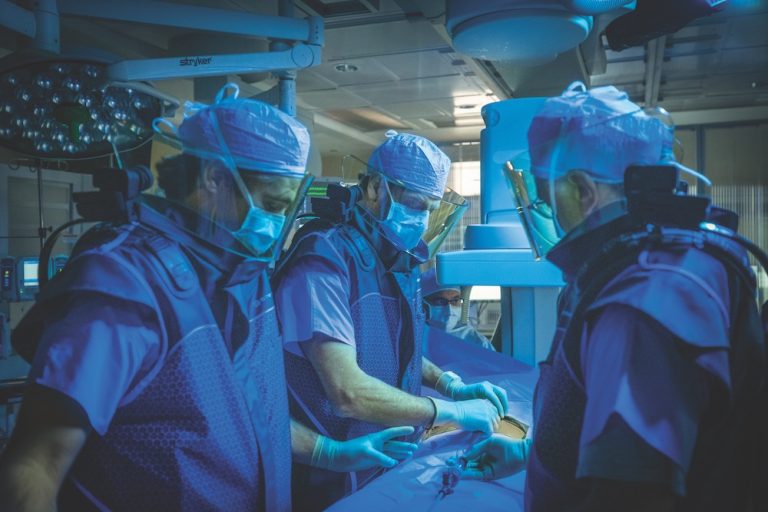
This advertorial is sponsored by Tampa General Hospital. The Aortic Disease Program at Tampa General Hospital’s Heart & Vascular Institute is no stranger to the challenges of complex care. Situated in the population center of Tampa, Florida, in the nation’s…
WVS 2022: New evidence of radiation reduction benefit emerges
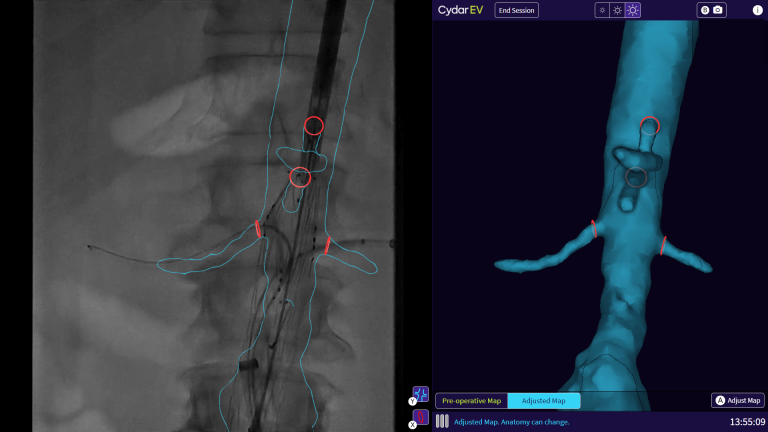
Surgical augmented intelligence in the form of 3D mapping during complex aortic procedures can decrease radiation exposure, fluoroscopy time and contrast use when combined with real-time fluoroscopic images, a new analysis has established The results were presented during the 2022…
Patients in Florida with complex aortic pathology gain unique access to F/BEVAR

This advertorial is sponsored by Tampa General Hospital. Patients with complex pararenal and thoracoabdominal aortic aneurysm (TAAA) disease are faced with limited treatment options outside of one of the most technically and physiologically demanding operations on a vascular surgeon’s schedule:…