Brought to you by:

SVS leadership and membership integral to ‘far-reaching’ BEST-CLI trial
Support from the Society for Vascular Surgery (SVS) and, later, funding from the SVS Foundation were integral to the BEST-CLI trial, said one of the landmark trial’s leaders. BEST-CLI sought to determine the best revascularization treatment strategy—surgical or endovascular—for patients…
Intermittent Topical Wound Oxygen: ‘It needs to no longer be seen as late-stage therapy’

This advertorial is sponsored by AOTI. Two prominent vascular surgeons discuss a rising tide of evidence pointing toward benefits of adjunct use of cyclically pressurized Topical Wound Oxygen (TWO2) therapy in the treatment of vascular ulceration. The best way to…
Study demonstrates textbook outcomes occur less than a quarter of the time after CLTI revascularization

Textbook outcomes remain “very rare” after revascularization for chronic limb-threatening ischemia (CLTI), with the main driver being an enduring inability to attain complete wound healing and to return patients to their preoperative ambulatory status, according to the lead researcher behind…
BEST-CLI trial spline model analysis breaks new ground in assessing the impact of CKD severity on CLTI outcomes
A new analysis of the BEST-CLI trial has produced the first evidence-based glomerular filtration rate (eGFR) value—30 mL m2—as the cutoff below which patients with chronic limb-threatening ischemia (CLTI) experience significantly worse outcomes after revascularization regardless of the treatment modality…
Deep vein arterialization: Much remains to be learned but use poised to expand in patients with less severe ischemia
These remain early days for transcatheter arterialization of the deep veins (TADV) in the setting of patients with severe chronic limb-threatening ischemia (CLTI), says Daniel Clair, MD, one of the principal investigators in key clinical trials of the procedure, but…
Data and device tweaks herald ‘practice-changing’ future for bioabsorbable scaffolds
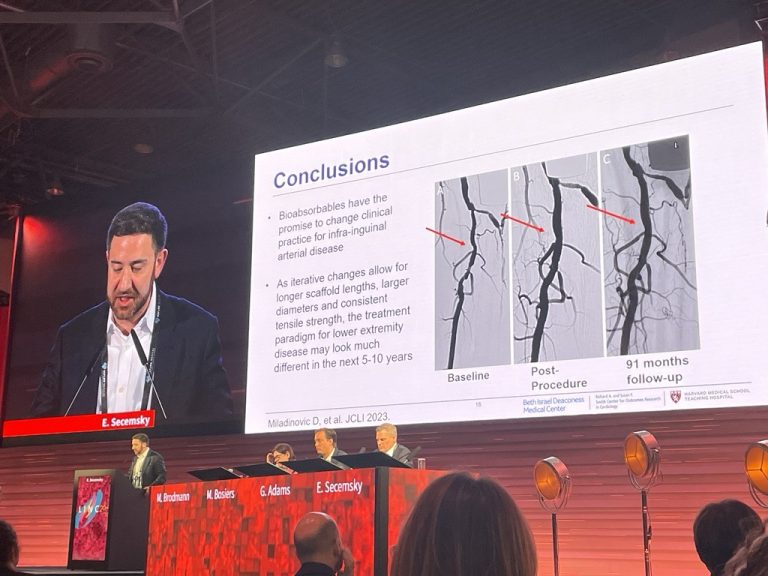
Pending the results of several trials and “iterative changes” to device design, bioabsorbable scaffolds are set to change the treatment paradigm for lower extremity peripheral arterial disease (PAD) within the next decade. So concluded Eric Secemsky (Beth Israel Deaconess Medical…
Cagent Vascular initiates the Serranator POINT FORCE observational registry
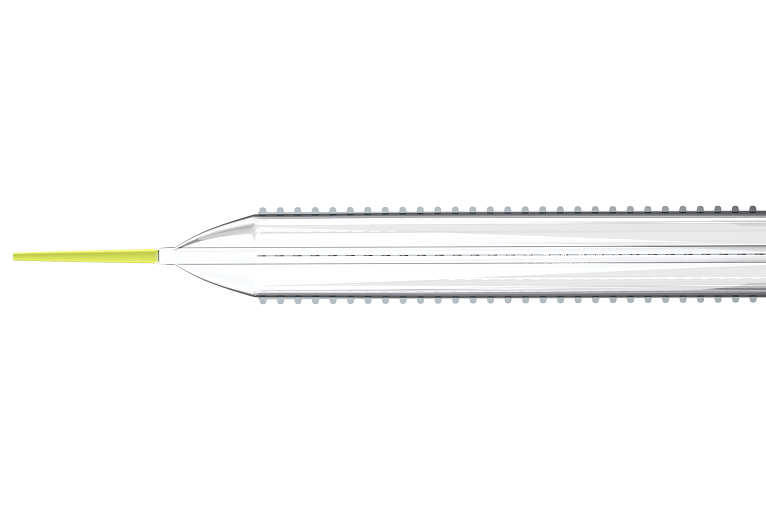
Cagent Vascular has announced the start of the POINT FORCE registry, a postmarket clinical follow-up study of the Serranator percutaneous transluminal angioplasty (PTA) serration balloon catheter. This prospective, multicentre, single-arm study will enrol a minimum of 500 patients at up…
SVS gets moving on PAD-related grant

All those steps logged during the SVS Foundation’s exercise challenge in September will help the Foundation—and researchers—take new steps to unlock new treatments for peripheral artery disease (PAD). The foundation’s Vascular Health Step Challenge, during National PAD Awareness Month, raised…
Study finds adverse outcomes after decreased use of paclitaxel-coated devices
A recent analysis of over 270,000 Medicare fee-for-service beneficiaries has found an increase in adverse outcomes and death after a US Food and Drug Administration (FDA) warning led to decreased use of paclitaxel-coated devices for peripheral revascularisation procedures. Writing in…
Pioneering Florida limb preservation program laser-focuses on evidence-based, customized care for PAD

This advertorial is sponsored by Tampa General Hospital. As the prevalence of peripheral arterial disease (PAD) continues to climb across the U.S. and globally, a pioneering limb preservation program in south Florida is sharpening its resolve to provide cutting-edge treatment…