Brought to you by:

Terumo announces commercial availability of Roadsaver carotid stent system

Terumo Interventional Systems has announced the early commercial availability of its US Food and Drug Administration (FDA)-approved Roadsaver carotid stent system. Indicated for use with Terumo’s Nanoparasol embolic protection system, Roadsaver is intended to treat carotid artery stenosis in patients…
Terumo Neuro receives FDA approval for carotid stent system
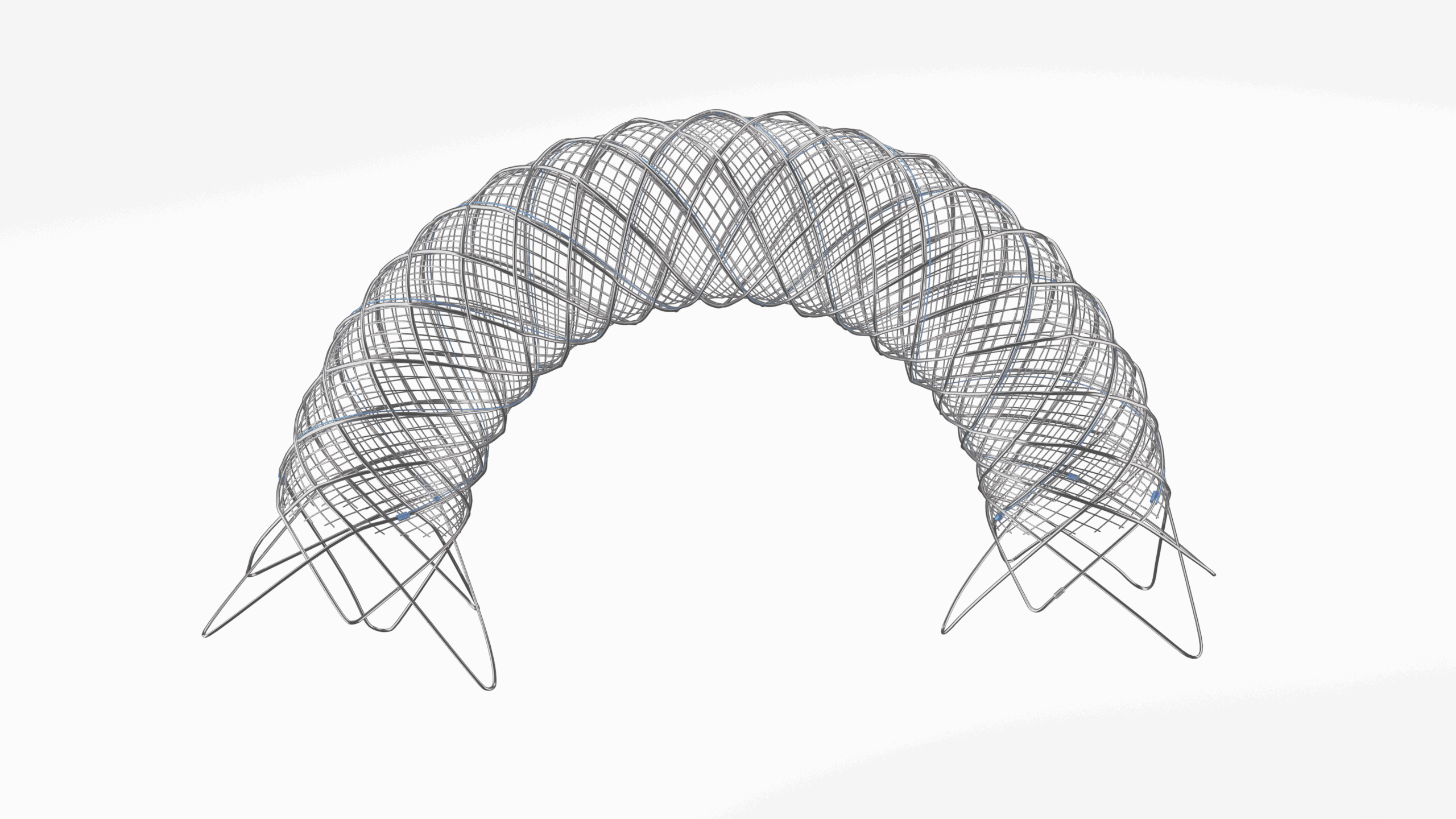
Terumo Neuro has announced that its carotid stent system has received premarket approval (PMA) from the Food and Drug Administration (FDA). This milestone marks the first dual-layer micromesh carotid stent approved in the U.S., offering physicians a clinically proven option…
ROADSTER 3 provides key evidence that ‘goes beyond registry data’ on TCAR-related stroke rates
Thirty-day results from the ROADSTER 3 study have demonstrated that transcarotid artery revascularization (TCAR) is a safe and effective approach in patients who are deemed to be standard risk for experiencing adverse events related to carotid endarterectomy (CEA). These findings…
CEA vs TCAR: Surgeons should be familiar with both procedures and ‘collaborate as needed’

When it comes to the ongoing debate of carotid endarterectomy (CEA) versus transcarotid artery revascularization (TCAR) in the treatment of carotid artery stenosis, operators should be comfortable and maintain experience with both of these procedures—and “collaborate as needed.” That is…
LINC 2024: C-GUARDIANS data represent lowest event rates in published trials of CAS, TCAR and CEA

New data from the C-GUARDIANS pivotal investigational device exemption (IDE) trial support consideration of carotid artery stenting (CAS) with the CGuard embolic prevention stent system (EPS; InspireMD) as a “frontline therapeutic option for appropriate patients being considered for carotid revascularisation”.…
ISC 2024 examines TCAR ‘explosion’ alongside advances in intensive medical therapy

This year’s International Stroke Conference (Feb. 7–9) in Phoenix, Arizona, hosted discussions on the current state of play in carotid stenosis treatment—and, most notably, advances that may erode the dominance of long-established carotid revascularization procedures in the U.S. Session moderator…
Safety benefits mean TCAR may be preferable approach in radiation-induced carotid stenosis

A study set to be presented at VAM (14–17 June, National Harbor, USA) has found that the long-term outcomes of transcarotid artery revascularization (TCAR) are “not significantly affected” by prior head and neck radiation. Owing to substantially increased risks of…
Interim data find ‘no evidence of benefit’ for carotid revascularization additional to optimized medical therapy
Interim results from the ECST-2 randomized controlled trial (RCT) have shown no evidence that carotid stenosis patients with a low-to-intermediate stroke risk, treated with optimized medical therapy, will benefit from additional carotid revascularization via carotid endarterectomy (CEA) or carotid artery…
Medical therapy gains highlight need to reassess carotid surgery
“The time has definitely come to look at the evidence, and redo these studies,” posited Alun Davies, MD, from Imperial College London in London, England, putting forward his argument that the NASCET and ECST clinical trials “need to be reconducted”…
Equivalency to clinical practice ‘varies considerably’ across recent carotid intervention trials

The transferability to real-world clinical practice of contemporary randomized controlled trials (RCTs) investigating carotid artery stenosis interventions “varies considerably,” according to a recent analysis published in the European Journal of Vascular and Endovascular Surgery (EJVES) by senior author Hans-Henning Eckstein,…