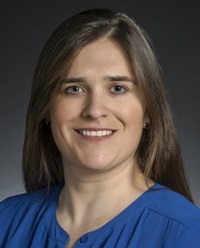
How do vascular surgeons and other similar specialties come together for the benefit of the patient? That is the main question behind a session given by Caitlin Hicks, MD, associate professor of surgery at Johns Hopkins School of Medicine, during Leadership Corner: Turf Battles in Vascular Surgery, at VAM 2026. Vascular Specialist caught up with Hicks to discuss the topic’s importance in today’s health care landscape.
Vascular Specialist: What is the background of this session?
Caitlin Hicks, MD: I’ve done a lot of research in the space looking at appropriateness of care or value-based care, specifically in peripheral vascular disease management. There’s been a lot of debate that has come up as a result of that, of whether or not one specialty or another is providing better or worse care. This talk is centered around how do we come together and how do we provide holistic care without doing the thing we tend to do, which is pointing fingers at other similar specialties that are all taking care of the same disease processes.
Vascular Specialist: What are the main points of the session?
Hicks: It’s not us or them. How do we get a seat at the table and remove cardiology? That’s not the goal. The talk will be centered around how do we come together as a multi-specialty physician group to reach a consensus on the best course of management for patients and how can we do it together? I’ll be pulling in lessons from BEST-CLI, which had a lot of groups that had multi-specialty teams, including specifically cardiology and vascular surgery. Then other examples in other disease processes, like PE, where there’s a lot of multi-specialty involvement.
The key things I’ll be touching on is that it’s important for the society to have a seat at the table. All of the societies need to be coming together. We tend to do things very siloed. We do our own guidelines and the ACC [American College of Cardiology] does their own guidelines and nobody really talks to each other. What needs to happen to be effective, and I know that the SVS [Society for Vascular Surgery] leadership is working on this, is to try to come up with a way of doing these sort of larger documents where we have inclusion across the specialty spectrum so that we’re not having isolated guidelines that say different things.
The other thing is having a presence in the literature. I’ve made a big point in the last couple of years to publish in our vascular literature, but not just the vascular literature, because I think when you publish there, you’re just speaking to each other. We should try and publish in journals that reach a slightly different audience. If I’m trying to talk about PAD and I think cardiologists should be part of the conversation, then publishing some the work in journals that have a cardiology readership can be very helpful.
Another thing which I still need to do better at is to have presence at meetings. It’s not like vascular surgeons are only at vascular meetings and cardiologists are only at cardiologist meetings and there’s no crosstalk. But I think we need to do a better job as physicians of being cognizant of how we go to meetings and learn from each other. What are they doing that we can bring to our practice? What are we doing that the other specialties should be thinking about in theirs?
Vascular Specialist: What was the driving force behind the session?
Hicks: What I’ve observed is that there’s a really fundamentally different way of thought processes around the treatment of PAD, depending on the specialty. We have cardiologists at Hopkins that treat PAD and they do a great job. They’re great technical surgeons. We just think about the disease process a little bit differently. Especially now in the setting of BEST-CLI, where we know that some people are better off getting open bypass and some people are perfectly good candidates to get an endo first strategy, having more dialogue is really helpful. Me and the cardiologist at Hopkins have really started over the last couple of years sharing patients. Just starting that dialogue, even if it’s just a one-on-one relationship, is the beginning of that multi-specialty care.
Vascular Specialist: How important is cross-specialty collaboration?
Hicks: Talking amongst each other is ultimately for the benefit of the patient. The goal is to take care of the patient in the best way that we possibly can. We’re stronger together as opposed to isolated entities. It’s been shown in the diabetic foot ulcer space time and time again that multidisciplinary teams are much more effective in providing good outcomes than single specialty teams. The same is true for patients with CLTI or claudication. It really deserves multidisciplinary management.
There was the attempt at an individualized board certification by ACC last year that was ultimately unsuccessful. The SVS got very upset about that. What we need to do is come together and ask why they want that. How can we help? Does it make sense for us to have a specialty certification in treating PAD? In the work that I’ve done around appropriate care in the PAD space, vascular surgeons are not all doing excellent care. It’s not a single specialty problem. Do we need to have better training?
I get a lot of patients referred from outside. When I look at what they’ve had as work up to that date, I’m like, “Where is this study? These things are missing.” But that’s just not part of the paradigm of the person that referred them. I will send people out and they’ll text me asking “Did you do X, Y, or Z?” I’ll say, “No, that’s not really part of our standard workup.” Everyone has nuances in their personal practice but understanding what the minimum standards would be and trying to have conversations to ultimately funnel patients to the right treatment paradigms.
Vascular Specialist: What’s the key takeaway?
Hicks: The key takeaway is it’s not us versus them. It’s us with them. How do we come together to provide the best care for the patient?