
A cohort study using national Medicare data found patients with Alzheimer’s disease and related dementias face significantly higher risks across different outcomes after elective abdominal aortic aneurysm (AAA) repair. The data were presented at the 2026 annual meeting of the Southern Association for Vascular Surgery (SAVS) in Paradise Island, the Bahamas (Jan. 21–24).
Led by researchers from Brigham and Women’s Hospital in Boston, Massachusetts, the study is the first to evaluate outcomes of AAA repair specifically in patients with dementia. “We included 42,733 patients in our study, and of those, 4.3% had dementia,” said co-investigator Samir K. Shah, MD. “Overall, around 80% underwent endovascular aneurysm repair (EVAR). A greater percentage of patients with dementia, 89.1%, underwent EVAR.”
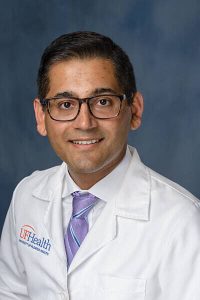
Researchers sought to test if EVAR among high-risk patients with dementia was safe due to it being less invasive. “There’s a common understanding that endovascular repair is a less physiologically stressful alternative to open repair, and therefore is a ‘safe’ procedure,” said Shah, an assistant professor in the division of vascular surgery and endovascular therapy at the University of Florida. “There has been no study focused solely on aneurysm outcomes amongst patients with dementia that we identified. This is the first one ever.”
The results suggest EVAR isn’t necessarily a low-risk procedure for this population. “Across the board, patients with dementia had worse outcomes,” said Shah. Thirty-day mortality was found to be 6.9% in patients with dementia compared with 3.6% in those without the disease. Inpatient complications occurred in 23.5% of dementia patients versus 17.9%, and 90-day readmission rates were 30% compared with 19.7%. “After adjustment, that remained true,” Shah added.
The researchers also calculated time at home ratio, which measures how much time a patient spends at home rather than in hospitals or nursing facilities the year following a surgery. “Most patients with dementia are community dwelling,” said Shah. “People have this idea that patients with dementia are primarily institutionalized, and across any number of studies, that’s been shown not to be the case. We found that the time at home ratio is lower among patients with dementia.”
Shah emphasized the study’s purpose is not to tell clinicians whether to operate, but to inform discussions. “It would be an error to look at this data and see it as prescribing a specific way of treating or not treating patients,” he said. “What we want is to calibrate decision-making with the data. Aneurysm repair is done for life extension, not life improvement. Because that’s the case, it’s especially important for patients and their caregivers to understand the impact that undergoing this operation will have.”
Shah said the findings should serve as a framework for shared decision-making. “If after understanding all of the data, patients and their caregivers say it is consistent with what they want, then I think by all means they should do it,” he said. “I see our data as a tool to help align care with patient goals.”
The study also highlights a broader problem. According to Shah, cognitive impairment in vascular patients is common but often undiagnosed. “We have a separate paper that was published last year in the Annals of Vascular Surgery that showed amongst patients in our vascular surgery clinic with no diagnosis of Alzheimer’s disease, traumatic brain injury, or any other sort of dementia or cognitive impairment, there was a 77% incidence of mild or moderate cognitive impairment as measured by the Montreal Cognitive Assessment,” he said. “That’s spectacular. That’s three out of four patients who have nothing on their chart that have a problem that we can detect using a validated tool.”
Understanding a patient’s cognitive baseline is critical for accurate counseling and risk assessment, said Shah. “If people have this condition and we don’t pick up on it, then we won’t be counseling patients with the most accurate data,” he added. “We won’t have an appropriate understanding of their near-term and longer-term risks.”
The findings support the idea that coordinated, multidisciplinary care could lead to better postoperative results. “In an ideal world, we would be working with primary care doctors, with geriatricians, with family members or other caregivers who know the patient well and understand their goals,” said Shah. “Oncologists routinely do this with surgeons, radiation oncologists, medical oncologists and others to come up with the best possible solution for the patient.”
Shah said the next step is to gather more patient-centered data, such as information on pain, mobility, mood and quality of life. “We have mortality, readmissions and major complications data, but what we don’t have is what laypeople would consider patient-centered data,” he said. To address that, his group has begun giving patients smartwatches that collect data on movement, sleep, pain and mood, merging that information with clinical records. “If patients had that kind of data, they could make decisions that are as close to ideal as possible,” he said