Brought to you by:

Study highlights need to extend scope of cerebrovascular health disparities research

A new research letter in Stroke outlines use of the novel National Institutes of Health (NIH) All of Us research program dataset of diverse participant data to identify factors that increase the risk of carotid artery stenosis and those who…
The top 10 most popular Vascular Specialist stories in January
January’s top 10 includes “Our forever plague,” a combined editorial by Malachi Sheahan III, MD, our medical editor, on fake news and science, and coverage of the U.S. investigational device exemption (IDE) Aortic Research Consortium and how the chief investigators…
Medtronic issues voluntary recall for TurboHawk Plus directional atherectomy system
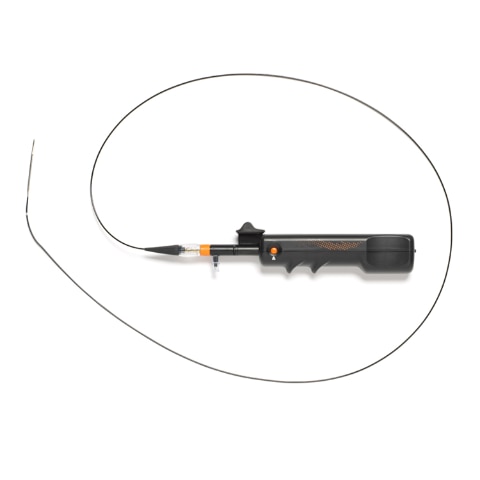
On Feb. 7, Medtronic issued a notice emphasizing that the same warnings and precautions issued for the HawkOne directional atherectomy system also apply for the company’s TurboHawk Plus 6Fr system due to design similarities. The company stresses that this is…
Index atherectomy interventions for claudication ‘is associated with higher’ reintervention rates vs. other technologies

Atherectomy use during index peripheral vascular interventions in claudicants is associated with higher reintervention rates when compared to other technologies, a newly unveiled study by Caitlin Hicks, MD, and colleagues at Johns Hopkins Hospital in Baltimore, Maryland, shows. The researchers…
Marston: Diversity required to deliver comprehensive care to vascular disease population
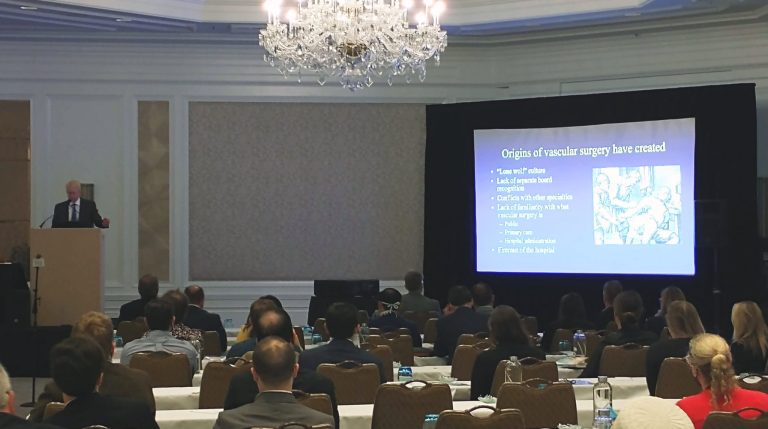
William A. Marston, MD, was recalling a recent experience acting as a bone marrow donor for a family member, and the moment it dawned on him, after the harvesting procedure with a specialist in the field, the true value of…
Interview: Combating the problem of spin, or overinterpretation, in RCTs

The presence of spin, or overinterpretation, in scientific papers that ultimately demonstrate statistically insignificant findings had been gnawing away at Thomas Forbes, MD, for quite some time. The practice, the University of Toronto vascular chair reflects, is by no means…
Risk of venous stent migration ‘rare’ but probably ‘underreported,’ systematic review finds

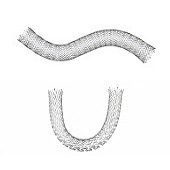
Stent migration following treatment of acute iliofemoral thrombus or venous obstruction is “rare but may be underreported,” with the majority of reported cases being shorter and smaller diameter stents. This is the main concluding finding of a systematic review published…
Radiation protection: Lightweight shield designed to reduce dose during complex endovascular procedures gains ground
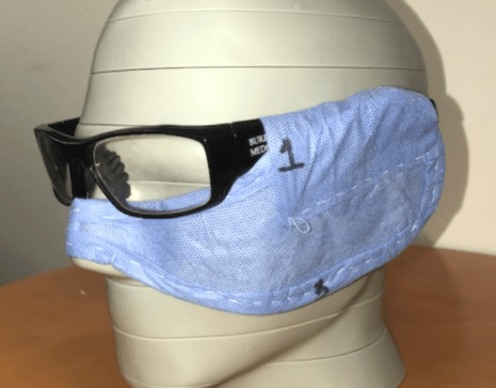
It all started with a “we should do research together; this is fascinating.” The result—the production of a prototype eyewear that decreases radiation to the eye and brain—is the more-than-decade-long toil of Melissa Kirkwood, MD, and colleagues at UT Southwestern…
VESS 2022: Novel use of TCAR to treat complex brachiocephalic disease shown to be effective, researchers report
A “unique” case series of patients undergoing transcarotid artery revascularization (TCAR) in which the system was put to novel use for proximal intervention or incorporated in a hybrid approach to complex brachiocephalic disease demonstrated it to be effective in “providing…
Office-based laboratory setting proves ‘safe’ for iliac vein stenting
A retrospective study of 1,223 iliac vein cases performed in three office-based laboratories (OBLs) demonstrated a major complication rate of 0.41%, suggesting these procedures are safe and well-tolerated in this setting, the authors say. According to corresponding researcher Levan Sulakvelidze,…