Brought to you by:

First data from BEST-CLI bring surgical bypass into the forefront of discussion for patients with high-quality great saphenous vein
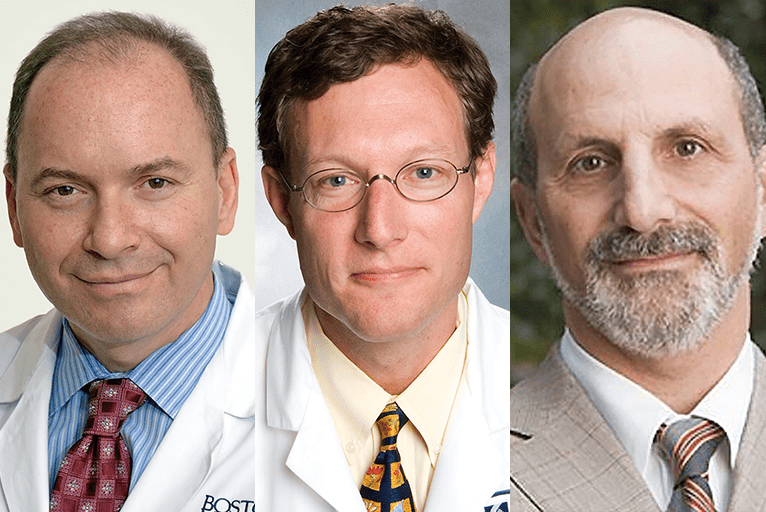
The first results from the BEST-CLI randomized controlled trial (RCT) of 1,830 patients show that surgical bypass with adequate single-segment great saphenous vein (GSV) is a more effective revascularization strategy for patients with chronic limb-threatening ischemia (CLTI) who are deemed…
SVS asking members to expand diversity in Nominating Committee
The Society for Vascular Surgery (SVS) will ask voting-eligible members to consider three revisions to article X of the SVS bylaws that would take a step toward change on the SVS Nominating Committee. In the past several years, the membership…
Amplifi vein dilation system continues to show promise following latest first-in-human study update
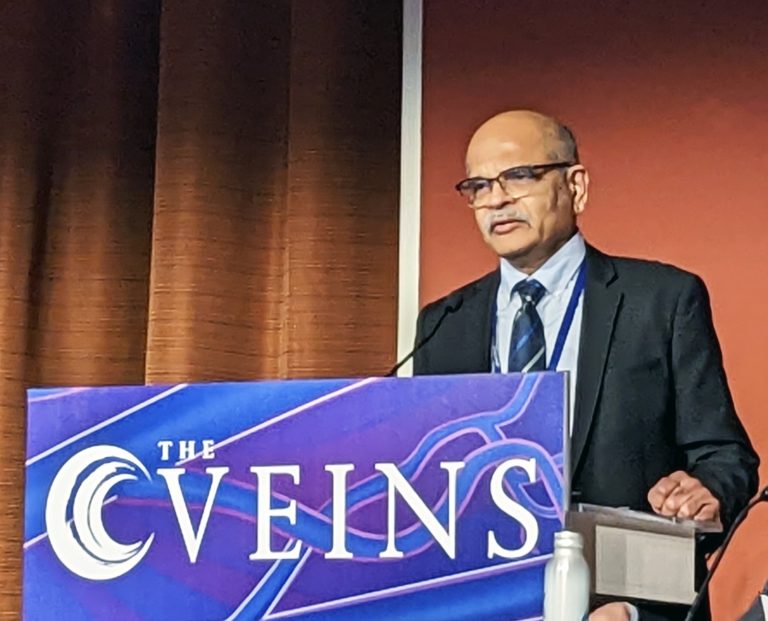
An update from the first-in-human study assessing the Amplifi vein dilation system (Artio Medical) was delivered by Surendra Shenoy, MD, from Washington University School of Medicine in St Louis, during the first-ever late-breaking clinical trials session at this year’s Venous Endovascular…
Virtual visits versus in-person: Telemedicine study detects ‘substantial’ cost savings for patients
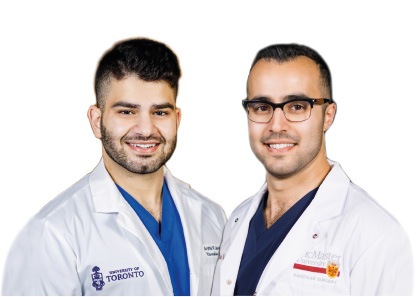
Virtual consultations appear comparable to care received in-person when it comes to clinical outcomes as well as patient and practitioner satisfaction, a systematic review and meta-analysis of all primary studies evaluating virtual patient visits in vascular surgery has demonstrated. “The…
‘Significant’ increase in atherectomy use in US largely driven by office-based procedures, VQI data show
In the United States, atherectomy use in peripheral vascular interventions (PVIs) “more than doubled” from 2010 to 2019, with office-based procedures a “major driver” of this increase. This is according to published U.S. data from the Vascular Quality Initiative (VQI),…
Disrupt PAD III observational study results confirm safety and effectiveness of IVL in complex calcified lesions

The final 1,373-patient cohort analysis from the Disrupt PAD III observational study (OS) demonstrates consistent intravascular lithotripsy (IVL; Shockwave Medical) outcomes in complex and challenging lesions across multiple peripheral vessel beds. Ehrin Armstrong, MD, from an interventional cardiologist from Adventist…
End-stage CLTI: Deep-vein arterialization procedure demonstrates amputation-free survival rate of 66% at six months
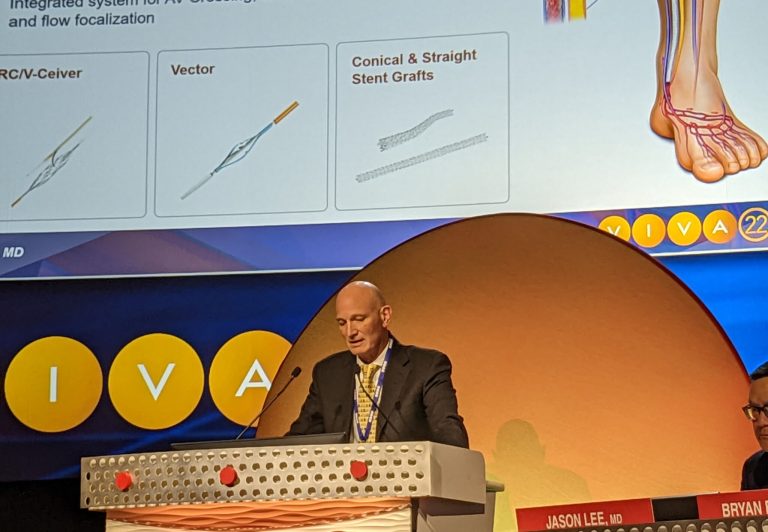
Six-month results from the PROMISE II trial of the LimFlow deep-vein arterialization system showed an overall amputation-free survival of 66%—“well above” the primary endpoint target of 54%, chief investigator Daniel Clair, MD, told the 2022 Vascular Interventional Advances (VIVA) meeting…
BEST-CLI attracts $3.3m funding injection to continue data analysis

The Novo Nordisk Foundation has made a $3.3 million contribution toward the BEST-CLI (Best endovascular vs. best surgical therapy in patients with critical limb ischemia) clinical trial, the Denmark-based entity has announced. The grant is set to be used by investigators…
CEA, TCAR ‘continue to show superior outcomes’ to transfemoral stenting
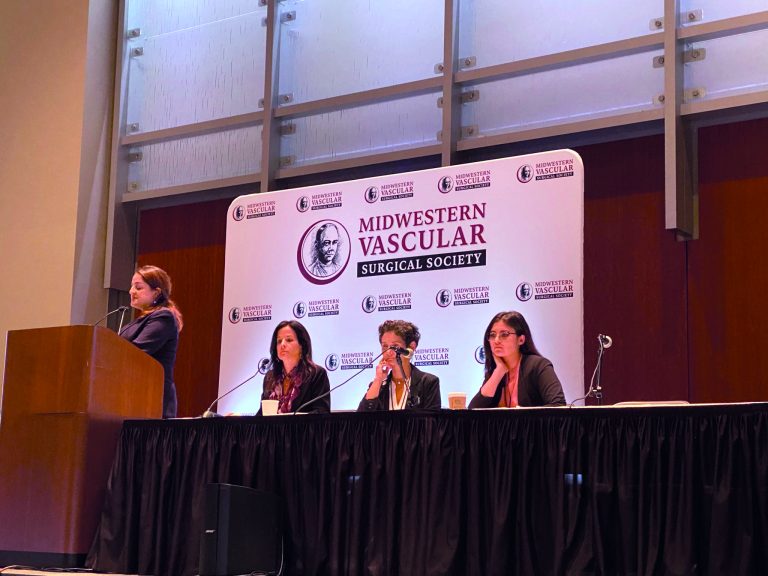
Researchers led by a vascular team in Indianapolis found that carotid endarterectomy (CEA) remains the most-used strategy in carotid revascularization, with CEA and transcarotid artery revascularization (TCAR) showing decreased odds of stroke or death compared to transfemoral carotid artery stenting…
SurVeil DCB demonstrates sustained durability of safety, efficacy endpoints in TRANSCEND
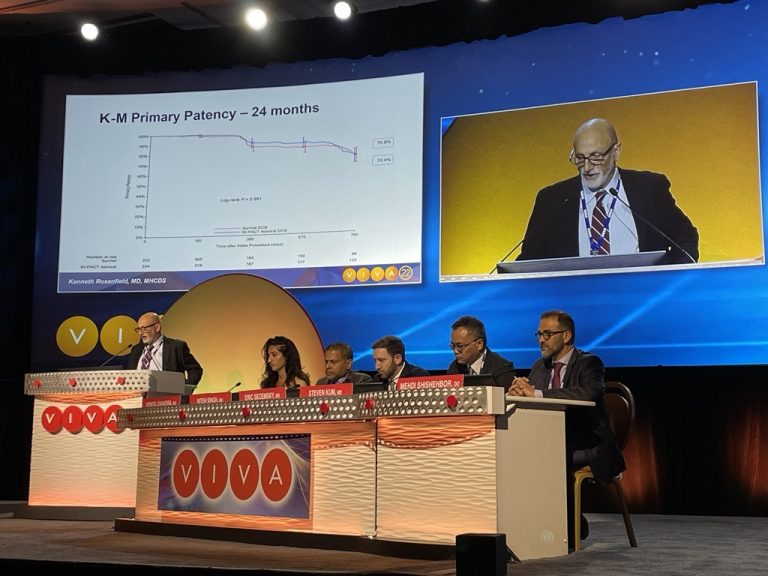
In the TRANSCEND clinical trial, the SurVeil drug-coated balloon (DCB; Surmodics) demonstrated “excellent efficacy and safety” out to 24-month follow-up. This is according to Kenneth Rosenfield, MD, from Massachusetts General Hospital in Boston, who presented the new data at Vascular…