This advertorial is sponsored by Laminate Medical.
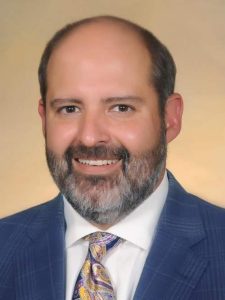
What happens after a fistula is created can be just as important as the procedure itself. Dion Franga, MD, shares how innovations like VasQ may help improve fistula maturation, reduce catheter time and additional interventions and create a more reliable dialysis experience for both patients and care teams.
Vascular Specialist: How can innovations like VasQ help redefine AVF success beyond the operating room and drive better outcomes across the entire dialysis care continuum?
Dion Franga, MD: Devices that help optimize and enhance native fistulas from creation serve to increase the odds that a patient is going to receive dialysis through a mature access faster and with fewer maturation procedures, complications, or interruptions in dialysis care. This helps decrease the number of days patients are dependent on their catheter and lessens the burden on our interventionalists and of course, it’s better for the patient who does not have to endure additional procedures.
Vascular Specialist: In what ways have you seen VasQ standardize AVF creation to deliver more consistent, reliable fistula performance?
Franga: VasQ standardizes the anastomosis to mitigate some of those common points of fistula failure. Specifically, VasQ helps to address hemodynamic and mechanical stress at the anastomosis by creating a tapered outflow and reenforcing the vein against the arterialized transluminal pressures associated with negative remodeling. That’s where I find the real advantage of the device — once we create the fistula, we really have no control over how it matures after the patient leaves the operating room. VasQ is a tool that gives me the ability to better control for variables that were previously outside my control as a surgeon. This device is not going to make a bad fistula a good fistula, but it can take an average fistula and make it more likely to succeed.
Vascular Specialist: What impact can easier, more predictable cannulation have on dialysis staff efficiency and patient experience?
Franga: Number one, patient experience and comfort are of the utmost importance. Reducing infiltrations can improve both patient comfort and fistula durability over time. For dialysis centers, VasQ fistulas retain their configuration, so they may be less prone to cannulation complications. I have seen a notable decrease in my patients that I enrolled in the Post-Market RCT of cannulation complication with VasQ fistulas.
Vascular Specialist: How might improving early fistula usability reduce catheter dependence and the need for additional interventions?
Franga: Simple, the sooner the fistula is ready, the sooner the catheter can be removed. Additionally, the happier a patient is with their fistula, the less likely they will elect to remain on a catheter. Sometimes, patients who are good fistula candidates are directed towards alternative access options, like grafts, because of the fear that the fistula maturation will take too long and extend that catheter time. For the same reason, surgeons will opt for a more proximal fistula even if the patient is a candidate for a radiocephalic. But we have to think long-term about the usability and durability of the fistula over the patient’s lifetime. I have observed in my patients that adding VasQ to a fistula reduces the risk of needing maturation procedures allowing me to refer more fistulas for cannulation at the first follow up. Such a tool will provide more confidence in not just choosing a fistula over a graft, but perhaps choosing a more distal option, such as a radiocephalic, to preserve future access options.
Vascular Specialist: What are the system-wide benefits of innovations like VasQ that shift AVF success from a single procedure to long-term functional performance?
Franga: The system-wide benefit is improving the overall quality of dialysis care — from more straightforward fistula creation for surgeons, fewer maturation procedures for our interventionalists, improved quality of life for the patient who has a working access and less interruptions in scheduled dialysis for centers and patients. Patients are always our primary focus, so improving the overall access experience is what motivates me to harness innovations like this. Innovation means finding new ways to improve fistula outcomes, support successful cannulation, enhance patient comfort and decrease burden of additional procedures. All those things have impacts on patient outcomes and their survival and quality of life, so anything that enhances the procedure I’m already doing and benefits patients makes sense to me.