Brought to you by:
Study detects no difference in adverse outcomes from balloon dilatation strategy used during TCAR
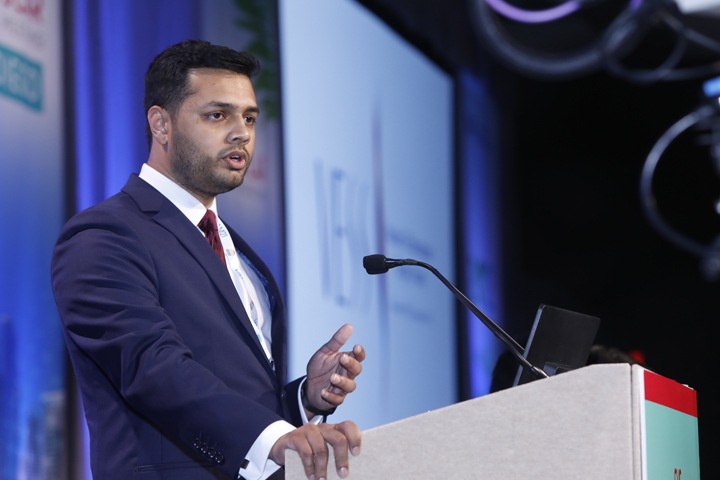
Avoiding a strategy of post-stent balloon dilation during transcarotid artery revascularization (TCAR) may be unnecessary—a “contradistinction” to results shown in conventional transfemoral carotid artery stenting, new research has shown. Jones Thomas, MD, an integrated vascular surgery resident at University Hospitals…
AI and transforming vascular surgery
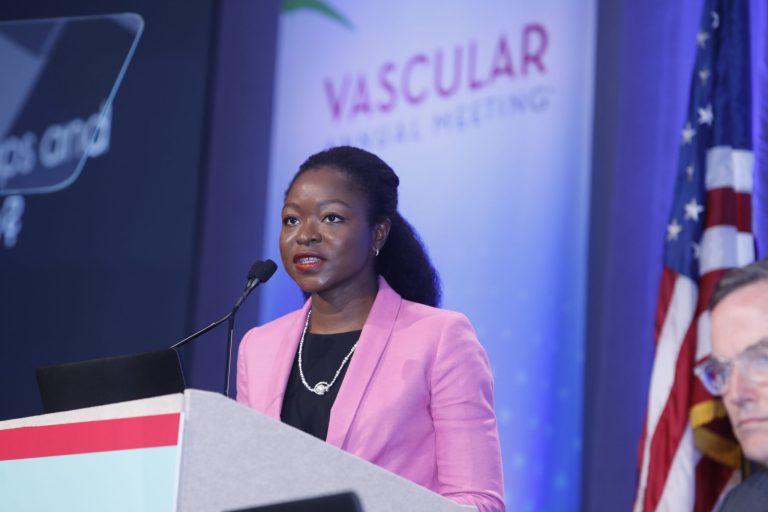
The 2021 Vascular Annual Meeting (VAM) Roy Greenberg Distinguished Lecture saw delegates hear about the potential for artificial intelligence (AI) to transform vascular surgery. Elsie Gyang Ross, MD, assistant professor of surgery at Stanford University, told attendees during her Aug.…
Save the date for new PAD skills workshop
September is National PAD Awareness Month, and the Society for Vascular Surgery (SVS) will spend the month not only calling attention to causes and treatment for the disease, but also planning a peripheral arterial disease (PAD) skills workshop. The hands-on…
VAM 2021 structural changes prove hit with attendees
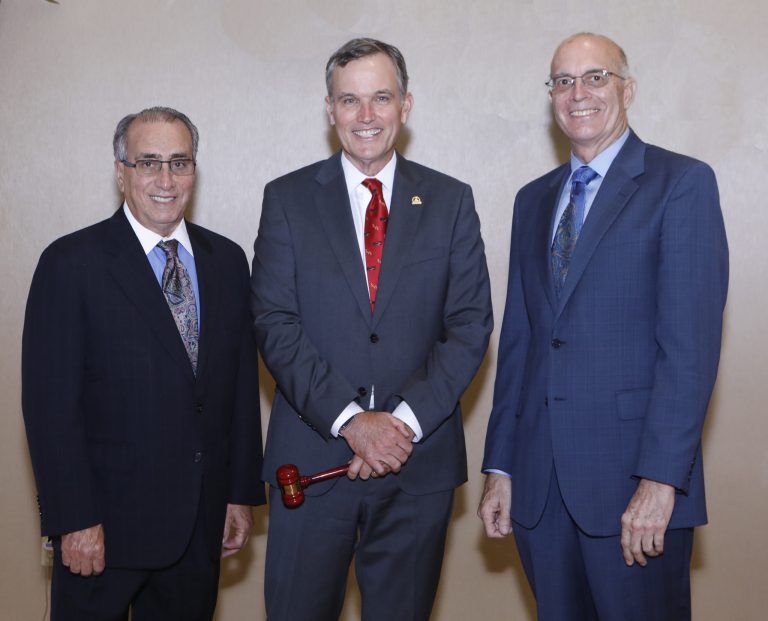
It was an epic return: nearly 700 abstracts presented in six plenaries and several other forums; six concurrent sessions; six SVS breakfast sessions; three postgraduate courses; six “Ask the Experts” presentations; more than 1,000 in-person professional attendees; nearly 400 livestreaming…
Survey on radiation safety in vascular trainees demonstrates a quarter received no feedback on exposure
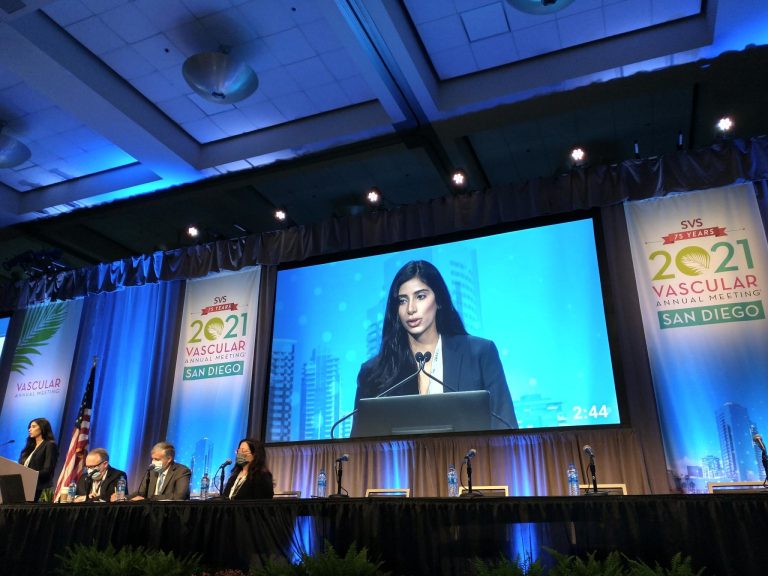
A collaborative effort is needed to establish and adhere to best practice guidelines for radiation safety and exposure, Jasmine Bhinder, MD, a general surgery resident at the University at Buffalo, Buffalo, New York, told attendees of the 2021 Vascular Annual…
Significant reintervention after F-BEVAR ‘does not negatively impact survival’
Patients who underwent reinterventions after fenestrated and branched endovascular aneurysm repair (F-BEVAR) had improved long-term survival over those who did not undergo a secondary operation, a large study of all investigational device exemption (IDE) F-BEVAR procedures carried out at nine…
Thirty-year experience indicates SMA aneurysms are ‘relatively stable’
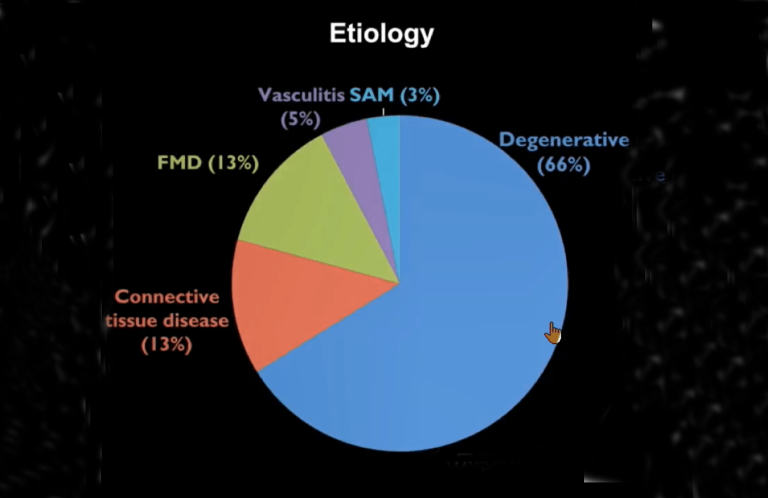
Based on 30 years of experience, researchers have concluded that aneurysms of the superior mesenteric artery (SMA) are “relatively stable” and that those <20mm may be safely monitored with surveillance imaging. The experience also suggests that operative treatment should be…
‘Tremendous advances in imaging possibilities’ signal further innovation, says leading vascular chief

It was a complex repair in the thoracoabdominal region of the aorta around 10 years ago, and Matthew Eagleton, MD, and his surgical team were in the process of cannulating several target vessels. They were being guided by what, for…
SVS membership, CME-MOC deadlines fall in September
The third deadline of 2021 to apply for Society for Vascular Surgery (SVS) membership is Sept. 1. Be a part of the premiere organization representing vascular surgeons and allied health professions, and reap the substantial benefits SVS offers. These include…
Veterans with claudication who undergo revascularization ‘significantly more likely to have major amputation than those who do not’

Patients within the Veterans Affairs Administration healthcare system who underwent an intervention for intermittent claudication (IC) were consistently at three-to-four times greater risk of undergoing subsequent amputation compared to those who did not, researchers at Stanford University report. Furthermore, Intervention…