Brought to you by:


Robotics points to the next era of vascular surgery
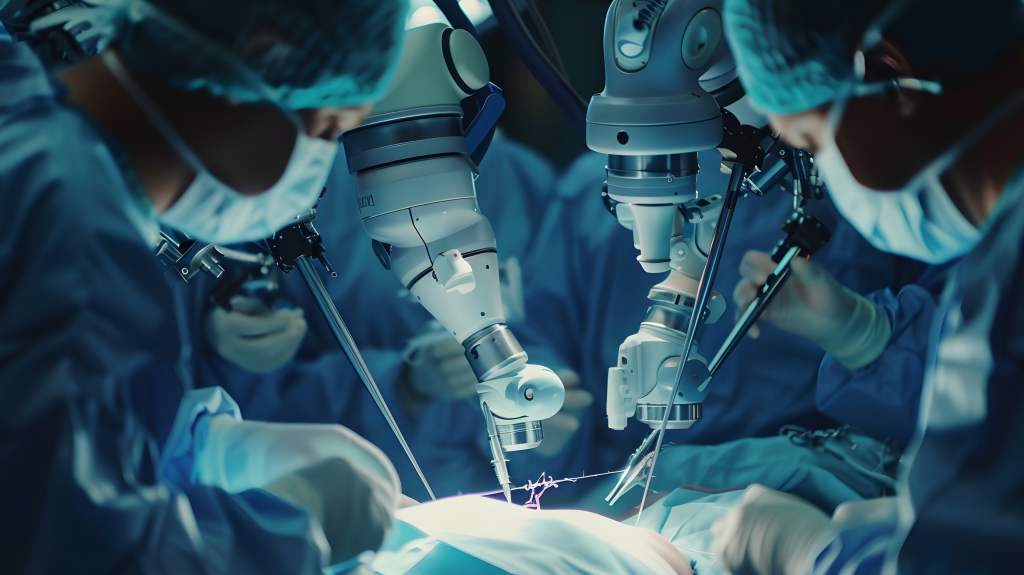
Robotic surgery could allow vascular surgeons to combine the durability of open reconstruction with a minimally invasive approach, but wider adoption will require dedicated training pathways and experience, according to Charu Bavare, MD, of Huston Methodist Hospital.
During a session at the 2026 meeting of the Eastern Vascular Society (EVS) in Washington, D.C. (Sept. 17-19), Bavare traced vascular surgery’s evolution from open aortic reconstruction to endovascular therapy, noting that less invasive approaches have transformed care but can require surveillance and secondary interventions.
Bavare argued that robotics could provide another option by allowing surgeons to perform traditional vascular operations through a minimally invasive approach. “What you do as an open procedure, you can still do as a laparoscopic procedure,” he said, describing robotic instruments as “an extension of your hands inside the belly.”
His own path into robotics began without an established vascular surgery training program. After completing basic robotic training, simulation and case observation, Bavare pursued additional experience with vascular anastomoses and aortic exposure before gradually expanding the procedures performed robotically.
Bavare’s program now uses robotic approaches for procedures including aortic aneurysm and occlusive disease, renal vein transposition, ovarian vein procedures and selected visceral artery operations. However, he said that one challenge to broader adoption is that no formal robotic training pathway currently exists in the U.S. for practicing vascular surgeons.
Still, he sees opportunities for future vascular surgeons as robotic exposure becomes more common during general surgery training. “This is where the future is for vascular surgery,” said Bavare. “We can do open vascular surgery. We know how to do endovascular surgery. What we have to learn is robotics. This is the only specialty in the world which will be able to do all three.”