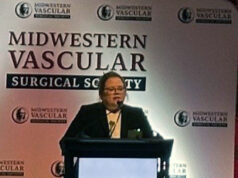
Dennis Gable, MD, from The Heart Hospital Baylor Plano in Plano, Texas, discusses the unique imprint of the five-year follow-up from the GREAT registry and analyses the results in patients with aortic dissection.
“We have just over 97% of patients that achieved some form of follow-up during the five-year window,” says Gable particularly emphasizing the outcome of freedom from aortic-related mortality.
“We see that we have achieved freedom from aortic-related mortality in just over 95% of patients. We see that there is an all-cause mortality of just over 70%, which is certainly in line with all of the published data. But what that’s showing is that these patients are succumbing to issues unrelated to their aorta, but related, more than likely, to various other issues,” he adds.
This registry has collected real-world data from patients treated not only in high-volume, big academic centers, but also those treated by physicians with good experience with the device that may not have the same volume, explains Gable,
Lowering the bar for treatment with a stent-graft
Gable points out that “this [data] may lower the bar a little bit to allow us to treat some more patients [with aortic dissection], to give them a little bit more peace of mind.” Patients typically see good remodelling of the aorta, resolution of any pain they were having, and get back to a relatively normal state of life, knowing that they’ve been treated and the people that get this treated actually have good outcomes,” he concludes.
This video was sponsored by W.L. Gore & Associates.