Brought to you by:


ClotTriever BOLD reshapes approach to DVT thrombectomy
This advertorial is sponsored by Stryker.
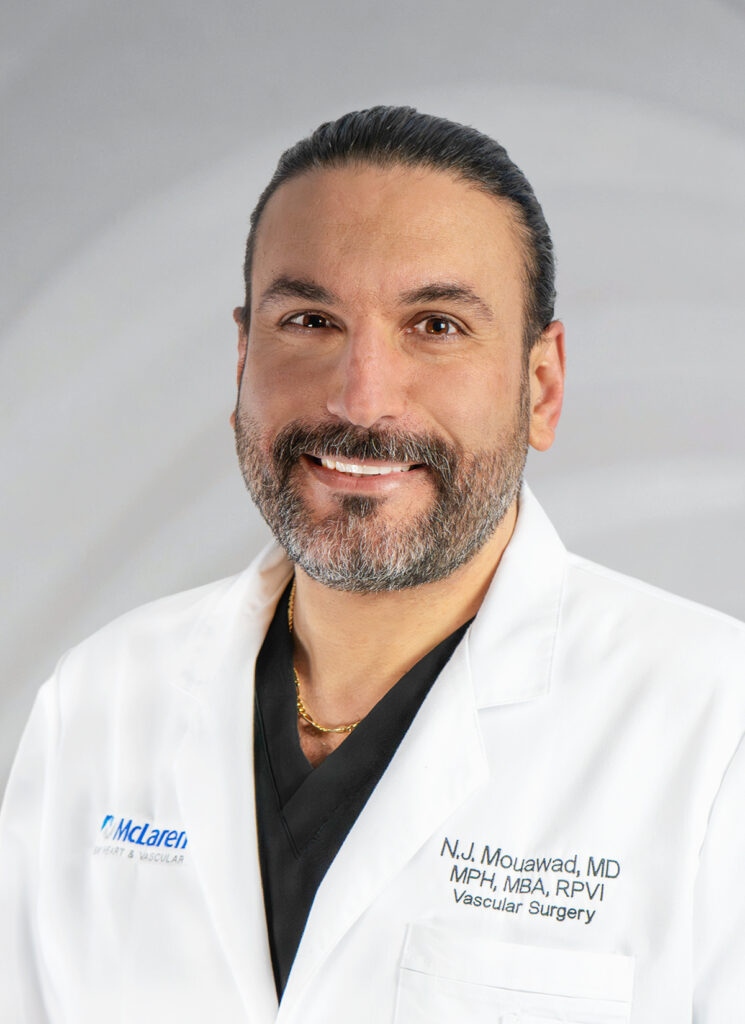
Acute thrombus can be difficult to predict based on symptoms alone, complicating device selection and treatment strategy for deep vein thrombosis (DVT). Nicolas J. Mouawad, MD, chief of vascular surgery at McLaren Health in Bay City, Michigan, discusses his approach to mechanical thrombectomy, the importance of minimizing residual thrombus and how long-term data has informed his focus on consistent, durable outcomes.
Vascular Specialist: How reliably does symptom duration predict the type of thrombus you’ll encounter and how should that uncertainty influence first device choice?
Nicolas Mouawad, MD: The clot is variable. Symptom duration does not always tell you what you're going to encounter. Frankly, most times I find that it's wrong. Your symptoms or presentation can be acute– but more commonly, the clot tends to be subacute or chronic and that's just because people present when they feel the pain or they feel that they see swelling when that change in status happens to them really acutely. However, that clot could have been forming there for weeks or months before the patient actually presents with what they feel as that area of swelling or pain.
I think symptom duration is not very reliable at all to help identify exactly what the type of clot is, whether it's fresh or not fresh. That's very important when thinking of those patients that may benefit from treatment because you may assume that the clot is fresh because of their one or two week history of pain. But a lot of the time it's not. Therefore, you want to consider having an option to be able to treat them with something that's successful regardless of clot chronicity.
Because it's unreliable to tell whether the clot itself is truly acute or not, because you cannot rely completely on the presentation of the patient, I prefer having a clot agnostic device, something that would be effective regardless of clot chronicity, whether it's acute, subacute, or chronic. I want to have a device that will work across all ranges of what the clot could be. In that consideration, a mechanical device is successful, whether it's acute, subacute, or chronic. That's what helps influence my first device choice because I want to be successful with one index procedure and not need secondary procedures or not have to need extra devices in the middle of the procedure to supplement.
Vascular Specialist: Aspiration can be fast when thrombus behaves as expected. Why do you find a ClotTriever BOLD-first approach more efficient across your practice?
Mouawad: Aspiration can be fast when the thrombus behaves as expected, but most times the thrombus doesn't behave as expected. The concern is that you can find yourself not where you necessarily want to be upfront. From my point of view, a lot of times we always think about being very fast and solving the situation very quickly. I think we should change our mindset when it comes to that. You don’t want to be fast per se –you want to be efficient and effective, of course have a good outcome that is safe and durable.
I find again that a ClotTriever BOLD-first approach is efficient for my practice because I don't have to worry about the chronicity of the clot. I don't have to worry about being right whether it truly was acute or if it was more subacute or chronic. Being able to truly manage the clot regardless of chronicity and having an effective solution with wall to wall adherence of the device to really clear out the entire clot itself gives you a more effective solution. When you don't have wall to wall adherence, you can create channels in the clot and get some flow in the vein but you are not clearing out the entire vein. You can end up having residual venous obstruction. We know that residual venous obstruction increases your chance of recurrent failure, recurrent DVT, venous stent failure, post-thrombotic syndrome and death. You want to be able to remove as much clot as possible effectively when you can. That is why it's important to remember that being fast is not necessarily what you want. You want to be efficient and you want to be effective.
Vascular Specialist: When you finish a DVT case, what endpoint are you unwilling to compromise on, and how do you know you’ve done enough?
Mouawad: My objective is straightforward. It's to remove as much thrombus as possible, as efficiently as possible, in a single session. The goal is to ultimately make this procedure predictable, consistent and repeatable across my practice, regardless of patient presentation, clot chronicity and any other considerations that may come up. I want to make this as standardized as I possibly can.
Having that wall to wall apposition that leaves as little as behind a possible is the most important thing. Even if you create a channel now and things are looking better, down the line these people may suffer from post-thrombotic syndrome. Residual venous obstruction, which might not be a problem right now, is a problem and it's much more challenging to deal with later. These are things that I will not compromise on upfront because I want to absolutely minimize or eliminate the incidence of subsequent problems years down the line.
Vascular Specialist: CLOUT followed 500 real-world patients through two years, regardless of symptom duration. How well does that evidence reflect your practice, and why does long-term follow-up matter?
Mouawad: I think the CLOUT registry was excellent because it reflects real world practice and mirrors what I have seen in my own personal practice. In the CLOUT registry, despite patient presentation, a third of the clot was acute, a third was subacute and a third was chronic. We saw that the ClotTriever demonstrated greater than 90% complete or near complete thrombus removal. Almost 100% was at single session with a median of 26 minute device time.
With follow up, we saw that down the line the veins were patent, there was still flow confirmed in the vein and there was compressibility that we noted despite all the treatment. Even more important are the long term outcomes. The rate of post-thrombotic syndrome that had no or mild symptoms was 94% at two years. It's hard to tell what true long-term post-thrombotic syndrome is at two years but it's a start. This is an outcome we really need to look at.
Vascular Specialist: If you could ask your peers to change one thing about how they approach their next DVT cases, what would it be and what should they pay attention to?
Mouawad: What I would ask my peers is to look beyond the acute solution and think about the durability of the solution. I would recommend considering having a consistent reproducible, standardized, efficient and effective treatment plan. We know that every DVT case is not the same. Sometimes if you start with one device, it might not be effective enough and you may have to switch to another one. In these type of situations, having a mechanical device that is essentially clot agnostic, regardless of chronicity of the clot, that is effective in a single session and gives you wall to wall apposition for extraction of as much of the clot as possible allows you to be efficient. Creating a channel may be helpful but you have to also think about the long term concerns.
Dexter, D. Final Two Year CLOUT Outcomes. Presented at VIVA 2024 (Las Vegas, NV)
This is an article sponsored by Stryker Peripheral Vascular. The HCP’s sharing their views and opinions here express their experience with Stryker medical devices. The HCP’s opinions of these devices were formed independently of Stryker and may not represent every experience or outcomes with the devices.
Indications for Use:
The ClotTriever® Thrombectomy System is indicated for: (1) The non-surgical removal of thrombi and emboli from blood vessels. (2) Injection, infusion, and/or aspiration of contrast media and other fluids into or from a blood vessel. The ClotTriever Thrombectomy System is intended for use in the peripheral vasculature including deep vein thrombosis (DVT). Review complete Instructions for Use, Indications for Use, Warnings, Precautions, Possible Adverse Effects and Contraindications prior to use of these products. Caution: Federal (USA) law restricts this device to sale by or on the order of a physician.
Stryker or its affiliated entities own, use or have applied for the following trademarks or service marks: ClotTriever. All other trademarks are trademarks of their respective owners or holders.
PRO-4491-USA-EN-v1