Brought to you by:

Researchers develop machine learning models to predict IVC filter complications

Researchers in Canada have developed machine learning (ML) models that they claim, “can accurately predict one-year IVC [inferior vena cava] filter complications, performing better than logistic regression”. Writing in the Journal of Vascular Surgery: Venous and Lymphatic Disorders (JVS-VL), Ben…
Boston Scientific to acquire IVL developer Bolt Medical

Boston Scientific has announced it has entered into a definitive agreement to acquire Bolt Medical, the developer of an intravascular lithotripsy (IVL) advanced laser-based platform for the treatment of coronary and peripheral artery disease. “Representing one of the fastest growing…
Large database study finds no difference in outcomes between three carotid shunting strategies

A new Vascular Quality Initiative (VQI) data analysis, recently published in the European Journal of Vascular and Endovascular Surgery (EJVES), has found no statistically significant differences between three carotid endarterectomy (CEA) shunting strategies regarding in-hospital stroke and death rate, including…
Study finds adverse outcomes after decreased use of paclitaxel-coated devices
A recent analysis of over 270,000 Medicare fee-for-service beneficiaries has found an increase in adverse outcomes and death after a US Food and Drug Administration (FDA) warning led to decreased use of paclitaxel-coated devices for peripheral revascularisation procedures. Writing in…
Study reports lack of evidence to support theory that hospital integration improves value of healthcare

A systematic review of U.S. literature focused on analyzing the effects of mergers and acquisitions on healthcare suggests that there is a lack of evidence to support the theory that integration is an effective strategy for improving the value of…
Novel sirolimus-eluting scaffold system demonstrates ‘potential to address Achilles’ heel’ of currently available endovascular treatment options

Ongoing studies of the Efemoral vascular scaffold system (EVSS)—previously described as a potential new paradigm in the treatment of long occlusive lesions—show that the device continues to show promise, according to investigators. The latest animal study assessed the subacute response…
How physician assistants help vascular surgery teams provide ‘continuity of care’

The key role played by physician assistants (PAs) as part of vascular surgery teams in the U.S. came into focus during the Vascular Societies’ Annual Scientific Meeting in Brighton, England. Julie Ann Freischlag, MD, the former Society for Vascular Surgery…
Vascular trainees better prepared for open aortic practice than commonly reported, new study shows
Current graduates from both vascular surgery residency and fellowship programs are well prepared for surgical practice in aortic disease whether they are performing open repair or endovascular therapy, contrasting with research indicating that trainees are entering the workforce with inadequate…
The endovascular revolution and open aortic training: ‘It’s not necessarily a crisis but it could become one’

Jean Panneton, MD, considers himself what he terms a “blue-collar” vascular surgeon as much as one engaged in academic practice and the necessity of helping contribute to the next generation of vascular surgeons. He operates. And he operates a lot.…
FDA approves Humacyte’s Symvess for vascular trauma
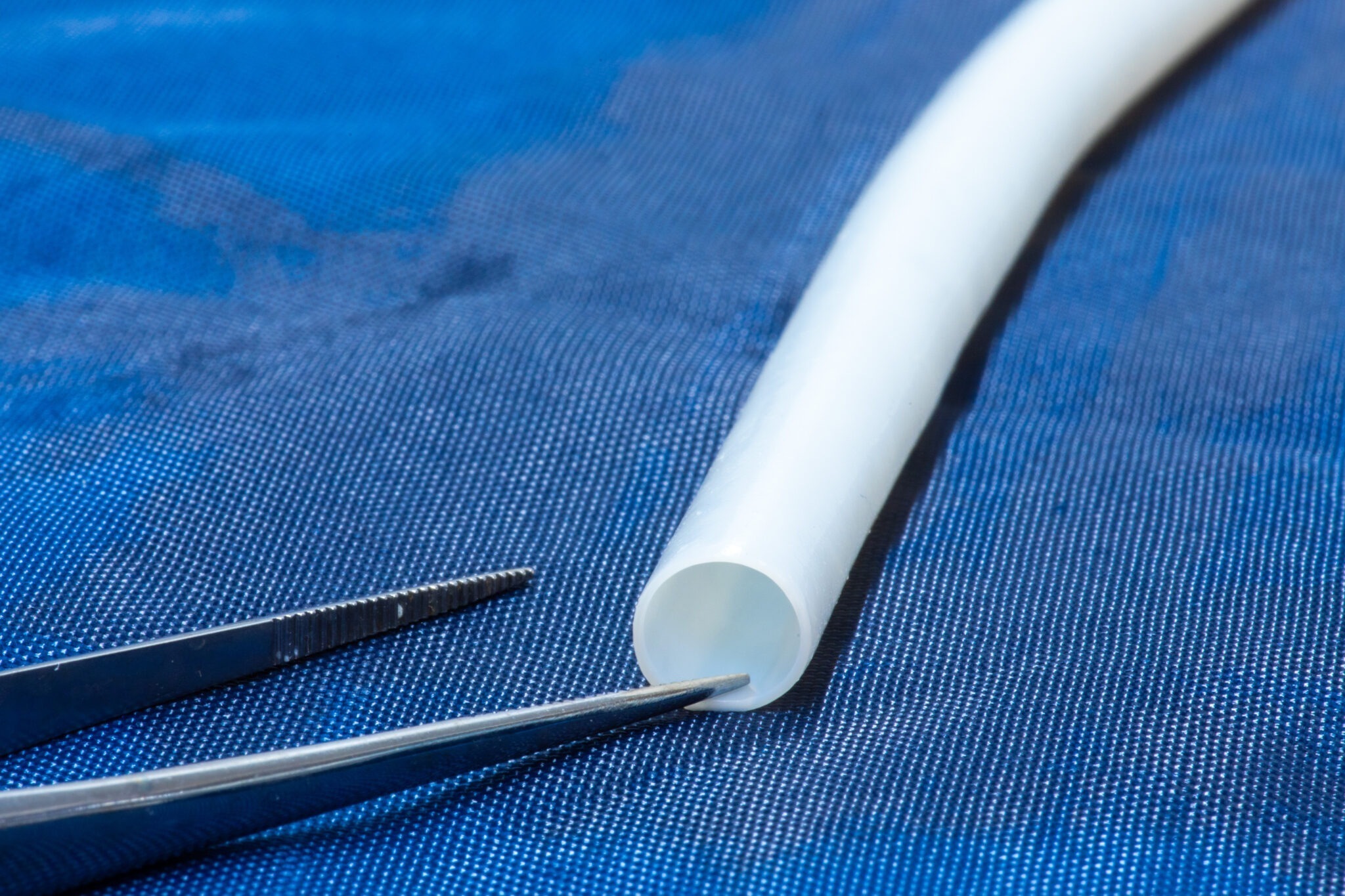
Humacyte recently shared that the Food and Drug Administration (FDA) has granted a full approval for the Symvess acellular tissue-engineered vessel. A press release notes that Symvess is indicated for use in adults as a vascular conduit for extremity arterial…