Brought to you by:

Amplifi vein dilation system demonstrates ‘encouraging’ clinical results in hemodialysis access

Artio Medical announced that full results from its first-in-human clinical study of the Amplifi vein dilation system were presented at the 2021 VEITHSymposium (Nov. 16–20, Orlando) by Surendra Shenoy, MD, associate professor of surgery in the Washington University School of…
First-in-human study of Wrapsody endoprosthesis yields ‘very promising’ results

Merit Medical Systems has announced positive results from a prospective, observational, first-in-human study to evaluate the safety and effectiveness of Wrapsody—a self-expanding, cell-impermeable endoprosthesis designed for the treatment of arteriovenous (AV) fistula access circuit stenosis and AV graft access circuit…
CMS creates new billing code for central venous vascular access system
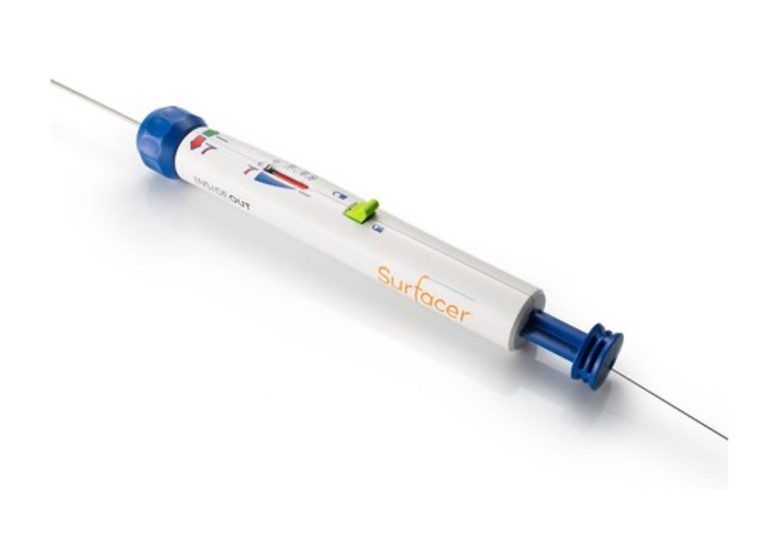
Bluegrass Vascular Technologies announced today that the Centers for Medicare & Medicaid Services (CMS) has finalized a new Healthcare Common Procedure Coding System (HCPCS) code and New Technology Ambulatory Payment Classification (APC) assignment for use of the Surfacer Inside-Out Access…
Artio Medical completes enrollment of first-in-human trial investigating Amplifi vein dilation system

Artio Medical announced today it has completed enrollment in its first-in-human study evaluating the Amplifi vein dilation system. In the study, five patients were treated by Adrian Ebner, head of the cardiovascular department at Sanatorio Italiano Hospital in Asunción, Paraguay.…
Oversized balloon angioplasty technique ‘safe and effective’ for AV fistula maturation
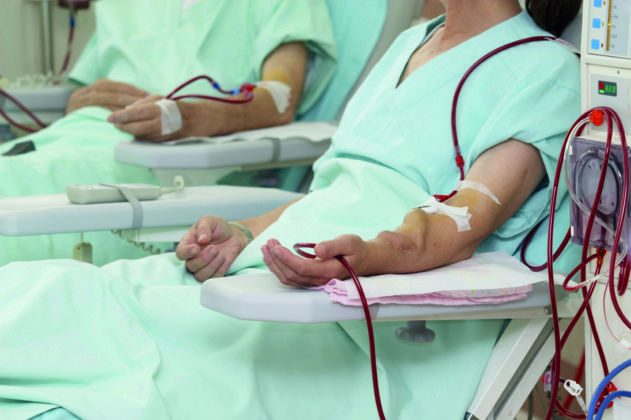
A retrospective analysis published in the Journal of Vascular Access (JVA) has shown that the oversized balloon angioplasty technique to assist arteriovenous (AV) fistula maturation is safe and effective—and allows cannulation of the fistula within hours or days of the procedure, decreasing…
AVFs contribute to higher survival of hemodialysis patients with COVID-19
A new study, published online in The Journal of Vascular Access (JVA), suggests that arteriovenous fistulas (AVFs) contribute to higher survival of hemodialysis patients with COVID-19. Authors Ahmet Murt, MD, of Istanbul University-Cerrahpasa, Istanbul, Turkey, and colleagues urge that end-stage renal disease (ESRD) patients “should…
Fluoroscopically-guided insertion of td-CVC found to be ‘low exposure,’ despite large variability across procedure types

While there is large variability based on the site of insertion, patient characteristics and previous accesses, fluoroscopically-guided insertion of tunnelled central venous catheters (td-CVC) for dialysis can be considered a “low exposure” procedure, according to a report. The report, which is published…
COVID-related hypercoagulability linked to elevated malfunction rate in temporary hemodialysis catheters
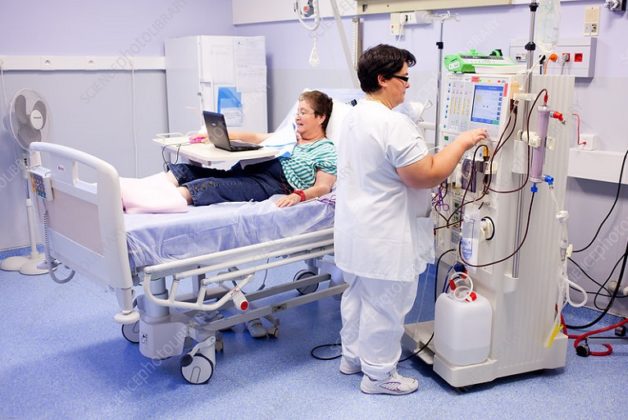
Hypercoagulability in COVID-19 patients leads to an increase in the malfunction rate of temporary hemodialysis catheters—but heparin locking of the catheters is linked to decreased malfunction rates. Those are among the main findings of a study recently published in the…
VQI to discuss quality improvement projects, clinical practice guidelines
The SVS Vascular Quality Initiative will discuss two important topics on Tuesday, July 7: quality improvement projects and the VQI, and clinical practice guidelines. Gary Lemmon, MD, will moderate the quality improvement abstracts from noon to 1 p.m. Adrian Fung,…
National Kidney Foundation releases guideline for vascular access in dialysis patients
The American Journal of Kidney Diseases (AJKD) has published the National Kidney Foundation’s KDOQI Clinical Practice Guideline for Vascular Access: 2019 Update, a completely revamped set of 26 individual guidelines for clinicians that focuses on dialysis access choices tailored to individual patients’…