Brought to you by:
PAD: Endologix acquires PQ Bypass

Endologix recently announced completing the acquisition of PQ Bypass, a medical technology company pioneering a first-of-its-kind technology that addresses severe peripheral arterial disease (PAD). PQ Bypass’ proprietary Detour platform for percutaneous femoropopliteal bypass has been designated by the Food and…
Surgeons react to reintroduction of bill that aims to increase access to PAD screening

The recent reintroduction of the bipartisan Amputation Reduction and Compassion (ARC) Act—aimed at improving peripheral arterial disease (PAD) education, increasing access to PAD screening and preventing avoidable lower limb amputations—has drawn a mixed response from vascular surgeons. The move gained…
VenoValve: Chronic venous insufficiency device gains brisk double of first US patent, IDE approval
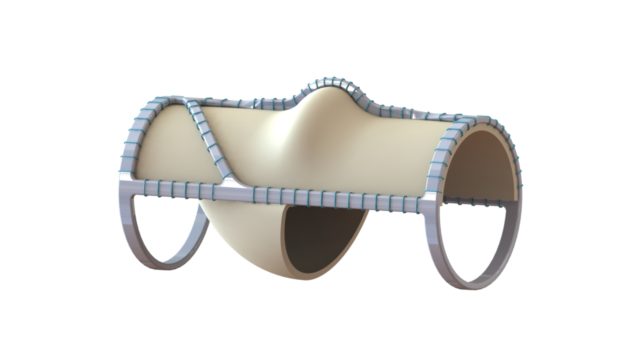
Hancock Jaffe Laboratories recently revealed that the United States Patent and Trademark Office (USPTO) issued the first patent covering the company’s VenoValve. The patent is entitled Implantable Vein Frame and is U.S. patent number 10,959,841. The company recently announced that only…
Emerging picture: VAM 2021 shaping up into blockbuster event

The moving pieces that comprise the 2021 Vascular Annual Meeting (VAM), set to take place Aug. 18–21 at the San Diego Convention Center, San Diego, California, are being assembled into a blockbuster whole. Though plenary sessions have yet to be…
Patients with AAAs who had COVID-19 may need ‘more frequent surveillance’ until better understanding of link emerges
Patients who have known abdominal aortic aneurysms (AAAs), who may have had a COVID-19 infection, might need to have more frequent or a different surveillance regimen until a better understanding of the relationship between the virus and potential symptomatic progression…
‘Radiation will be a thing of the past’
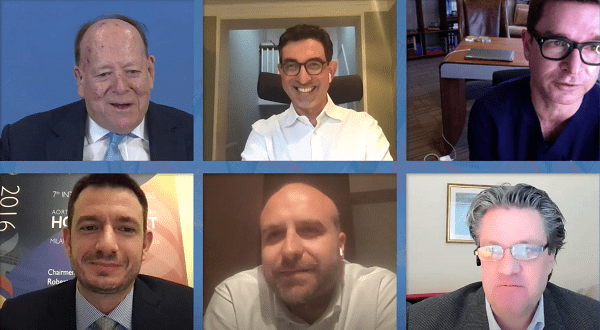
Discussion during the opening day of the Charing Cross (CX) 2021 Digital Edition emphasized the potential of Philips’ Fiber Optic RealShape (FORS) technology to reduce radiation and ease technical success, with moderator Gustavo Oderich, MD, professor and chief of vascular…
SVS advocacy efforts help spark landmark change in research effort requirements

The recent decision from the National Heart, Lung and Blood Institute (NHLBI) to reduce the dedicated research effort from 75 to 50% for K awards is a landmark change and will have a tremendous impact on vascular surgeons. The decision…
BUTTERFLY study finds most reinterventions after FEVAR are not related to balloon-expandable covered stent use

A mid-term assessment of bridging stentgraft integrity and flare geometry following fenestrated endovascular aortic repair (FEVAR) finds that, although there is a substantial reintervention rate post-procedurally, most are not related to the use of balloon-expandable covered stents (BECS). This is…
SVS PAC has weathered the storm of 2020

The year 2020 was one of firsts and of resilience. We had a plague of biblical proportions; civil unrest; fiery political and racial tensions; riots; polar vortices, where it was literally freezing in the Southwest; and, last but not least,…
Lessons in PAD care from VA vascular surgeons

The care of patients with peripheral arterial disease (PAD) is challenging and costly. Every practicing vascular surgeon knows that when patients present with ulcerations, infection, ischemia and comorbidities, we can accomplish amazing things. In an ideal world, our approaches universally…