Brought to you by:

Using the gracilis muscle flap
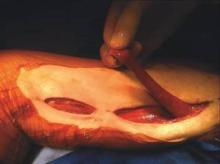
Muscle flaps have come to play an invaluable role in the management of complex groin wounds (Figure 1). We have found that the gracilis muscle offers significant advantages over other local muscle flaps. In comparison to the segmental blood supply…
The 10,000-hour rule

In 2002, the Accreditation Council for Graduate Medical Education, or ACGME, rocked traditional residency training paradigms by proposing a regulated residency call schedule.1 Revised standards were implemented in 2011 throughout the United States prohibiting first-year residents from spending more than…
From the editor: New column launches

This month we are introducing a new feature in Vascular Specialist – a column on medicolegal matters. After all there are few issues that we face as vascular surgeons that can so negatively affect our lives. For a malpractice suit…
Reducing radiation exposure

SCOTTSDALE, Ariz.– “It’s surprising to me today, when I go proctor or watch a case, how people don’t understand the impact of radiation,” Dr. Mark A. Farber, professor of surgery and radiology at the University of North Carolina, Chapel Hill,…
Shared decision making?

Recently I read a blog by Dr. Ira Nash at the blog site, KevinMD, where Dr. Nash suggests that it behooves physicians to fully inform patients with carotid stenosis about the pros and cons of proposed treatment. This is in…
Residents reluctant to recommend DNR to patients
BOSTON – Medical residents in the United States appear to understand that cardiopulmonary resuscitation or intubation is highly unlikely to benefit patients with advanced cancers at the end of life, but the majority of residents surveyed said that they do…
TLR – Target lesion recurrence

In November I attended the VEITHsymposium in New York. Almost 600 experts from around the world gave lectures on every aspect of vascular surgery. Given 5 minutes per talk, the presenters had to carefully select data they believed would bolster…
Some things vascular surgeons should know that they don’t learn in training

All vascular surgeons want to be good doctors and to take the best possible care of their patients. They, therefore, train diligently and strive to keep up with new developments by reading vascular journals and attending cutting edge vascular meetings.…
Reduced resident duty hours haven’t changed patient outcomes

Patient mortality and morbidity outcomes have not changed since the most recent round of reforms to medical residents’ duty hours in 2011, according to two of the first nationwide studies to assess these “improvements,” which both were published online Dec.…
EVAR vs. open repair for rAAAs

Although some vascular surgeons are convinced that endovascular aneurysm repair (EVAR) is superior to open repair for the treatment of ruptured abdominal aortic aneurysms (rAAAs), the issue remains controversial. The naysayers for the superiority of EVAR in this setting claim…