Brought to you by:

Search Results for stroke
Carotid endarterectomy tied to lower stroke, mortality rates than stenting

Carotid endarterectomy (CEA) was associated with significantly lower long-term stroke and mortality compared to carotid artery stenting (CAS) in patients with asymptomatic carotid artery disease, according to a new real-world analysis. The study, which was presented at VAM 2026, compared…
‘Historical’ CREST-2 data show reduced stroke risk with carotid stenting versus medical therapy alone
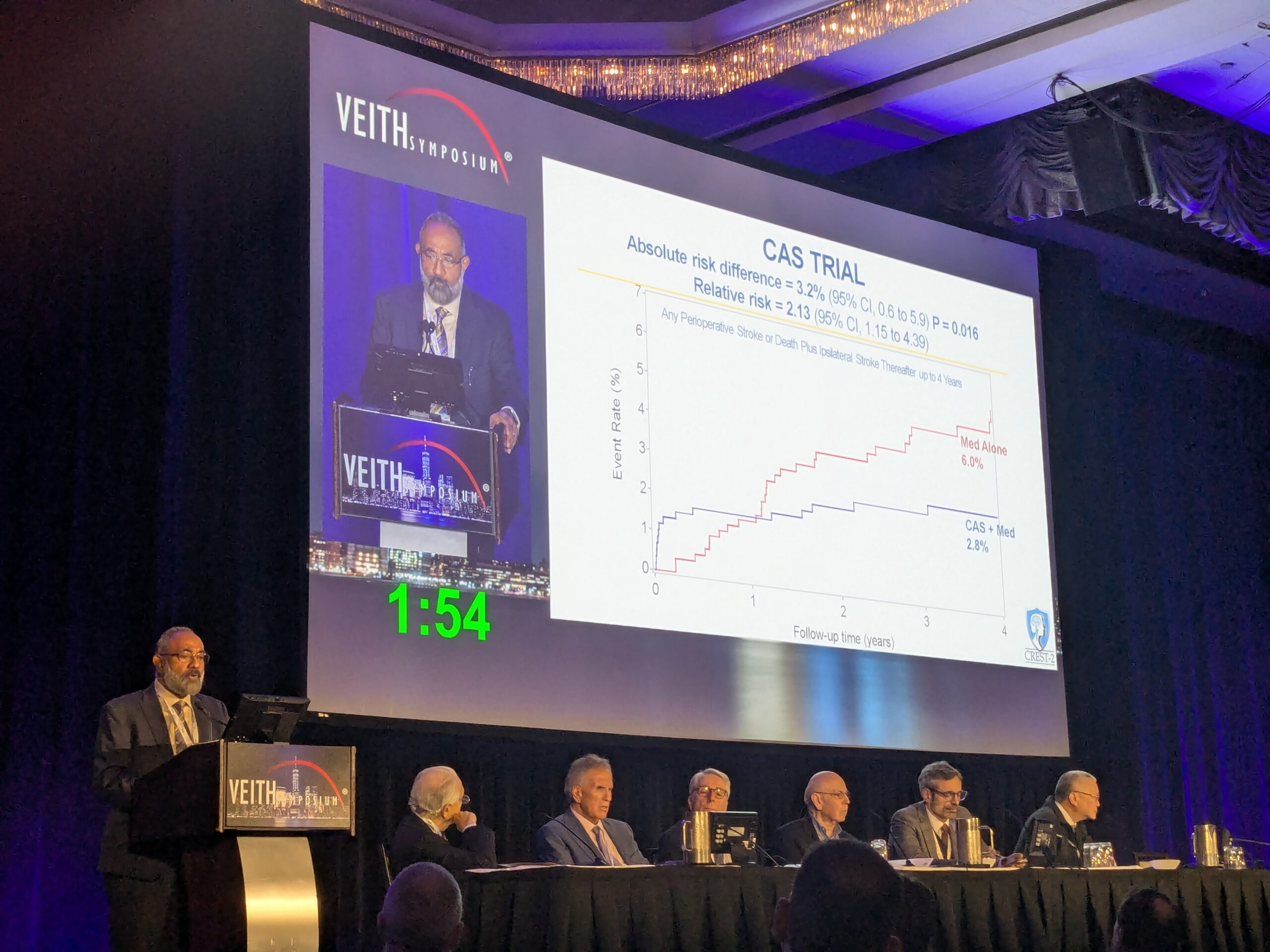
The international CREST-2 study has found that, for people with severe carotid artery narrowing who have not experienced recent stroke symptoms, a minimally invasive carotid artery stenting (CAS) procedure—combined with intensive medical therapy—significantly lowered stroke risk compared with medical therapy…
Not all carotid procedures are equal after patients suffer a postoperative stroke

Comparative analysis looks at stroke-related disability and mortality after three modes of carotid revascularization. Strokes after transfemoral carotid artery stenting (TFCAS) were “the most disabling and lethal” when compared with transcarotid artery revascularization (TCAR) and carotid endarterectomy (CEA) in a…
CGuard Prime carotid stent gains US and European approvals for stroke prevention

InspireMD has been granted premarket approval (PMA) from the Food and Drug Administration (FDA) for its CGuard Prime carotid stent system in the U.S.—news that follows the company’s recent announcement of CE-mark approval under the European Medical Device Regulation (MDR).…
Transatlantic multicenter experience highlights effectiveness of total endovascular aortic repair with F/BEVAR but 5% risk of major stroke

Staged total endovascular aortic repair (TEAR) utilizing arch branched and thoracoabdominal fenestrated and branched endografts is effective, but identified predictors of morbidity and mortality—including stroke—highlight the importance of individualized risk assessment to optimize outcomes. These are some of the key…
ROADSTER 3 provides key evidence that ‘goes beyond registry data’ on TCAR-related stroke rates

Thirty-day results from the ROADSTER 3 study have demonstrated that transcarotid artery revascularization (TCAR) is a safe and effective approach in patients who are deemed to be standard risk for experiencing adverse events related to carotid endarterectomy (CEA). These findings…
CEA: The importance of doctor-patient conversations about quitting smoking for better stroke outcomes in setting of asymptomatic stenosis

A new analysis that shows current smokers who undergo carotid endarterectomy (CEA) for asymptomatic carotid stenosis are at increased risk of long-term stroke and death compared to former or never smokers helps reinforce the importance of physicians talking to patients…
VAM 2024: Paper exploring stroke rates in arch TEVAR emerges as winner of Poster Competition

The 2024 Vascular Annual Meeting (VAM) in Chicago showcased emerging talent in vascular surgery through a moderated Poster Competition held over two days of the conference. This event provided a platform for research and recognized excellence among the next generation…
No relationship found between DW-MRI lesions and long-term stroke risk following carotid revascularisation

A secondary analysis of existing clinical trial data has indicated that new ischaemic brain lesions detected via diffusion-weighted magnetic resonance imaging (DW-MRI) following carotid artery revascularisation—either with carotid artery stenting (CAS) or carotid endarterectomy (CEA)—do not appear to have a…
Rates of stroke, death and myocardial infarction post-TCAR do not differ by patient sex

While sex disparities regarding the outcomes of carotid revascularization have “long been a concern,” new prospective data published in the Journal of Vascular Surgery (JVS) indicate that no such disparity exists between male and female patients treated with transcarotid artery…